
The State Department’s report on Kosovo: Washington is for the first time openly disappointed with the state of human rights
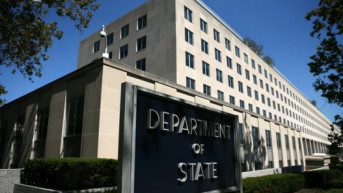
In the State Department's Report on Human Rights in Kosovo for 2022, the US administration expressed disappointment, citing examples of arrests of the Serbs, expropriation of land in the north of Kosovo, crimes, and threats against ethnic minorities, as worrisome phenomena. According to Washington, the cause of such a situation is corruption and inefficiency of the judiciary. Senior researcher at the NGO "Aktiv" Igor Markovic tells Kosovo Online that the US report is much stricter towards Kosovo's institutions than in previous years, while analyst Blerim Burjani believes that it does not directly refer to Kosovo's institutions.
"Long detentions, an average of six months, both before and during court proceedings, continue to be a problem," the Report on Human Rights in Kosovo states, among other things.
It is also stated that the leaders of the Serbs from Kosovo had expressed concern about the long-term pretrial detention for two people who had been arrested in December 2021 on charges of corruption, for which a sentence of one to five years was foreseen. The report also looks at the issue of expropriation of land in the north of Kosovo, stating that the Serbs are extremely worried about the decision of the Government of Kosovo to confiscate their land.
The opposition in Pristina reacted to the assessment that there was serious corruption and impunity in the Government of Kosovo, stressing that the term "disappointment" in politics was a "difficult word", and Kosovo Prime Minister, Albin Kurti, said that he would "seriously deal with the report's findings."
Igor Markovic from the NGO "Aktiv" assesses that the State Department's report contains key information concerning the Serbs in Kosovo.
"Unlike previous years, the State Department's report for 2022 is much harsher and more critical of Kosovo institutions when it comes to respecting human rights. When it comes to the rights, problems, and challenges faced by Kosovo Serbs, the report for 2022 comprehensively includes key information concerning this community. From internally displaced persons, problems with access to private property, the return process, the security situation, access to information and documents, all the way to language rights. It seems that the space and attention that is devoted to Kosovo Serbs in this report significantly increased compared to previous reports," Markovic said.
As Markovic adds, of all the problems mentioned, the most problematic is the security environment in which members of the Serbian community live in Kosovo.
"As stated in the report itself, the number of incidents in areas inhabited by the Serbs had increased significantly, especially after the entry of the Special Units of the Kosovo Police into the north of Kosovo. It is very important that the report found the dissatisfaction of citizens due to regular and unprovoked mistreatment by members of the Special Units of Kosovo Police. What this report has unfortunately succeeded in doing is recycling the Pristina authorities' claim that Special Units of Kosovo Police members are present in the north in order to maintain a safe and secure environment for Kosovo Serbs, which is fundamentally far from the truth," Markovic said.
Markovic also notes that for the third year in a row, the report cites the reports of the NGO "Aktiv" on security incidents that have occurred in areas inhabited by the Serbs over the past few years.
"This report only mentions the semi-annual report for 2022 and the figure of 51 incidents in the period January-June, which meanwhile, according to the research of this organization, rose to a total of 86 incidents by the end of December - damage and theft of religious property of the Serbian Orthodox Church (24 ), damage, beatings and robberies of households (19), provocative graffiti (16), physical attacks (11), theft and damage to private movable property (9), theft and damage to property of public institutions (7)," Markovic said.
According to his words, Washington's dissatisfaction with the current government in Pristina in the last year goes beyond the usual diplomatic vocabulary and performance.
"Criticism directed at Albin Kurti and his government can safely be called a precedent because no government or political leader in Kosovo has been the target of so much criticism from Washington. It seems that Kurti somehow broke the "taboo of unconditional obedience" to American policy, which in the last three decades was valid for politicians and leaders of Albanian nationality," Markovic added.
As it turned out, the judicial system in Kosovo is under great political influence, and from the point of view of the Serbs from Kosovo, it is completely turned against that community.
"The judicial system in Kosovo is certainly under great political influence and has not reached complete independence and functionality. From the perspective of the Serbian community, the judicial system in Kosovo is completely turned against the members of this community, which is through how court judgments are made, which is due to a huge number of procedural problems in the processes in which the Serbs participate. The lack and delay of translations into the Serbian language, both oral and written, during court proceedings, arbitrary interpretation of legal frameworks and criminal provisions, and time limits are just some of the problems. In addition, illegal arrests and retention of members of the Serbian nationality, often without a legal basis, which turn into a systematic problem, additionally shows that Kosovo Serbs are practically at the mercy of the arbitrariness of decision-making both in the judiciary and in all other institutions in Kosovo. It is scandalous that in the last few years, we are witnessing increasingly frequent detentions of persons of Serbian nationality without explaining the reasons and legal grounds. In the absence of legal grounds for holding or starting the process, judicial authorities are increasingly reaching for the "map" of the alleged war crimes, which automatically creates support in the Kosovo-Albanian public for conducting the process against the arrested, before the process even started," Markovic said.
In his opinion, the Report will not have a particular effect on the political situation in Pristina, but it is an indicator of the relationship that international factors will have in the coming months in exerting pressure on Pristina.
"Not only in the domain of normalizing relations with Belgrade but also in solving institutional and systemic problems and shortcomings, for which Kurti and the Self-Determination Movement actually received support - the fight against corruption, the functionalization of the health system, the strengthening of institutions. If the formation of the Community of Serb-majority Municipalities (CSM) is not started this year, we can expect a significant deepening of the political crisis in Kosovo and a significant weakening of Kurti's negotiating position and consequently support for his Self-Determination Movement," Markovic concluded.
On the other hand, Kosovo analyst Blerim Burjani believes that the State Department's report is an analysis of the event as a whole and that the US criticism is not addressed to Kosovo institutions. Burjani added that Serbia was destabilizing Kosovo.
"Whoever violates the working order, the Constitution, and the laws must be held accountable in court, this applies to Albanians and the Serbs, as well as to other citizens. In Kosovo, when it comes to the Serbs, political marketing by Serbia dominates. Criminal gangs in the north, are connected to the Serbian mafia and politicians. We need to work there to return the Serbs to the institutions, but I don't think they are free to accept the state of Kosovo," Burjani said.
According to Burjani, even if the CSM is formed, there will be no peace in Kosovo until it becomes a member of NATO.
"Serbia's first step is to destabilize Kosovo. The West wants the CSM and that is the last line for Serbia, and in return, it should recognize Kosovo," Burjani emphasized, adding that Serbia would suffer the consequences if it did not accept it.
0 comments