
Stevic: A shift in the new Government’s approach toward Serbs cannot be expected
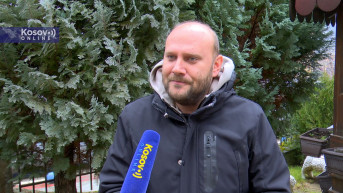
Journalist from North Mitrovica, Lazar Stevic, told Kosovo Online that the appointment of Nenad Rasic as Minister for Communities and Return confirms the continuity of Prime Minister Albin Kurti’s policy toward the Serb community, despite the fact that the Serb List won the largest number of votes among Serbs in the elections. He assesses that no shift in the new government’s approach toward Serbs can be expected, nor a reduction of political pressure in the coming period.
“First and foremost, I would not focus too much on the issue of new names and the new composition of the government. I would rather focus on what is very important for us Serbs — that despite the Serb List having won the largest number of votes in the December 28 elections, Albin Kurti once again included Nenad Rasic in the same government and gave him a ministerial post instead of someone from the Serb List. This only shows that the direction of the new government will be the same as the previous two, Kurti 1 and Kurti 2, and that it will not care much about the wishes of the Serbs. As for the other names, everything is mostly the same, with some minor changes, but none of that will significantly affect the policy that the previous two governments pursued toward the Serbs,” Stevic emphasized.
The speed with which the Assembly was constituted and the government formed in a single day does not surprise Stevic, as deadlines were expiring, but he says the election of the Deputy Speaker is somewhat surprising.
“They had very short deadlines to complete everything, first to constitute the Assembly and then to elect the government. The most surprising part was the election of the Deputy Speaker of the Assembly. We remember how it was last time — there was voting and they could not, and did not want to, elect anyone from the Serb List as Deputy Speaker. However, at the right moment, the Constitutional Court’s decision arrived, clearly stating that the election of Nenad Rasic in the previous term was unconstitutional and that someone from the Serb List must be appointed. This time, to avoid another vote and possible disagreements, they did it as a package deal — all five Deputy Speakers were elected at once, resolving that issue immediately. The formation of the government followed and was voted through right away, so a great deal of work now awaits them. For more than a year Kosovo had no government; many international agreements, primarily donations on which Kosovo heavily depends, are pending ratification. That is why they accelerated the entire process and completed everything in one day,” he said.
He does not expect any change in the new government’s policy toward the Serb community, recalling that Serbs were not even mentioned in the Prime Minister’s exposé.
“I do not expect any improvement for Serbs and the Serbian people because, as Albin Kurti himself stated in his exposé, he did not even mention the Serbs. If he does not even mention them, what can Serbs expect in terms of improvement or hope for something different and better? Therefore, I do not expect the new government’s policy toward Serbs to improve — on the contrary, I expect even more problems. We already see what is happening with the university and faculties — they have already begun targeting them, they entered the rectorate and did not provide the necessary document; they issued an ultimatum to the University of Pristina, saying either relocation or signing an agreement with the University of Pristina under the Kosovo system. In the coming period, I expect even more problems and greater pressure, especially now that Albin Kurti has secured the majority he wanted in the Assembly. That pressure on the Serbs will continue,” Stevic stressed.
Stevic also notes that one of the reasons for accelerating the process of constituting the Assembly and forming the new government is the upcoming election of a new President of Kosovo in March.
“Now there is speculation about who will be proposed by Self-Determination, since as the largest political party that won the previous elections, they have the right to nominate a president. Will they continue with Vjosa Osmani? She has announced on several occasions that she will run again. However, major issues are now emerging as to whether the opposition will agree and vote for her, because we know how this works in Kosovo — a two-thirds majority in the Assembly is required to elect a new president. Given all the moves Vjosa Osmani made in the previous period and her public support for Self-Determination as a party during the elections, I do not expect the opposition to be accommodating or to simply forget that. This is one of the issues Albin Kurti is now weighing — whether to propose and support Vjosa Osmani and risk not securing the necessary votes and triggering new elections, or perhaps to consider another name that might appeal to the opposition in order to preserve the stable government he currently has,” Stevic concluded.


0 comments