
Gogic: A government of continuity – Kurti will continue his policy
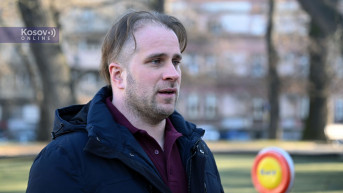
Political scientist Ognjen Gogic stated that the new government in Kosovo is a government of continuity and that Prime Minister Albin Kurti will continue the policy he has pursued over the past year. He noted that Kurti enjoys support from Washington and Brussels for implementing the Western agenda in the region, regardless of previous disagreements.
Commenting on Kurti’s address, Gogic said that the most important part of the exposé concerned defense, adding that he was not surprised that Serbs were not mentioned.
“I did not expect him to mention the Serbs. That is not a message he ever sends, nor is it something his electorate wants to hear — that he intends to make concessions to the Serbs. That is not the policy by which he came to power; quite the opposite. The key point was when he spoke about defense, because that fits into the broader context we are witnessing. Kosovo is arming itself, acquiring military equipment, and trilateral meetings have been held regarding an agreement between Kosovo, Albania and Croatia. The trend is toward shaping the Kosovo Army, which is expected to be completed within the next two years. There is clearly Western support for this, from NATO member states that want to see Kosovo have an army according to NATO standards and potentially become a NATO member. That process will not stop. Kurti has shown that he understands this Western expectation — it is not solely his initiative. The West wants to see Kosovo integrated into Euro-Atlantic structures, and Kurti aligns himself with that policy,” he told Kosovo Online.
He added that this is linked to broader geopolitical circumstances, as the West seeks to integrate the region into its own structures and push out Russia and China.
Commenting on changes within the new government, Gogic pointed out that by establishing a ministry dedicated to the war in Kosovo, Kurti is appealing to the public, which closely follows the trial of former KLA leaders in The Hague.
“It is interesting that one of the ministries will be dedicated to the liberation war, as it is referred to there. He had to appeal to the Albanian public, which is following the proceedings in The Hague with great attention,” Gogic said.
He emphasized that this is a government of continuity, despite some noticeable changes, and that the biggest surprise is the absence of Besnik Bislimi from the government, who had previously been in charge of the dialogue with Serbia.
“This is a government of continuity. Despite some personnel changes and a larger number of ministries, it is a government that continues where Kurti left off, and he had been leading policy as a technical prime minister for almost a year. Perhaps the biggest surprise is that Besnik Bislimi is not in the government. He was deputy prime minister and chief negotiator in the dialogue with Belgrade. He recently made significant statements regarding the implementation of the Law on Foreigners and the integration of the healthcare and education sectors. It is interesting that he made those statements and then did not end up in the government,” he said.
Gogic noted that Glauk Konjufca and Donika Gërvalla swapped portfolios — Konjufca will now head the Ministry of Foreign Affairs, while the former foreign minister will become Minister of Justice.
He also said that it is concerning for the Serb community that the Ministries of Interior and Local Self-Government are headed by the same officials as in the previous government.
“That is not encouraging for the Serbs, who did not have good communication or cooperation with them in previous years. It is interesting that there will be a significant number of ministers from non-majority communities. Nenad Rasic is Minister for Communities and Return, which was expected,” the political scientist stated.
Gogic assessed that institutions were formed as soon as conditions allowed in order to prevent a financial crisis.
“The fact is that Kosovo no longer has time. By the end of February, the budget must be adopted; otherwise, a serious financial crisis will follow. That requires action — the government must adopt a draft budget, conduct some form of public debate, submit it to parliament — and all of that takes time,” Gogic said.
Another matter requiring urgency, he added, is the upcoming election of a new president on March 4. He noted that after the Constitutional Court’s decision, Self-Determination accepted that the Deputy Speaker of the Assembly should come from the Serb List, although it had initially opposed this; otherwise, neither the Assembly nor the Government would have been formed.
“They did it in a way that drew attention. Once again, there was package voting for two deputy speakers, and the votes proceeded one after another. It is no longer even news in the media that the authorities voted for Slavko Simic, because events unfolded in such a way that the government itself became the main topic, rather than the deputy speakers. In that way, they concealed the fact that they were not consistent with their previous statements and that they voted for Slavko Simic from the Serb List, although they had said they would not,” he pointed out.
According to Gogic, the Self-Determination candidate for president will likely secure parliamentary support.
“For now, it is not known whom Kurti, as the leader of the strongest party, will support for president. Judging by the mood in parliament, it appears that the Self-Determination candidate will obtain the necessary votes or at least the quorum to reach a third round, because the opposition seems to have come to terms with its situation. It suffered a debacle in these elections and does not appear ready to test the strength of Self-Determination again,” he added.
Gogic assessed that the Democratic League of Kosovo (LDK) in particular has softened its stance and that representatives of that party have suggested they would accept or allow a Self-Determination candidate to become the new president.
“We will see who the candidate will be and whether it will be someone controversial. Kurti did not explicitly say he would support Osmani; that remains unresolved. It seems to me that the international community wants this process to be concluded, institutions in Kosovo consolidated, and for things to move forward. If the opposition were to attempt to obstruct the presidential election process, it would face pressure from the international community,” Gogic concluded.


0 comments