
Sunter: The future of Bondsteel depends on US strategic priorities, not the situation in Kosovo
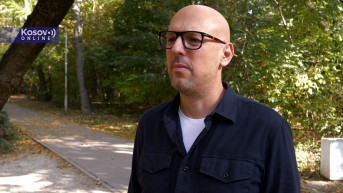
Security expert Daniel Sunter believes the big question is what will happen to Camp Bondsteel in the coming months and years, adding that this is primarily linked to the future of the US military presence in Europe.
“At present, Congress officially lists Camp Bondsteel as a site of the continuous military presence of the United States, meaning that the Pentagon has maintained a presence there for more than 15 years. In the summer of this year, the US Department of Defense announced a six-month review, following which it is expected to determine which bases and military capabilities Europe will need in the coming period, in line with the new strategic priorities of the United States. So this is not an improvised decision,” Sunter told Kosovo Online.
He added that the process is based on the 2026 US National Defense Strategy, which states that the first priority of the United States is to defend its own territory and interests in the Western Hemisphere, followed by deterring China in the Indo-Pacific region.
He also referred to the NATO 3.0 concept, which, he stressed, does not envisage a US withdrawal from Europe but requires European allies to provide much more of their own military capabilities on the continent.
“These are some of the parameters that will influence the US assessment of future force deployments and how those forces will be used. What is new about Camp Bondsteel is that, for the first time since 2014, the latest rotation of US forces consists of active-duty military personnel rather than National Guard members. The reason for this actually has nothing to do with the situation in Kosovo, but rather with a change in how the US military operates in Europe. Missions are now being staffed exclusively with resources already present on the European continent,” our interlocutor stressed.
Sunter said that, accordingly, the latest rotation of US forces in Kosovo consists of members of the 2nd Cavalry Regiment and elements of the 1st Infantry Division.
“These are ground units, including command and support elements, as well as a helicopter component. That is the key difference, but it has more to do with what is happening across Europe under the NATO 3.0 concept,” he said.
Sunter believes it is important to understand what Bondsteel is actually used for.
“On the one hand, it is a US Army garrison that forms an integral part of the KFOR mission. On the other hand, Bondsteel is also home to a unit called the Area Support Group Balkans, whose task is to provide administrative, logistical and technical support to US forces stationed not only in Kosovo but also in Bosnia and Herzegovina and Montenegro. This unit therefore has broader regional significance, although the main focus of its activities is support for the KFOR mission. In this respect, Bondsteel has a dual role. Its future function must be viewed within the framework of broader US policy documents and plans,” Sunter explained.
Our interlocutor emphasized that there is currently no precise information about the Pentagon's plans.
“That will become clear once the review is completed and the document analyzing the future shape of the US military presence is published. It may be useful to compare the situation with other parts of Europe, such as Poland. Poland is on NATO's eastern flank and is a close military ally of the United States. It has purchased significant amounts of US military equipment and is strengthening security cooperation with the US through strategic dialogue mechanisms, including discussions about future plans,” Sunter said.
Sunter concluded by noting that one of Poland's plans is to establish a permanent US military presence in the country, primarily through a project known as “Fort Trump,” which involves plans for a lasting deployment of American forces.
“Poland uses strategic dialogue mechanisms for these purposes, whereas in Pristina, on the other hand, there is no political atmosphere comparable to the one currently prevailing in Poland. That is why it may seem somewhat unusual to try to turn the US military presence into some kind of bilateral arrangement without first establishing the level of strategic dialogue that exists between Poland and the United States,” Sunter concluded.



0 comments