
Surlic: Osmani sometimes more radical than Kurti in public, more moderate with Western officials
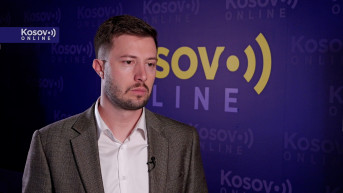
Assistant Professor at the Faculty of Political Sciences in Belgrade, Stefan Surlic, reflecting on the four-year term of Kosovo President Vjosa Osmani, assesses that during this period, she had to balance between the extreme nationalist and chauvinistic policies of Albin Kurti’s government and her own desire to leave a personal mark as a legal expert and a reconciliatory figure regarding internal divisions within the Albanian population.
He emphasizes that this was a balance between competitive chauvinism on one side and, on the other, demands for respect for rights, the constitution, laws, and other legal norms.
Regarding Serbian-Albanian relations, Surlic states that if there is anything positive that has emerged in these four years, it is the transfer of land ownership to the Visoki Decani Monastery, in which Osmani was involved.
"When we talk about the dialogue between Belgrade and Pristina, although we have not seen actual normalization of relations, negotiations, or any concrete agreement that has been implemented on the ground, I believe her greatest legacy is related to the land case of the Visoki Decani Monastery. Both foreign officials and NGOs confirm that Albin Kurti’s government would have annulled this decision and that the land would not have been officially transferred to the monastery if Osmani had not been involved in the entire process," Surlic explains.
He also notes that over the past four years, Osmani has sought to present herself as someone who cannot be easily influenced, whether by Western actors or by the government, portraying herself as diligent and as an academic who entered politics to help Kosovo.
However, he points out that the West was aware that Osmani did not hold real political power and that she was navigating between a formal position and the absence of any substantial influence on realpolitik.
"In some cases, she even used more radical rhetoric in public than Albin Kurti, but everyone pointed out that she was much more moderate in conversations and compromise solutions compared to Kurti, at least when it came to Western officials. So, she ultimately represented a more moderate political current in realpolitik and in reaching agreements, compared to Kurti’s resolute negative stance, especially regarding the Belgrade-Pristina dialogue," Surlic states.
Regarding whether Osmani will remain in politics after her term ends next year, Surlic believes she currently lacks additional political capital to offer Albin Kurti – she no longer holds the trump card she had four years ago when she left the Democratic League of Kosovo and effectively gave Kurti additional legitimacy, which led to her being rewarded with the presidency.
"Political options are now clearly defined – those who oppose the Self-Determination Movement cannot be attracted by Vjosa Osmani in any way. She might consider her own political engagement to appeal to disillusioned voters, primarily from the Democratic League of Kosovo, but that represents a very small percentage of the electorate. Realistically, even the LDK is struggling for votes and potential growth in support. On the other hand, the Democratic Party of Kosovo has a stable voter base, meaning that Osmani would not have much political maneuvering space or major success. Therefore, I believe she is genuinely contemplating her next steps. A second term does not seem realistic, but it is evident that she is ambitious and will not simply end her career—unlike Atifete Jahjaga, for example. Instead, she will likely seek to remain politically active, either by integrating into Self-Determination or by creating her own political movement," Surlic concludes.



0 comments