
Surlic: There will be no change in policy in Pristina until the entire society feels the consequences through concrete sanctions
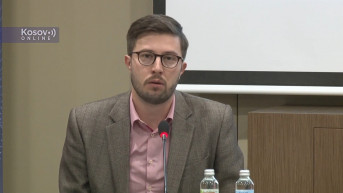
Stefan Surlic, an associate professor at the Faculty of Political Sciences in Belgrade, stated for RTS that there will be no change in policy in Pristina until the entire society in Kosovo feels certain consequences through concrete sanctions, noting that for now, Albin Kurti is only facing some measures that are not called sanctions.
He pointed out that surveys show Kurti's popularity is growing in Kosovo and that the majority of citizens of Albanian nationality actually support the policy he is currently implementing in the north.
"Which means they don't see any consequences of such a policy," Surlic emphasized.
Given the situation in Kosovo, Surlic says that the ball is in the court of international actors and that this is a turning point that can jeopardize the entire Brussels dialogue and everything that has been achieved so far in the process of normalizing relations between Belgrade and Pristina.
"However, the ball is in the court of international actors. Will they truly create conditions for de-escalation? Will they exert crucial pressure on Pristina and change this unsustainable factual situation in the long run regarding the lives of people in northern Kosovo? In that sense, I believe that de-escalation can happen through dialogue, and it is important for the two sides to meet, and meetings in Brussels should not be rejected, but at the same time, the entire dialogue should not be rendered meaningless so that after so many years we still have the topic of people's security, their basic rights, and their freedoms," Surlic stated.
He points out that, unfortunately, international actors still perceive the entire Western Balkans through crisis management, and they insist on establishing peace first while everything else can be subject to compromise.
When asked if he expects Pristina to be punished for its recent actions, Surlic says that the rhetoric is certainly harsher, but the usual diplomatic language of "we call on both sides" is still being used.
"We shouldn't continue using those kinds of softened diplomatic formulations that make no sense. The key responsibility lies with one side, and that is Pristina. Josep Borrell actually highlighted the conditions that President Aleksandar Vucic reiterated. De-escalation can happen if special police forces are withdrawn, if the existing mayors are relocated, if new elections are called, and if the formation of the Community of Serb Municipalities begins. For now, Kurti is only facing some measures; they are not called sanctions," Surlic adds.
Speaking about proposals for repeat elections in northern Kosovo, Surlic believes that it is the only way out and that it is the only acceptable solution.
"There must be a legitimate and legal authority on the northern part elected by the majority population. In this case, they are representatives of the Serbian community, and only then can we talk about the Community of Serb Municipalities and about ensuring what is vital for them, which is autonomy in key areas that include healthcare, education, local development, and planning," Surlic concludes.
0 comments