
Surlic: Through the Postal Savings Bank, material security for the Serbs can be institutionally ensured
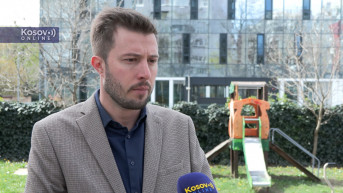
Assistant Professor at the Faculty of Political Sciences Stefan Surlic says that a solution for financing Serbian institutions in Kosovo can be found if international actors genuinely want to make progress in the dialogue. In his assessment, at yesterday's round of dialogue in Brussels, Belgrade had a very constructive proposal on how to preserve the normal functioning of the Serbs and Serbian institutions because the existence of the Postal Savings Bank "is an institutional way to ensure financial, or rather, material security for the Serbs in Kosovo."
"Without this minimal concession, we just continue with a very obvious policy of completely undermining the normalcy of life for Serbs in Kosovo. Unfortunately, we haven't seen any willingness from Pristina to make concessions in terms of repeating only those measures that are in line with the regulation of the Central Bank of Kosovo. This would have to change, and it's impossible without international pressure. Perhaps this story about the Council of Europe will be presented as a slightly open door in the sense of: 'let's make a concession with the dinar so that we confirm membership in the CoE,' let it be some carrot from international actors to Pristina," Surlic says for Kosovo Online.
The Postal Savings Bank, as he explains, would have to have a license from the Central Bank of Kosovo, but it would enable all entities in the Serbian system to be legal and for payment transactions to function normally.
"Here, it's not just about the currency, but whether someone is a legal entity in Kosovo. How can the healthcare and education systems operate normally with the budget when Pristina not only bans the dinar but also prohibits them from existing as legal entities and having accounts in banks? This is a much bigger issue than the one constantly reiterated by Pristina: just exchange dinars for euros. It's about whether institutions within the Serbian system will survive and whether the Serbs will function normally or not," Surlic says.
He adds that the issue of the dinar shouldn't have been on the table at all because it's a technical question that could have been raised only after the formation of the Community of Serb-majority Municipalities. According to him, it's obvious that this issue was forced with the intention of blocking further dialogue between the two sides.


comments