
Tanaskovic: In the Muslim world, Serbia has a great reputation and support, the situation for Kosovo is not particularly positive
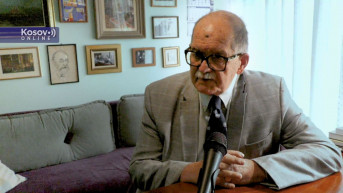
In the Muslim world, Serbia has a great reputation and countries that support it. He is managing to develop better relations with some countries that have recognized the independence of Kosovo, which is important because then those countries do not have as much motivation to actively fight in lobbying for the recognition of Kosovo's independence, says Darko Tanaskovic, an Islamologist and former Serbian ambassador to Turkey and the Vatican, for Kosovo Online.
As he adds, of course there are exceptions, such as Turkey, which on the one hand develops very good relations with Serbia and which is one of the countries that most persistently lobbies for the recognition of Kosovo's independence.
On the other hand, according to Tanaskovic, the situation among Islamic countries towards Kosovo is not particularly positive.
Commenting on the meetings that the President of Kosovo Vjosa Osmani had with representatives of Islamic countries last week in New York, where the General Assembly of the United Nations was held, and in which Osmani sought support for membership in international organizations and new recognitions, Tanaskovic assesses that Osmani does not have much reason for optimism after those consultations.
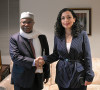
Among the meetings that Osmani had, there was also a meeting with the King of Jordan, Abdullah II, as well as with the Secretary General of the Organization of Islamic Cooperation (OIC), Hissein Brahim Taha.
"Just like last year, during the session of the UN General Assembly, the president of the so-called Kosova's Vjosa Osmani lobbied very intensively in the corridors of the UN building on the East River. As for Jordan, he is an old ally of Kosovo. When I was the permanent representative of Serbia to UNESCO in 2015 and when the battle was being fought against the admission of Kosovo to UNESCO, if we exclude Albania, which basically led the entire action and which made the request, Jordan was among the most active countries in supporting Kosovo and there is nothing new there. The Secretary General of the OIC is from Chad, a country that recognized Kosovo in 2012, but he does not have too much influence in this organization, with the fact that he can influence the agenda of the conference and the fact that there is a draft Resolution on inviting all OIC countries to recognize Kosovo. It is not difficult for them to vote for such a resolution because they have among their members the majority of countries that have recognized Kosovo, but such resolutions have already been passed and did not give any particular results," says Tanaskovic.
He indicates that out of 57 members of the OIC, about thirty have recognized the independence of Kosovo and that this percentage is lower compared to the countries of the European Union, which, he says, might not be expected.
"On the other hand, from the very beginning, there was a distinct tendency to portray, by inertia with the events of more than two decades ago in Bosnia and Herzegovina, that the conflict in Kosovo and Metohija is essentially a conflict between Islam and Christianity and that Muslims are threatened there , so that from the point of view of Islamic solidarity, Muslim countries express their support for Kosovo, including the recognition of its independence. That story, however, did not pass because for many reasons it became clear that this is not about any inter-religious conflict, but that it is purely political, territorial and other reasons. Because of this, Pristina has long been dissatisfied with the response of the Muslim world to their requests to be internationally recognized and to support their international affirmation," explains Tanaskovic.
In the Muslim world, he adds, countries that have not recognized Kosovo's independence have strong reasons for doing so.
"Whether they are of a principled nature - adherence to international law, or what is much more common, which is that these countries themselves have certain problems of separatism and experience with this type of attempt to achieve the independence of their territories, so they will certainly not change that attitude ", says our interlocutor.
Overall, in the world, according to Tanaskovic, the situation today is less favorable than it was ten years ago in terms of the readiness of countries that did not recognize Kosovo to recognize it now.
"Since the beginning of the war in Ukraine, in the Muslim world, a greater affection towards Russia has been felt and a certain anti-Americanism is strengthening, which was otherwise strong in that world, and since it is known that in the background is the war of the collective West, i.e. the USA against the Russian Federation, I think that a factor that globally also does not contribute to the fact that a greater number of Muslim countries would recognize the independence of Kosovo at this moment is the fact that it is an American project. All in all, I wouldn't say that there are many reasons for optimism with Ms. Osmani after her consultations," concludes Tanaskovic.
As some of the countries in the Islamic world where Serbia has support for its views, our interlocutor points out Morocco, Algeria, Indonesia, Iran...
"There is also Egypt, which actually froze relations with Kosovo, that is, it never developed them even though in special circumstances they formally recognized Kosovo in the last days of President Morsi's rule," says Tanaskovic.

0 comments