
Terzic: Ethnically motivated attacks are part of Albin Kurti's broader anti-Serb agenda
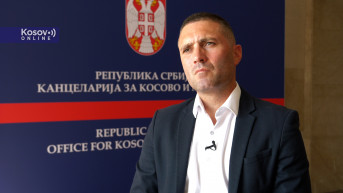
Milos Terzic, Deputy Director of the Office for Kosovo and Metohija, said that ethnically motivated attacks against Serbs in Kosovo are part of Albin Kurti's broader anti-Serb agenda, with the tacit support of part of the international community. He said that Belgrade, as before, will continue to work to improve the position of the Serbian people in Kosovo, both institutionally and materially.
Terzic notes that it must always be borne in mind that since Albin Kurti came to power in Pristina, more than 800 ethnically motivated attacks targeting Serbs exclusively have been recorded, including attacks on children.
“We always talk about what is currently happening, but we also remind people of the attacks on Serbian children, including the shooting of Serbian children in Gotovusa on Christmas Eve. Everything Serbian has been attacked. What is needed for an act to be classified as an ethnically motivated attack is a motive, and Albin Kurti's motive is to attack everything Serbian. He has clearly defined goals in his political program, and those goals include unifying the two Mitrovicas, which cannot happen based on everything agreed in the 2013 and 2015 Brussels Agreements and the part concerning the establishment of the Community of Serb Municipalities,” Terzic told Kosovo Online.
He added that another goal of Albin Kurti's is Pan-Albanianism, or the creation of a “Greater Albania.”
“The goal is the ethnic cleansing of Kosovo and Metohija, driving out all remaining Serbs living in the southern Serbian province, and abolishing Serbian as an official language. Accordingly, all these ethnically motivated attacks on the Serbian people and Serbian children are directly connected to Albin Kurti's goals. The motive is to attack everything Serbian, and that is why we view these acts in this way. In other words, ethnically motivated attacks are actually part of Albin Kurti's broader anti-Serb agenda, with the tacit support, evidently, of a part of the international community, which we can say is complicit in these processes. Here we are also referring to everything that has happened over the past month,” Terzic said.
In his view, the intention to open the bridge over the Ibar also represents a major incident and a departure from dialogue.
“There is also the beating of Nenad Raskovic. In connection with that case, we can see that certain disciplinary proceedings have been initiated, which shows that members of the so-called Kosovo Police subjected that innocent man to terror. We have seen what they did at Gazivode as well, and the sole objective is an anti-Serb campaign, which is a reflection of Albin Kurti's anti-Serb policy of driving Serbs out through pressure. That is something the Serbian state will never allow. We will also point out to that part of the international community what kind of regime this is, because that regime is creating unbearable living conditions for the Serbian people. In addition to what Kurti is doing, the attitude of international actors, the EU, KFOR, and EULEX, is also important because if they do not stop what Kurti is doing, we can say nothing other than that they are complicit in this process,” Terzic said.
Asked what needs to happen for the international community to respond more concretely to ethnically motivated incidents against Serbs, he said that foreign representatives have issued statements in such situations, but that these have been sterile and anemic statements.
“The Serbian people in Kosovo and Metohija gain nothing from that. Concrete measures need to be taken against the provisional institutions of self-government in Pristina and against Albin Kurti in order to stop this terror against the Serbian people. We will, of course, under the guidance and leadership of President Aleksandar Vucic, do everything within our power and fight to improve the position of the Serbian people in Kosovo and Metohija. We have been doing so institutionally and materially, and we will continue to do so,” Terzic stressed.
Recalling that, since 1999, KFOR troops “armed to the teeth” entered Kosovo pursuant to Resolution 1244 and the Kumanovo Military-Technical Agreement, he pointed out that the greatest crimes, pogroms, and ethnically motivated attacks against Serbs in Kosovo occurred precisely after June 10, 1999.
“They did not want to do what they were obligated to do, to guarantee the security of every resident in the southern Serbian province, regardless of their ethnic, religious, or any other affiliation. They clearly positioned themselves as someone who wanted to participate in building the so-called independent Kosovo. They failed to do that, and we will never allow them to do so. This is also demonstrated by President Vucic's diplomatic skill, to whom the greatest credit goes for the fact that 28 countries withdrew their recognition of the so-called state. This is causing enormous nervousness in Pristina because they did not achieve what they expected to achieve by 2012,” the Deputy Director of the Office for Kosovo and Metohija said.
Terzic also stressed that it is concerning that KFOR had similar security assessments, such as the one concerning the bridge over the Ibar, ahead of March 17, 2004.
“We all remember very well what happened then. NATO silently watched Serbian holy sites being burned and Serbs being expelled and killed in Kosovo and Metohija. So, it is up to us to raise these issues and use all available means to fight within the framework in which we can currently operate. My impression is that Kurti wants to provoke certain reactions from official Belgrade and the Serbian state. We must be wise, we must be smart, and we must continue to strengthen Serbia economically, politically, and in every other sense until we reach a point where, in accordance with our political and diplomatic activities, we will be in a position to respond as we believe we should,” Terzic concluded.

0 comments