
Troude: Awareness that Kosovo can happen to everyone in Europe is raising in France
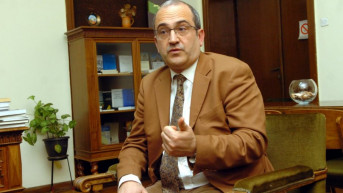
If Kosovo "did not violate any valid regulation of international law" when making the declaration of independence, as argued by Hisashi Owada, the president of the International Court of Justice in 2010, it means that the power of demography has sovereignty at the expense of the country of the people to which the country historically belongs. If we Europeans would agree to such an understanding of rights, I cannot even imagine the future of certain regions of my France, said Professor Alexis Troude from the University of Versailles after his visit to Kosovo, Novosti reports.
The French delegation of politicians led through Serbia by Professor Troude is currently writing a report to the European Parliament on impressions from Kosovo and the state of law, and it will be read at the first spring sessions. Serbs, Gorani, Roma, or representatives of communities whose human and other rights have been mercilessly violated for years will personally testify from the benches of the EU Parliament.
The professor from Versailles reveals that in the conclusion of the document, it will be requested that the future solution of the Kosovo issue be exclusively within the framework of Serbia and on the basis of UN Security Council Resolution 1244.
"The state of Kosovo, since its establishment in 2008, has represented a humanitarian disaster in the heart of Europe. It is characterized by the omnipresence of mafia activities, including organ trafficking, and unprecedented ethnic cleansing. The Serbs are by far the worst because they are outcasts from the historical cradle of their own nation. Serbs, we have seen for ourselves, they show tremendous courage and perseverance to survive. The things we saw on the spot exceed the worst information about Serbian suffering that can be found in the European media," Troude says.
What places have you visited in Kosovo?
We started from Kosovska Mitrovica via Gracanica to Prizren, Osojan and Velika Hoca, and then to Decani. How far western hypocrisy has gone when it comes to Kosovo and Metohija, we were convinced right at the beginning through conversations with Father Sava Janjic from the Visoki Decani monastery, who informed us of the fact that he knew about the suffering of all Serbs in Kosovo and Metohija. The monk testified to us that he hosted hundreds of foreign delegations and high-ranking emissaries, some of whom stayed behind the monastery walls for a long time. Despite the promises and hopes that their powerful countries would help Albanians come to their senses and not use violence as a political tool, nothing happened.
What could be different after your report?
We are thinking of sending people from France to see for themselves. Next summer, we plan to send ordinary people who come forward as humanitarian workers or party volunteers to Velika Hoca, Osojane, Prizren. There they will help the Serbs in the reconstruction of houses, churches, around the vineyards. Now we have contacts, and there are also French people who want to see and help.
Who are these French people?
Those who have the truth at heart. In particular, Nicolas Bay, MEP, is now the vice-president of the new party in France Reconquête (Reconquest), which emerged from the party of Marine Le Pen. It is the fastest growing party in our country and already gathers 130,000 French people. You Serbs know Colonel Ogar, but there are also many professors, Marion Marshall from Lyon, the famous lawyer Stefano Alien, those whose politics are different from the globalism that Paris has been professing for years.
You say the problem is French globalism?
Let me be more clear. When we were returning to Kosovska Mitrovica from a visit to the Serbian enclaves and crossed the bridge over the Ibar River, Nicholas Bay turned to me and said: This is the bridge on which the common civilization is defended. Previously, while driving through Kosovo and Metohija, we realized that there is no sign of Albanian culture and history there, but only fake and clumsy monuments to KLA terrorists and an incredible number of gas stations, probably monuments to the mafia. And it is the only heritage of the state that our France recognized in 2008.
Are you not satisfied with France's policy towards Kosovo?
As a matter of principle, I discuss the politics of my country and its paths through history only in the French media. It is true that France has been on a bad path and I hope with all my heart that we will have the strength to change the policy. When it comes to relations with Serbia, until recently the French ambassador Fredric Mandolini testified to me that until 2016 there were no closer relations with Belgrade, but that was left to Brussels. Since a few years ago, France is returning to the Balkans through large infrastructure projects. The French are also aware that they cannot expect to just make money in Serbia, but also have to stay politically in the Balkans for the sake of their future.
Are you convinced that today Kosovo is networked with mosques?
There are mosques, but no believers. There are things that are very important to today's geopolitics. You Serbs may not have noticed, but some of the largest Islamic countries in the world have not recognized Kosovo. Pakistan, Egypt, Indonesia, Algeria are just some of them. They are aware that it is only a political territory created by the Americans for the needs of their geopolitics by bombing in 1999. Do not be naive, ambassadors of Islamic countries in Belgrade, and they know very well that only in Velika Hoca, where after all the pogroms, several hundred Serbs remained, there are 12 churches built over the centuries. Maintaining good relations with Islamic countries is important for Serbia as well as for France.
Were you impressed by the organization of life in Serbian enclaves?
Until they see life in Gracanica, Osojan or Velika Hoca, or rather that a community can survive in a circle of hatred - Europeans do not believe. It is strange to them that such a horror ghetto exists on their continent. Even when, in conversation with people, they find out that their estates with houses are located five or ten kilometers away and that they cannot live there, then the Europeans become angry. Awareness is raising in France that Kosovo can happen to everyone in Europe.
Have you been in Kosovo before?
A year ago, I brought three delegations from my country to Serbia and Kosovo, and our first host is always Arnaud Gouillon. My organization is called the France-Serbia Collective and we are at the service of French politicians who want to understand the Balkans. The drowning of France in Brussels is the question of all questions in my country.

comments