
Stevan Mokranjac Music School – from Gracanica to major concert stages
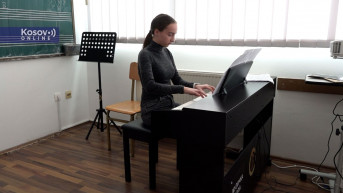
From its first lessons in a single classroom to performances at the National Assembly and awards at international competitions, the Stevan Mokranjac Music School in Gracanica has forged a distinctive path. Its students are living proof that talent, combined with the expertise of teachers, perseverance and a love of music, can flourish even in an environment where reaching major concert stages often requires additional effort.
The Stevan Mokranjac Music School in Gracanica is now one of the most prominent institutions for music education in central Kosovo, demonstrating that successful young artists can emerge even under challenging circumstances. Its students regularly return from competitions with top honors, with particularly notable achievements at national and international competitions.
Founded in Pristina in 1949, the institution has undergone numerous changes but has never abandoned its mission. After 1999, like many Serbian institutions, it was relocated from Pristina. Today, it is based in Gracanica, with satellite departments in Laplje Selo, Donja Gusterica, Susica and Strpce.
From Pristina to Gracanica – A Tradition Spanning More Than Seven Decades
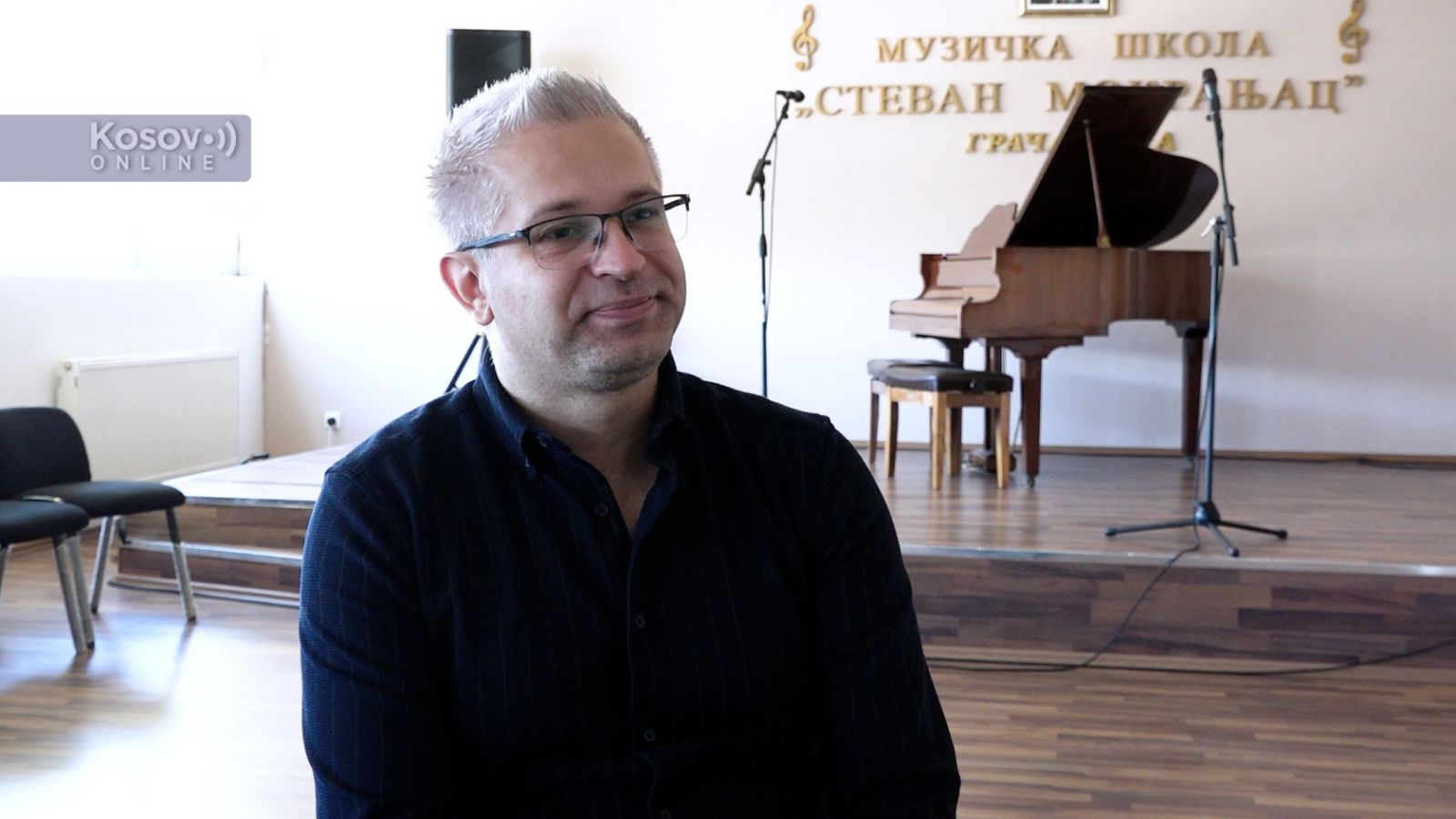
School principal Andrija Jovic recalls that the institution began operating as the Municipal Elementary Music School, while its first secondary music school department opened in 1962, marking the beginning of its further development.
"The first secondary music school department began operating in 1962, which we consider an important milestone in the school's history. Over the following years, the school continued to develop, going through various stages. It was originally based in Pristina, but in 2000 it was relocated to Gracanica. Today, we are here in Laplje Selo, in the school's main building," Jovic told Kosovo Online.
Today, a total of 205 students attend the school's elementary and secondary music programs. Classes are organized into different departments, and in addition to traditional instruments, the school strives to offer students a broader range of musical disciplines.
"We have four secondary music school classes, with an enrollment quota of eight students per class. This means that the secondary school currently has 25 students, while the rest attend the elementary music school. We currently have piano and accordion departments. However, as of this school year, we also have the option of offering guitar, violin, flute, traditional singing and solo singing, although these programs have been put on hold for the time being," Jovic explains.
Talent Is the Spark, but Hard Work Is the Path to Success
One of the questions the school's staff frequently encounter is how important talent is to success in music. Although talent is essential for identifying a child's potential during the entrance examination, the experience of the principal and his colleagues shows that outstanding results cannot be achieved without persistent effort.
"Some believe talent is the decisive factor, while others believe it is hard work. However, based on my experience and that of my colleagues, with whom I have worked at this school for 25 years, we have come to the conclusion that hard work is ultimately what matters most. Talent is important when enrolling in elementary or secondary music school, but it is not decisive for a student's further progress or for achieving the expected results, whether becoming a good pianist, accordionist or instrumental performer in general. Hard work is what makes the difference. Talent is the initial spark that allows our colleagues to recognize a student's potential during the entrance examination, but everything that follows comes down to hard work," Jovic emphasizes.
The students' achievements are best reflected in the numerous competitions in which the school participates, both domestically and internationally. Competition is fierce, but despite the distances involved and organizational challenges, young musicians from Gracanica regularly rank among the best.
"We have participated in a large number of competitions, both national and international, alongside students from other schools. There are approximately 60 music schools in central Serbia, and we are very active in this field. In recent years, we have achieved exceptionally good results, mostly ranking among the top competitors. Participants are ranked according to the number of points they earn, meaning there can be multiple first, second and third prizes. At virtually every competition so far, we have ranked among the top three. That is a significant achievement for our school, considering the conditions in which we operate," the principal says.
Although the school is well equipped with teaching materials, instruments and qualified staff, Jovic points out that traveling to competitions often requires additional effort. The distance to competition venues demands more time, planning and commitment, but all those difficulties are quickly forgotten when students return with awards.
"I can say that our working conditions are good. The school has all the necessary teaching materials, instruments, staff and everything else it needs. However, our location and the distance to the places where competitions and other events are held mean that we have to travel considerable distances and invest much more effort simply to get there. But when we return with good results, we simply forget all that extra effort and the difficulties we faced in making it happen," Jovic says.


Students Are the School's Gems
The dedication of the school's teachers is another key factor behind its success, according to Nemanja Djordjevic, a teacher of specialized music subjects, who describes his students as the institution's greatest treasure.
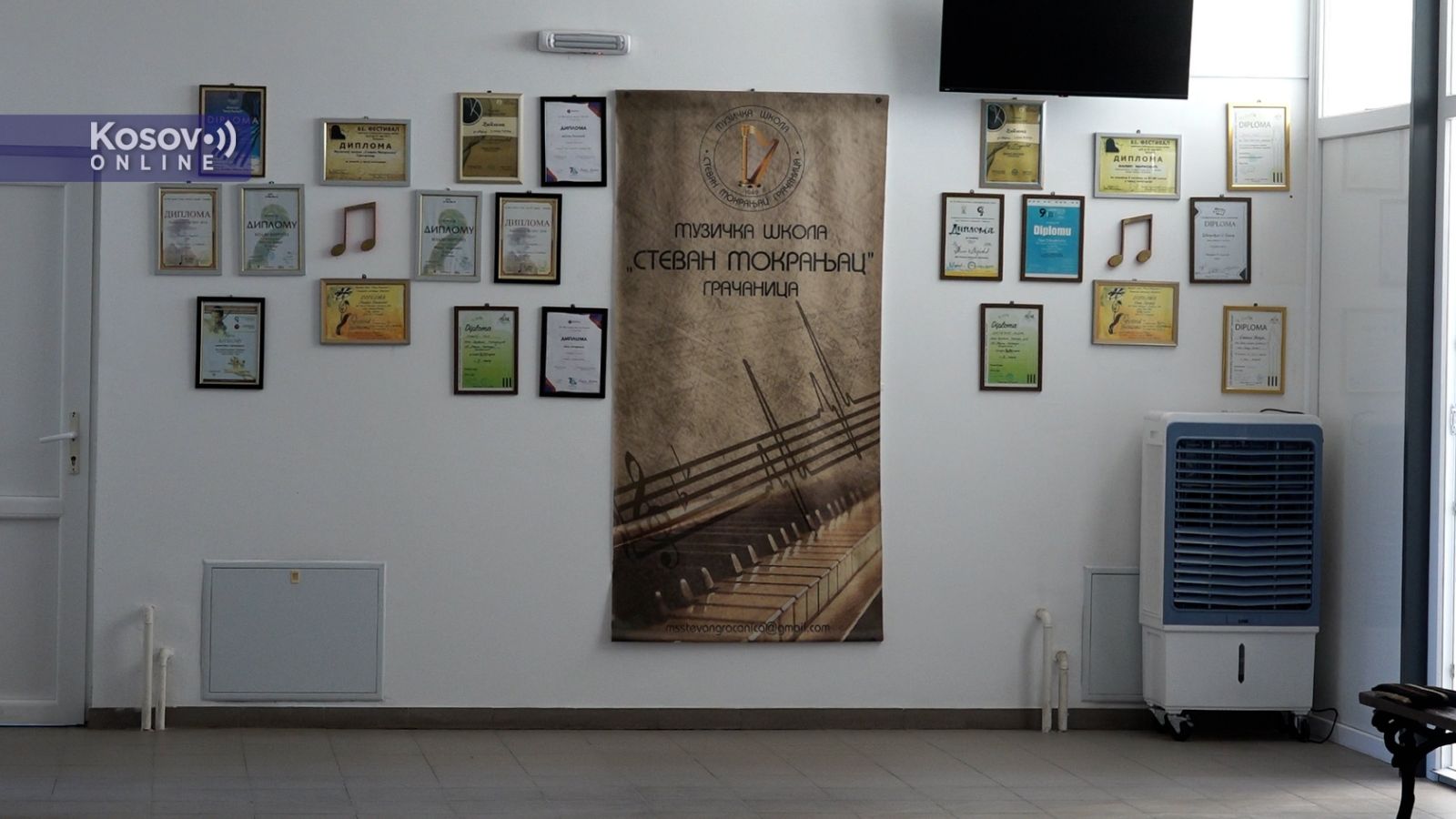
The achievements of his students are particularly impressive, with more than 50 awards to their name.
"I am extremely pleased with my students. They truly are our gems. We have participated in many competitions, both national and international, and most of the awards have been first prizes, or occasionally second prizes. For example, our student Lena Josifovic recently received an award recognizing her as the most promising young pianist in Serbia. That speaks volumes about how talented our students are. Last year alone, our students brought home five first prizes from an international competition in Sremska Mitrovica. They are, in a way, a source of motivation for us as teachers," Djordjevic says.
Nevertheless, he does not separate talent from daily practice. This is particularly true of the piano, an instrument that demands discipline, consistency and hours of practice, regardless of other commitments and everyday challenges.
"Talent is certainly necessary, but alongside talent, an enormous amount of hard work is required, because the piano is an instrument that does not forgive even a single day without practice. But once you fall in love with the instrument, you simply cannot stay away from it," Djordjevic emphasizes.
From Former Student to Teacher
Djordjevic's love of the piano developed in childhood, influenced by family members who were also involved in music. The first instrument he played was the accordion, but he later chose the piano as his main instrument.
"My brothers used to play music – my cousin Aleksandar, and then Dragan. Listening to them made me truly fall in love with music. I initially played the accordion, but later I started playing the piano and discovered all the beauty of that instrument," he recalls.
His work carries special significance because he now teaches at the very school where he took his first steps in music. Once a student who learned under the guidance of the current principal, Andrija Jovic, he now passes on his experience to new generations.
"I believe this is already my eleventh year of teaching. I certainly grew up musically at this school. My mentor was Professor Andrija Jovic, who is now the principal. Even back then, we started taking part in competitions and working on improving our skills. Of course, not everything was as accessible as it is today, particularly sheet music and recordings of compositions. Every era has its own challenges. Today, we have the internet and various online platforms, and if you use them wisely, they can help you make tremendous progress," Djordjevic says.
The conditions in which he once attended classes were considerably more modest. Nevertheless, the lack of space and resources did not prevent him from progressing, an experience he now shares with his own students.
"We used to have classes in a single classroom in Gracanica, which made teaching and learning quite difficult. But that certainly did not stop us from progressing and working on ourselves," he says.
He advises young musicians not to take their talent for granted but to nurture it and make the most of it, because music, in his view, deserves a special place in their lives.
"As far as I am concerned, music is the most beautiful form of art, and it should certainly be a top priority for all talented students," Djordjevic says.
For the school's students and teachers, every competition is an opportunity to demonstrate what they have learned and to measure their skills against those of their peers and colleagues from other communities. National and international festivals are among the most important events, while concert performances offer young musicians the chance to present their work to a wider audience.
"As for performances, last year we performed at the National Assembly of the Republic of Serbia, where our students truly excelled. Everyone in attendance was delighted. It was a concert featuring two other music schools from Belgrade, and we demonstrated that our education system here is vibrant and that we have excellent students. We certainly have more performances ahead of us. We will perform at the headquarters of the Serbian Orthodox Patriarchate, and again at the National Assembly, I believe sometime in the spring. We also have a New Year's concert and the National Festival coming up, and we are already actively preparing for all these events," Djordjevic says.
Young Pianists – Awards as Motivation for Further Success
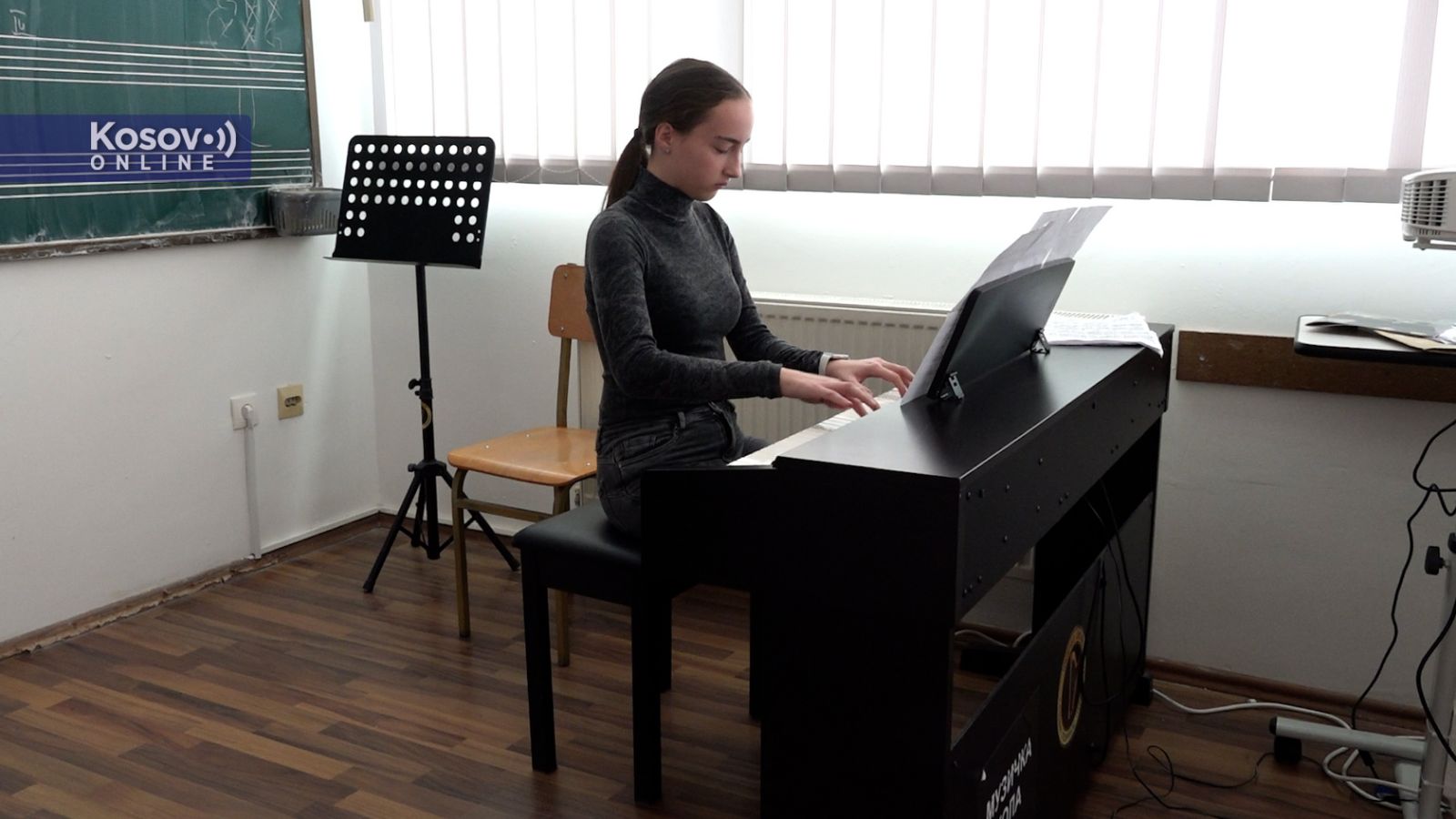
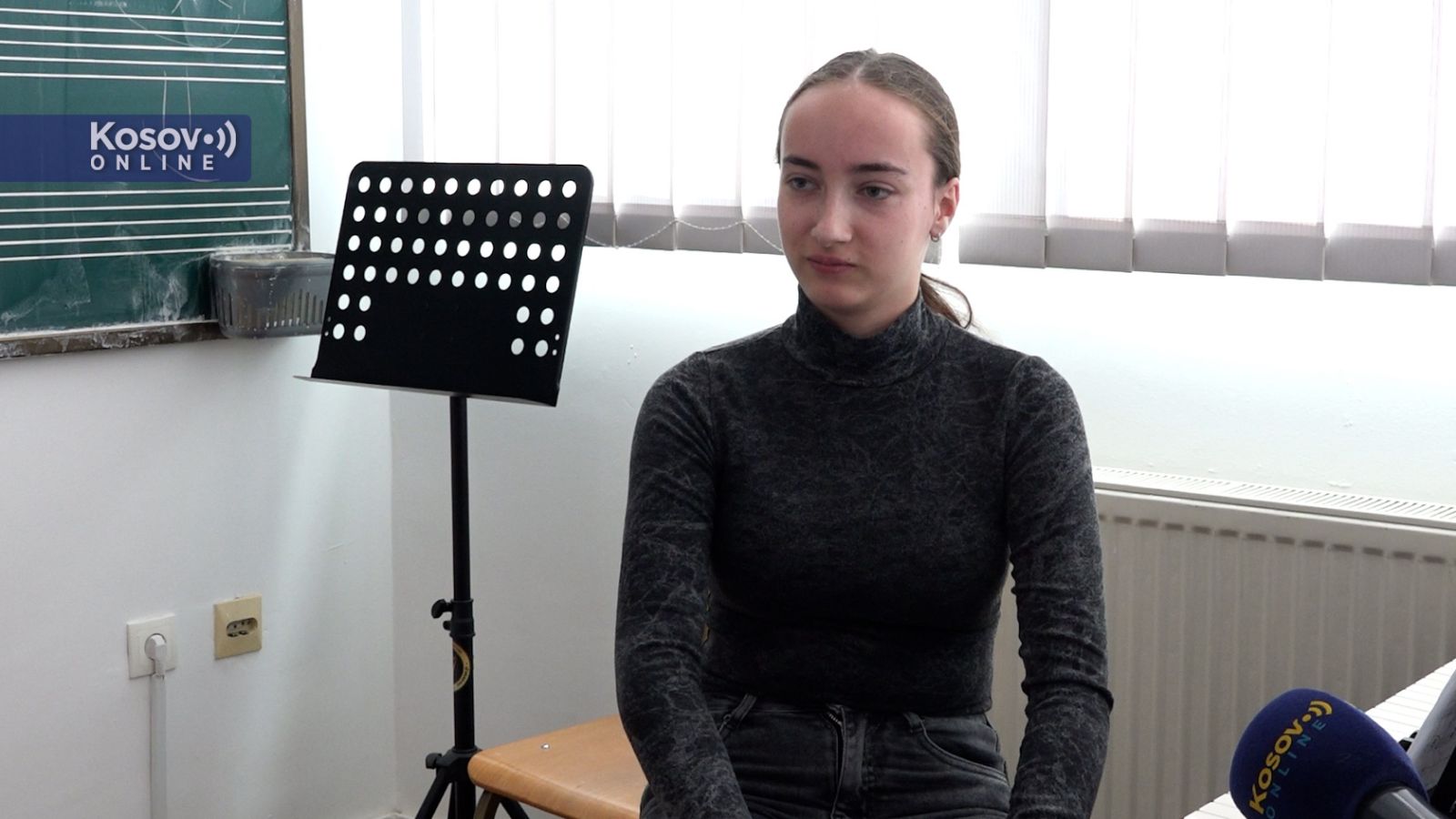
Among the students whose achievements demonstrate the quality of education at the school is Lena Josifovic from Gracanica, a fifth-grade music school student. Although still in the early stages of her musical education, she has already participated in six competitions, winning three first prizes and three second prizes. Receiving a special award as Serbia's most promising young pianist has been another important milestone in her musical journey.
Lena says she has loved music since early childhood and that the piano became her favorite instrument from her very first lessons.
"I have always loved music, especially the piano, although I also like the violin. When I started first grade, my teacher first showed me how to play the C major scale and some basic pieces, and I really enjoyed it. I have participated in six competitions and won three first prizes and three second prizes. Those awards really mean a lot to me," Lena says.
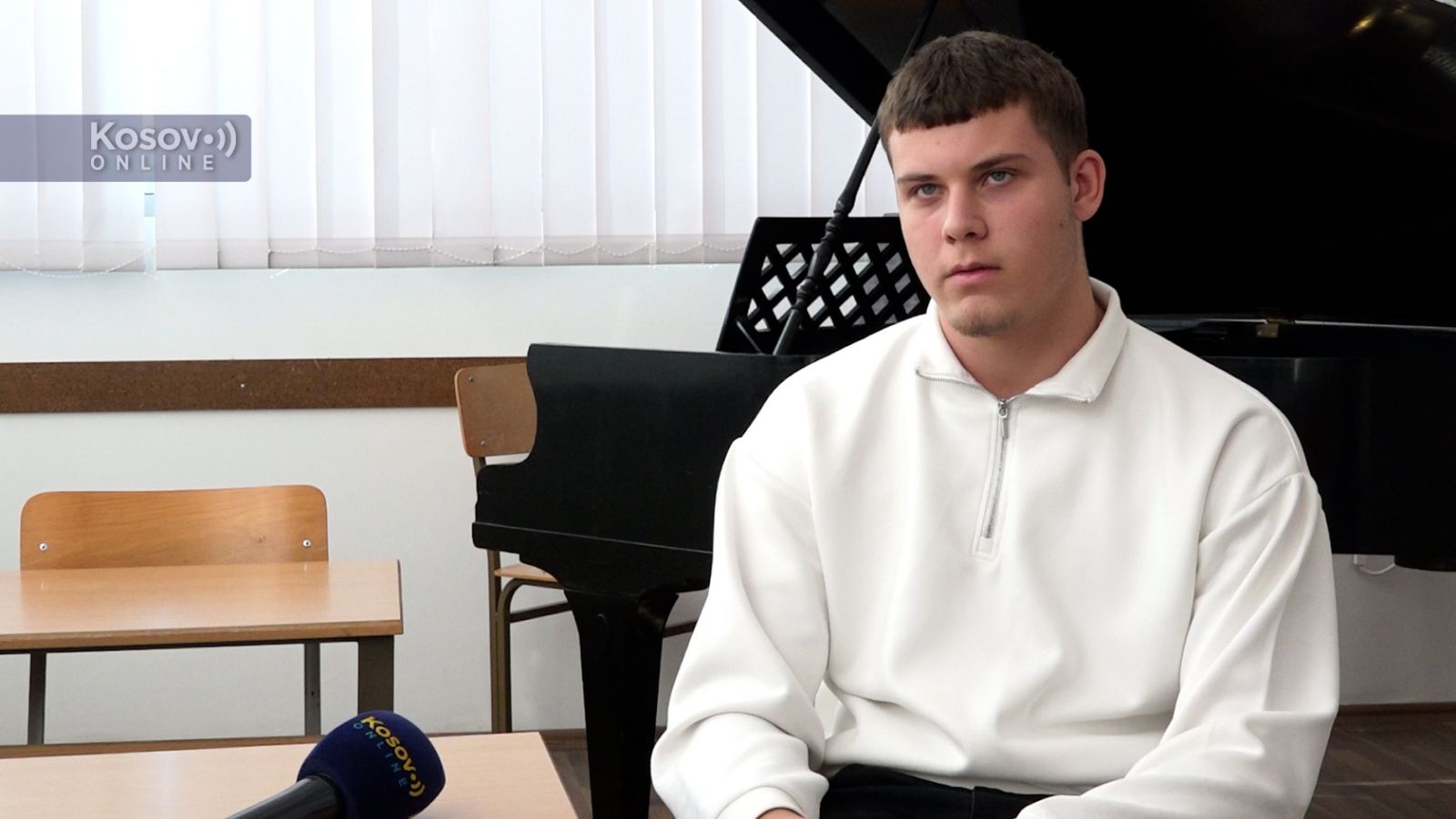
The experience of her fellow student Andrej Stolic from Gracanica shows that the path to musical success does not necessarily begin with confidence in one's own talent. He says his teachers were the first to recognize his potential, while his love of the piano grew with every new lesson and every piece he learned.
"Playing an instrument had always been my dream, ever since I was little, and I simply fell in love with the piano from the very beginning. I never really thought of myself as particularly talented, but my teachers kept telling me I was very good at it," Andrej says.
For him, concert performances are particularly important alongside competition awards, as they provide an opportunity to demonstrate before an audience what he has spent so much time and effort practicing. Although he initially suffered from stage fright, he has gradually learned to overcome it.
"It feels good. I used to get nervous sometimes, but not so much anymore. You get used to things," the young musician says.
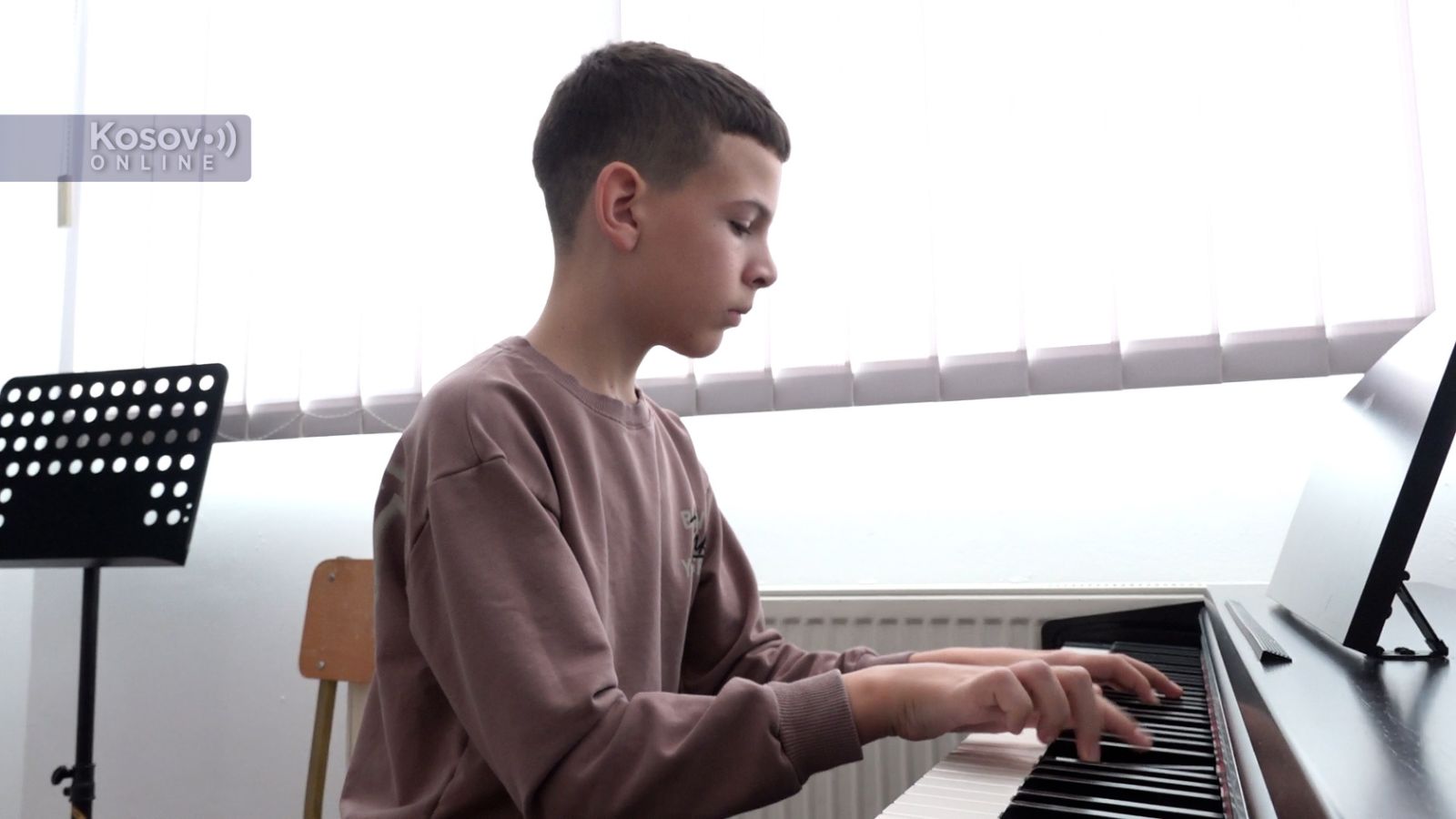
Another young pianist is 13-year-old Pavle Djordjevic from Crkvena Vodica, who discovered his love of the instrument relatively late but soon decided to devote his time to it. Winning first prize at a competition in Sremska Mitrovica has been one of his most significant experiences so far.
"At the age of 13, I fell in love with playing the piano and decided to pursue it, so I enrolled in music school. I took part in a competition in Sremska Mitrovica and won first prize. It feels really good, and that award means a lot to me," Pavle says.
For the Stevan Mokranjac Music School, every award is both a recognition of the work accomplished so far and an incentive to achieve even greater success.
And judging by the talent and dedication of its students and teachers, many more concert stages and accolades await the young musicians from Gracanica.


0 comments