
Troude: Quint's support for Pristina is weakening, good news for both Serbia and Europe
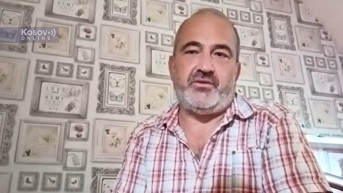
French historian and professor of geopolitics at the University of Versailles, Alexis Troude, tells Kosovo Online that the situation regarding Kosovo must be viewed in the broader context of the weakening EU, which is why the Quint's support for Pristina is no longer the same as it was in 2016. He emphasizes that this is good news for both Serbia and Europe.
"The situation with the Quint is not the same as it was in 2016, when the agreement on Kosovo and Metohija was formed. Public opinion in France has changed. The same is true in Germany. Germany's support for the Albanian side is not as strong as it was eight or ten years ago. The Quint is, however, divided, and I think this is good news not only for Serbia but also for Europe because the situation in Kosovo must be considered in a broader context, including the weakening of the European community, European military strength, and the context of a new world order," Troude stated.
Commenting on the French Ministry of Foreign Affairs' reaction that Pristina's unilateral actions affect the everyday life of the Serbian community, Troude says that the Quint is still not divided on this issue, but that official Paris has had the ambition to protect all minorities in Kosovo since 1999.
"The only new thing, in my opinion, which can be seen every day in Brussels and New York, is that the Albanian side has less and less support from the major powers. This is very interesting because it should lead to peaceful decisions that favor minority communities," the historian said.
He adds that the policies of current Prime Minister Albin Kurti are receiving less and less support even among Albanians themselves.
"The Albanian people do not support Albin Kurti's policies. Many Albanians from Kosovo have gone abroad. They have gone to work throughout Europe," Troude emphasized.
He dismisses the possibility that a unilateral decision to open the main bridge on the Ibar could increase tensions or even, as some Albanian analysts suggest, an "explosion" of violence.
"As usual, I think there will be tensions and provocations, especially from the Albanian side, but it will not lead to a major conflict. We must consider that such a conflict would not be in the interest of America, and even less so of Russia. We also know China's position, which has always been strong on the issue of Kosovo and Metohija, and it would never support new tensions or another war," Professor Troude concluded.



0 comments