
Vanovac: Those who had an interest in the March pogrom still prevent reconciliation today
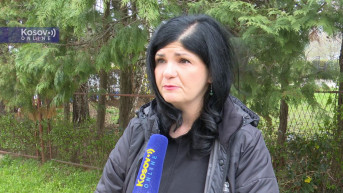
Ivana Vanovac, president of the Association of Journalists of Kosovo and Metohija, stated that even 22 years after the March pogrom, Albanian media continue to treat the event in an unprofessional manner, and that editorial policies and those behind them are responsible. She told Kosovo Online that those who had an interest in the violence at the time are still influencing the situation so that reconciliation between communities does not occur.
Vanovac notes that the public would like to know that an investigation into the events of March 17 and 18 has been launched, and that a court process has begun that would have an outcome, but she points out that it still remains unclear who organized the two-day violence against Serbs.
“What we certainly know is who significantly contributed to mobilizing the public and citizens to take part in that violence. These were the media, which by publishing false news that a group of Serbs was behind the deaths of Albanian boys in Cabra provoked aggression among the population, so that even those who may not have initially planned or known that anything would be organized joined the violence – ordinary citizens,” she said.
She emphasizes that the lie that was persistently spread in the public at the time was the trigger for the violence and that there is absolute responsibility of the media for the scale in which it occurred.
“What is alarming is that even now, 22 years after those unfortunate events, we face the same problem every year, which is the equally unprofessional approach of Albanian media toward that day and that information,” Vanovac stressed.
She reminds that no one should forget that investigations carried out at the time by independent international bodies showed that the Serbian community had nothing to do with the drowning of the boys in Cabra.
“This is very important to emphasize, because if we constantly revive that narrative about us as perpetrators, about one community bearing collective responsibility for the deaths of innocent people, then we really face the problem that every year, on March 17, everything escalates again,” Vanovac said.
Editorial policy, and those behind it, she adds, are responsible for the way the media still report on the events of March 17.
“Simply put, those who had an interest in the violence in March, such terrible violence against the Serbian people and their property and cultural heritage, are the same ones who today decide that the time has still not come for the two communities to fully reconcile,” she said.
Vanovac notes that one of the first signals that reconciliation and mutual recognition of responsibility for the overall political context might occur will be the way media report on tragic events affecting the other community.
“That will probably be the first indicator that there is hope for stabilizing this area. For now, there are no signs that this will happen, and March 17, as the greatest tragedy, will likely be the first benchmark showing that things are slowly normalizing and that one side is ready to accept responsibility for the events,” she concluded.


0 comments