
Group of NGOs calls for respect for established facts on the March pogrom: Interpreting events through inaccurate narratives does not contribute to normalization
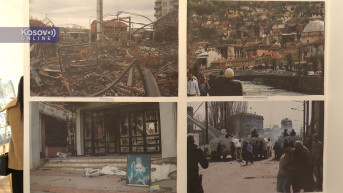
A group of non-governmental organizations has issued a joint appeal to institutions in Kosovo, the media, and the international community to respect established facts and adhere to professional standards regarding the March 2004 violence, warning against harmful rhetoric by political leaders and reporting by certain media outlets.
The NGOs recall that last week marked the 22nd anniversary of the March 2004 pogrom in Kosovo, an event which, they emphasize, remains the most serious wave of violence against non-majority communities since 1999.
International documentation on these events is extensive and well known, civil society organizations note.
“Investigations conducted at the time by the OSCE, UNMIK, and Human Rights Watch established that the violence was fueled by inaccurate and sensationalist media reporting, which attributed the drowning of three Albanian boys in the Ibar River to local Serbs, without any confirmed evidence. Subsequent investigations rejected these claims. Within 48 hours, 19 people lost their lives, hundreds were injured, more than 800 homes were destroyed, over 4,000 people were displaced, and 35 religious and cultural sites were damaged or destroyed. The OSCE concluded that, without inflammatory reporting, the scale of the violence would likely not have been as severe,” the statement reads.
They further state that it is therefore deeply concerning that, twenty-two years later, public discourse surrounding these events continues to reflect narratives that have already been unequivocally refuted.
“On 17 March 2026, during an official commemoration in Cabra attended by Kosovo’s Minister of Internal Affairs Xhelal Sveçla and the Mayor of South Mitrovica Faton Peci, the drowning of the children was attributed to ‘armed groups of Serbs’. This claim directly repeats allegations that international investigations have already deemed unfounded. The same narrative was reproduced in an official statement published on the website of the Kosovo Ministry of Internal Affairs. Presenting such claims as established facts in an official context raises serious concerns regarding the continued misrepresentation of verified historical findings,” the statement notes.
The organizations also recall statements made by Kosovo Prime Minister Albin Kurti and the Self-Determination Movement, as well as reporting by RTK two years ago.
“Such cases are not without precedent. During the marking of the 20th anniversary of the March events in 2024, similar narratives were disseminated through official communication channels of the Self-Determination Movement (LVV), while statements by Prime Minister Albin Kurti reflected interpretations that attributed responsibility in a manner inconsistent with the findings of international investigations. This continuity indicates that these are not isolated incidents, but rather a recurring pattern in public communication. Violence against civilians is presented as a justified or understandable reaction. Particularly notable is that during the 20th anniversary in 2024, the public broadcaster RTK aired and distributed content that reproduced similar unverified claims. This is especially significant given that initial reporting in March 2004, including by RTK, played a key role in spreading unverified allegations that contributed to the escalation of violence,” the NGOs state.
According to them, similar patterns have been observed this year as well.
“This year, several well-known media outlets, including Koha Ditore, Gazeta Express, Ekonomia Online, Dukagjini, Albanian Post, and Zeri, published content that reflects or relays unverified claims regarding the March events, further demonstrating how such narratives continue to spread within the media space. The repetition of these narratives in both political and media spheres does not merely indicate isolated inaccuracies, but rather the persistence of disinformation—understood as the deliberate or continuous dissemination of false or misleading claims despite the existence of verified facts. This distinction is particularly important given the passage of time and the availability of extensive documentation on these events,” the statement adds.
The NGOs warn that such an approach may create a sense of insecurity among minority communities, stressing the importance of demonstrating that lessons from 2004 have been learned.
“The continued spread of inaccurate narratives undermines factual accountability and blurs the distinction between verified information and false claims. This creates an environment in which harmful and inflammatory interpretations can become normalized, including those that shift responsibility away from violence against civilians. Most importantly, such an approach may further deepen divisions and feelings of insecurity, particularly among non-majority communities whose position remains sensitive and, at times, vulnerable. The concern is not limited to individual statements or isolated articles. What is evident is a pattern, particularly during anniversaries, when previously refuted claims are reintroduced without clarification or correction. This continuity raises important questions about institutional responsibility, the role of public discourse, and the extent to which lessons from 2004 have truly been internalized,” they state.
Responsibility for promoting facts lies with political leaders, and, as the NGOs emphasize, remembrance must not be used to deepen divisions.
“Political leaders and media bear an additional responsibility to ensure that public narratives are based on verifiable facts and contribute to stability rather than division. The absence of accountability for past disinformation, coupled with its continued reproduction, raises serious concerns regarding the resilience of the information space in Kosovo and its broader impact on interethnic relations. At the same time, it is important to emphasize that different approaches are both possible and necessary. Messages that promote dignity, factual clarity, and reconciliation—while acknowledging the suffering of all communities—demonstrate that public discourse can contribute positively to long-term stability. The manner in which societies remember difficult events matters. Memory should not be used to deepen divisions, justify violence, or perpetuate mistrust, but rather to strengthen a shared commitment to preventing recurrence and rebuilding trust,” the statement notes.
Civil society organizations called on institutions and media to uphold professional standards and promote established facts, and urged the international community to continue supporting accountability and reconciliation.
“We call on institutions in Kosovo to ensure that official communications reflect established facts and avoid the use or repetition of narratives that have already been refuted; on media organizations to adhere to professional standards, including accuracy, fact-checking, and responsibility for context in reporting; and on the international community to remain attentive to the impact of public discourse on interethnic relations and to continue supporting efforts that promote factual accuracy, accountability, and reconciliation,” the statement concludes.
The organizations emphasized that this statement is not intended to reopen debates about the past. According to them, all communities in Kosovo carry difficult experiences and legitimate grievances, but a sustainable and peaceful future depends on a shared commitment to truth, accountability, and the protection of all communities.
“Reinterpreting events through inaccurate or misleading narratives, especially in sensitive contexts, does not contribute to normalization. On the contrary, it can undermine the very foundations upon which normalization should be built,” the NGOs warn.
The appeal was signed by Nova drustvena inicijativa (NSI), Center for Affirmative Social Actions (CASA), Gracanica Online, Aktiv, Center for Advocacy of Democratic Culture (ACDC), Institute for Public Research, Institute for Territorial Economic Development (InTER), Humanitarian Center Mitrovica, Communication for Social Development (CSD), Center for Peace and Tolerance (CPT), Avenija, Center for Social Initiatives (CSI), Women’s Rights, and the Forum for Development and Interethnic Cooperation (FDMC).
0 comments