
Zecevic: The EU has no unified position on modified enlargement models, something may be resolved in June
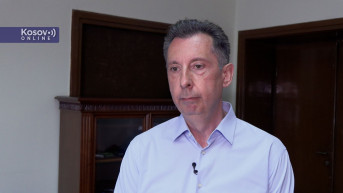
The Director of the Institute for European Studies in Belgrade, Slobodan Zecevic, stated that the European Union currently does not have a unified position regarding changes to the candidate accession process, but that something may be resolved on the matter at meetings next month. At the same time, he pointed out that candidates from the region have different ambitions – Montenegro and Albania seek full membership, while Serbia seeks economic integration.
According to him, the EU’s greater engagement regarding enlargement comes as a result of pressure from Ukrainian President Volodymyr Zelenskyy, who wants that country to gain member status by next year.
German Chancellor Friedrich Merz’s opinion is, Zecevic recalled, that this cannot be achieved, which is why he proposed associate member status for Ukraine.
“That is not envisaged under European Union law, because the EU is a more solid structure with federal aspects, so they do not like semi-statuses. But Merz decided to propose this in order to satisfy Ukraine, so that it would obtain associate member status while at the same time not being an EU member, but would be able to participate in institutions without voting rights,” Zecevic explained to Kosovo Online.
He notes that some states believe such an approach would be unfair to the Western Balkans and that every new member should be integrated according to merit, while before joining the Union they would be included in various economic programs, with larger allocations coming from Brussels.
Speaking about which of these scenarios would be best for candidates from the region, Zecevic said that depends on individual visions and ambitions.
“Some candidates have ambitions to become full members, such as Montenegro, which believes it could become a member in 2028, and Albania, which hopes for membership in 2030. When it comes to Serbia, whose negotiations are at a standstill, we hear statements from our government that progress in economic integration with the EU suits us, regardless of the fact that we will not become full members, because even that is better than a complete blockage in relations with the Union,” Zecevic said.
He also pointed out that, for now, there is no unified position within the EU on modified enlargement models.
“When it comes to Merz’s proposal, there is considerable skepticism in certain countries, Hungary, Austria... When it comes to the second plan, related to the Western Balkans, some countries, such as the Netherlands and the Baltic states, have objections regarding Serbia,” Zecevic said.
He pointed out that, although there is currently no consensus, there is a possibility that some progress on the matter will be achieved at meetings in June.
“Something may be resolved in June at EU meetings with the Western Balkans and meetings of the European Council and the Council of the European Union,” Zecevic assessed.

0 comments