
Zecevic: Rohde’s statements show dissatisfaction with the situation in Kosovo
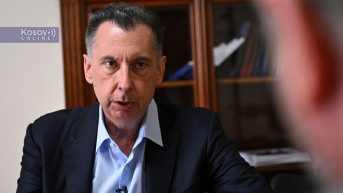
The Director of the Institute for European Studies, Slobodan Zecevic, assessed that the recent statements of the German ambassador to Kosovo, Jorn Rohde, should be interpreted as “dissatisfaction” with the situation in Kosovo, reflecting not only Germany’s stance but also that of the EU, due to the institutional crisis and the failure to implement the Brussels Agreement.
“His words reflect a certain dissatisfaction with the situation in Kosovo and with Kurti’s administration’s response to the implementation of the Brussels Agreement,” Zecevic told Kosovo Online.
He emphasized that Rohde’s statements are “indicative.”
“His reactions regarding the construction of two bridges across the Ibar, and generally his commentary on the implementation of the Brussels Agreement, are indicative and likely reflect dissatisfaction not only in Germany but also in the EU with the pace of implementation of what was agreed,” Zecevic said.
Commenting on the institutional crisis in Kosovo, Rohde, recalling his statement from April that “if your team is not successful, replace someone from the team,” has now included the “whole team” in the “football story.”
“After 55 attempts, maybe it is time to change the team, because I know the reactions of the opposition,” Rohde said.
Zecevic believes that such a statement can also be interpreted as a kind of warning to Albin Kurti.
“Perhaps it represents a veiled threat to Kurti that they might withdraw support. The process has been going on for too long to the detriment of the Serbs and to the detriment of the Serbian presence, at least in northern Kosovo, in the four municipalities where they form a sort of compact community,” Zecevic argued.
He added that statements from international representatives in Pristina are “heading in the right direction,” but that what is lacking is a concrete Western response.
“The statements are in the right direction, but they need to be backed up by concrete political actions from the EU and the US,” Zecevic emphasized.
Next week, on August 25, it will be ten years since the signing of the second Brussels Agreement, which defined many open issues between Belgrade and Pristina and specified the future form of the Community of Serb Municipalities.
Zecevic said that, from today’s perspective, “bad faith” on the part of Pristina is evident.
“Looking from 2013 to 2025, you can see there was bad faith on the Albanian side, tolerated by the US and the EU, to avoid implementing that agreement,” he specified.
He added that this is “building a consensus within the EU” that “enough is enough.”
“If Germany, once the patron of the Albanians, is now critical of them, that can certainly build a consensus within the EU that enough is enough when it comes to implementing the Brussels Agreement. This may be a sign of hope for the future, although I believe full implementation of the Brussels Agreement is necessary, as originally agreed in 2013,” Zecevic concluded.



0 comments