
Zikaj: Surprises possible in the election of the new EC chief, Plenkovic could accelerate the dialogue between Belgrade and Pristina
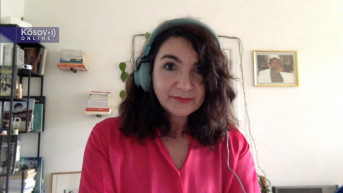
Erisa Zikaj, a correspondent for several Albanian media outlets in Brussels, believes that surprises are possible in the election of the new head of the European Commission because the Prime Ministers of Croatia and Greece, Andrej Plenkovic and Kyriakos Mitsotakis, are the most serious competitors to the current EC head Ursula von der Leyen. However, only the election of Plenkovic could accelerate the dialogue between Belgrade and Pristina and lead to a resolution.
"It will either be a second term for Ursula von der Leyen or we will have other candidates like Plenkovic or the Greek Prime Minister, though there are more candidates. But, compared to previous elections, these two names are potential candidates who could succeed and replace Ursula von der Leyen. This could happen because there are always big surprises in European elections. I must remind you that nobody knew or thought that Ursula von der Leyen would be the President of the European Commission. It was a big surprise for everyone because it depended on negotiations between political groups in the European Parliament, but also negotiations among states and governments in the European Commission,” Zikaj stated to Kosovo Online.
She mentioned that the election of Plenkovic or Mitsotakis as the President of the European Commission would partly influence the EU's relationship with the Western Balkans because they are representatives of countries that understand the problems and needs of the region. However, it would most impact the normalization process between Belgrade and Pristina because they are representatives of countries with opposing views on the independence of Kosovo.
“If one of them becomes the President of the European Commission, it will influence the process, not entirely, but in parts,” emphasizes Zikaj.
Plenkovic, she claims, would accelerate the dialogue process.
“If we get Andrej Plenkovic, who is clearly committed to the Western Balkans, he will push this region and will accelerate the dialogue between Belgrade and Pristina. We will have a complete commitment to finishing this process as soon as possible. Plenkovic knows the region very well. He knows it not just because he is from Croatia, but he has been a member of the European Parliament which makes it even easier for him to know every country in the Western Balkans and the problems they face. As the President of the European Commission, I see no different than the Belgrade-Pristina dialogue being accelerated and having a very constructive end,” says Zikaj.
According to her, Greek Prime Minister Mitsotakis is also well-acquainted with all the open issues in the Western Balkans region, but comes from a country that does not recognize Kosovo.
“And that could be a problem because if the President of the European Commission comes from a group of countries that do not recognize Kosovo, how can we expect that this process will be accelerated and brought to an end,” she emphasizes.
She states that this is best seen in the issue of lifting restrictive measures on Kosovo, which is currently blocked in the European Commission.
“When we ask the member states why this is so, they say they would like to lift these restrictive measures, but it is up to the European Commissioner and we do not know whether it is the High Representative or someone else who is stopping them. This is a concrete example of how one player in the European Commission can either block or accelerate a process. If you have a majority decision to lift restrictive measures on Kosovo, it is enough for one of the players to block it, and that will delay the entire process,” says Zikaj.
Erisa Zikaj, a correspondent for several Albanian media outlets in Brussels, observes that surprises are possible in the selection of the new head of the European Commission because the Prime Ministers of Croatia and Greece, Andrej Plenkovic and Kyriakos Mitsotakis, are the most serious competitors to the current EC head Ursula von der Leyen. However, she notes that only with Plenkovic's election could the dialogue between Belgrade and Pristina be accelerated and lead to a solution.
“It could either be a second term for Ursula von der Leyen or we might see other candidates like Plenkovic or the Greek Prime Minister, although there are more candidates. However, compared to previous elections, these two names are possible candidates who could succeed and replace Ursula von der Leyen. This is possible because there are always big surprises in European elections. I must remind you that no one knew or thought that Ursula von der Leyen would become the President of the European Commission. It was a big surprise for everyone because it depended on the negotiations of political groups in the European Parliament, but also the negotiations of states and governments within the European Commission,” Zikaj stated to Kosovo Online.
She pointed out that the election of Plenkovic or Mitsotakis as the President of the European Commission would partially influence the EU's stance towards the Western Balkans because they represent countries that understand the problems and needs of the region well. However, it would mostly reflect on the process of normalizing relations between Belgrade and Pristina since they are representatives of countries with opposing views on the independence of Kosovo.
“If one of them becomes the President of the European Commission, it will influence the process, not entirely, but in parts,” Zikaj emphasizes.
Plenkovic, she claims, would speed up the dialogue process.
“If we get Andrej Plenkovic, who is clearly committed to the Western Balkans, he will push this region forward and speed up the dialogue between Belgrade and Pristina. We will see a complete commitment to finishing this process as soon as possible. Plenkovic knows the region very well. He knows it not just because he is from Croatia, but because he has been a Member of the European Parliament, which makes it even easier for him to understand every country in the Western Balkans and the problems they face. As the President of the European Commission, I see no different outcome than an accelerated dialogue between Belgrade and Pristina, which will have a very constructive end,” says Zikaj.
However, she does not expect changes in the EU's positions towards the Western Balkans regardless of the fact that all analyses indicate a strengthening of right-wing parties.
“We expect a rise of the far-right in the European Parliament, and they are not too fond of EU enlargement, but they will not lead the processes in the European Parliament. The European People's Party will remain the first, largest, and main party and it will be up to them, along with the Liberals or Social Democrats, to form a larger coalition with the Greens in the European Parliament. They have a practical approach to EU enlargement,” explains Zikaj.
She reminds us that after nearly two decades, the issue of EU enlargement has come to the fore following the war in Ukraine.
“With Russian aggression in Ukraine, enlargement becomes a priority and it is currently a priority. Primarily because of the geopolitical situation. This means there won't be major changes in political groups in the European Parliament, because the far-right cannot change this decision, they are not strong enough to do so,” she adds.
She notes that there are expectations that Montenegro could be the first country from the region to become a full member of the EU by 2028 or 2030.
“It will be a very good sign for the region that EU enlargement is possible. In the last 15-20 years, we have seen a lot of opposition, nothing has happened, but now that process has started, it is a priority and we need examples, like Montenegro, to show that countries of the Western Balkans have a perspective not just on paper, but that it is truly possible. The residents of the Western Balkans need to have this perspective, they need it for their jobs, their environment, and many other things in their countries,” concludes Zikaj.


comments