
Zivotic: Kosovo issue at the top of the EU's priorities, war in Ukraine only accelerated that process
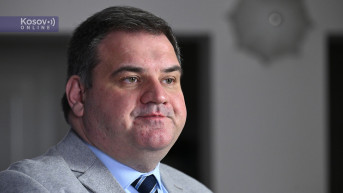
Professor at the Department of History, Faculty of Philosophy, Aleksandar Zivotic, assesses that the war in Ukraine has not fundamentally slowed down or altered the decision of the US and the EU to conclude the dialogue and normalization of relations between Belgrade and Pristina, but rather ushered that process into a "new phase."
"The international community's position on the so-called Kosovo issue hasn't fundamentally changed. These are processes that have been ongoing for many years, we can freely say decades. However, the moment that impacted the transition of this process into a new phase was the fact that certain structures in Europe have undergone reconfiguration. In that sense, the negotiation process between Belgrade and Pristina has entered a new phase, which primarily entails a sort of acceleration of what has been seen so far. Fundamentally, the Western world hasn't changed its position on the Kosovo issue; however, what it insisted on before, it now insists on much more strongly, swiftly, and forcefully. Essentially, all of this stems from the belief that the war in the East has led to new divisions, the creation of a new iron curtain, and everything fundamentally west of that line of formal demarcation the West simply considers its sphere of exclusive influence," Zivotic emphasizes.
The fact that the war in Ukraine shifted the focus of the US and the EU toward Eastern Europe, according to Zivotic, by no means implies that the Kosovo issue has fallen to the bottom of their priority list.
"It can freely be said that it's at the very top of those priorities. Considering the most severe ongoing conflict in Eastern Europe, the Western Balkans today represents the second zone of potential conflict escalation, not only of an ethnic nature but also on a much broader scale. Therefore, the Kosovo issue is quite high on the list of priorities of the Western world, primarily because they consider this conflict potentially dangerous within the depth of that zone they consider their sphere of exclusivity," Zivotic says.
When asked if Pristina has leveraged the conflict in Ukraine to launch a "counteroffensive" against Serbia, Zivotic emphasizes that Pristina has leveraged Europe's desire to shape the Western Balkans in a way that suits the EU.
On the other hand, Pristina aims to capitalize on changes in Serbia's foreign policy position.
"The mere fact that Serbia is the only European country that hasn't imposed sanctions on Russia, despite officially condemning the existing conflict, as well as other circumstances related to events in the East and Serbia's position, Pristina seeks to exploit and portray Serbia as a regional threat, as a diminished Russian ally that threatens neighbors in the region. In this way, they influence the creation of a desirable image of Serbia for them in the West," Zivotic emphasizes.
According to him, the normalization of relations between Belgrade and Pristina is in a way connected to the end of the war in Ukraine.
"In a sense, these are two separate processes, but they run parallelly and occasionally have points where they converge into an integral part of one process. During the period when the conflict in Ukraine is heading toward a 'prolonged conflict,' it will be of great importance to the Western world to channel existing conflicts in Kosovo and Metohija in the direction that suits them, primarily achieving what they euphemistically call stability but it is essentially pacifying a space according to their standards," he says.
Professor Zivotic was one of the few experts who, at the beginning of the war in Ukraine on February 24, 2022, stated that it wouldn't be a 'blitzkrieg' operation by Russia but a multi-year war that would simultaneously have very broad and serious implications globally.
He explains that all well-informed observers had that conclusion.
"My belief is that this conflict will last for a long time. It will go through various phases of more or less intense combat actions, but the end of that conflict isn't discernible at this moment. Of course, this forecast seems pessimistic, but circumstances compel us to reason in this way. Each of us would like this war to end at this moment, but the situation on the ground, relations among actors, both direct and indirect, indicate that there's no inclination for peace in the foreseeable future," Professor Zivotic concludes.


0 comments