
Baush: The region’s economies are “umbilically” tied to those of the EU
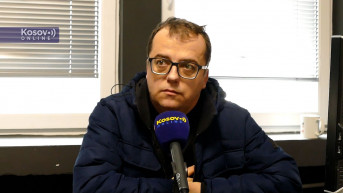
Economic analyst from Skopje Abil Baush assessed that the region’s economies are “umbilically” tied to the economies of the European Union and that they should focus on the European market, but will also have to do much more in order to make progress.
“We are naturally connected to the European Union. That is why we will have to use the opportunities to be part of the European Union, to use their funds, so that we can be competitive in those markets. Beyond that, the markets of the United States and China are too large for us here to take any kind of fan-like move or fan-like stance,” Baush told Kosovo Online.
He pointed out that, according to World Bank reports, economies in the region will have to do more, as those reports emphasize certain characteristics to which Western Balkan economies in particular need to pay attention.
“Everything depends on the nature of the Western Balkan countries and how they move through certain phases. Some states are experiencing economic growth. For example, according to that World Bank report, Serbia, Albania, Montenegro and other countries are far more advanced than Macedonia,” Baush noted.
According to him, Macedonia needs to take the right steps toward capital investments in order to achieve economic growth.
“When you look at the budgets of all Western Balkan countries, you will see that they are already shifting toward certain other areas, rather than toward capital investments. Everything is somehow moving toward defense, toward investing in defense, which at a certain point will prove to be a policy that does not generate economic growth,” Baush warned.
He assessed that North Macedonia and the Western Balkans are too small to be able to influence global economic policies and stressed that all countries in the region should begin working on reforms.
“I am speaking about all countries, that in certain areas we take good things from one another, help one another with those reforms as much as we can, because our economies are naturally close to one another. And if one of these Western Balkan countries stands out economically because it has advantages, for example Serbia has a better geostrategic position, a larger territory, population, resources and so on,” Baush said.
He then cited Albania as an example, a country that is investing particularly in tourism, but emphasized that other countries also have their own specific features through which they can be competitive in the Western Balkans.
“That is why some things, some projects, should be done together. The Berlin Process was a fantastic initiative. We managed to create a kind of parallel Open Balkan system, which you can see will not function if it is not set on the right framework. That is why it should not have been based on sincerity, camaraderie and friendship, but rather set on proper frameworks and procedures into which all countries should be able to integrate,” Baush said.
Asked whether the region fears political or economic moves by major powers, the end of wars or new sanctions, he replied:
“Yes, we have witnessed what happened with the war in Ukraine and Russia and the war in Gaza. We have also seen all the other economic crises that have occurred from 2008 to today. We have had too many crises to go through. We are truly a side that is very directly and indirectly affected. You saw the example of protectionism that Trump introduced with Germany. We felt that immediately in an indirect way as a country, and also as a region.”
If we are, as he said, part of the global and open market, we would also use its benefits.
“All the opportunities that market offers we can use, but we will also experience all the crises that market creates. But if we were good at what we do, if we could make greater use of opportunities, or crises that come along, we would have a different standard of living in these countries,” Baush said.


0 comments