
Primorac: Economic crises threaten the Western Balkans, but US investments could open new opportunities
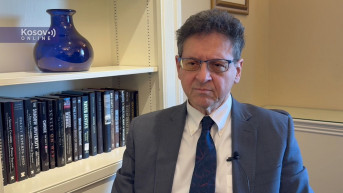
Economic policies of the European Union and internal political crises are slowing growth in the Western Balkans, while American natural gas and investments offer a new opportunity, says Max Primorac, a researcher at the Margaret Thatcher Center for Freedom at the Heritage Foundation, noting that Kosovo and North Macedonia have the potential to take advantage of these opportunities.
Primorac points out that Balkan countries are currently going through a serious economic crisis and says that policies implemented by the European Union and local governments, including climate initiatives, social policy, and regulations, are slowing economic growth and reducing employment opportunities.
“A large part of the skilled workforce is considering leaving for Western Europe, such as Germany, because domestic economies are not growing and there are not enough opportunities,” Primorac told Kosovo Online.
However, he emphasizes that there is enormous potential for economic development thanks to American natural gas and infrastructure projects, including the construction of pipelines and other energy facilities.
“This will create job opportunities in terms of building pipelines and other energy infrastructure, but it will also significantly reduce energy costs. I think that, combined with that, there will also be NATO expansion to 5 percent, which includes 1.5 percent dual-use infrastructure. These are roads, railways, major opportunities for job creation, if these countries can liberalize the regulatory environment, reduce taxes, and not fall into Brussels’ green energy fanaticism. I think there are truly many opportunities for these countries,” the expert said.
Speaking about the growth of Balkan countries, taking into account that Kosovo and North Macedonia are maintaining moderate growth in the range of 3.0–3.8 percent, and Serbia and Albania around 2.8 percent, Primorac said that he likes the more conservative Macedonian government which, as he notes, is much more open to international capital.
“That creates an environment for foreign capital, because these are the things that will create jobs in truly leading industries such as energy and technology and others. Kosovo, I think, has an opportunity to do that. It has an incredible amount of natural wealth and is still nowhere near utilizing those opportunities. We love the people of Kosovo, they are very pro-American. That is why we hope that after the elections later this month they will be able to seize those opportunities. Albania, we will see whether it will integrate into the European Union,” Primorac says.
He notes that the United States has been a leader in many aid policies practiced for years, “providing billions of dollars in an attempt to help these economies,” to show, as he says, that they were “against economic growth, against the family, with an LGBT agenda, with an abortion agenda, promoting left-wing nongovernmental organizations.”
“I think ending that by the United States will help. I hope we can get Europeans to stop doing that as well. But with the arrival of President Trump, I think that what I proposed during my recent testimony before Congress is precisely the president’s ability to lead commercial diplomacy. I think this region is ready for major investment opportunities with American capital. I believe that if these countries come to Washington and promote an investment strategy with the United States, they will benefit in many ways, especially in terms of job creation,” Primorac emphasizes.
He adds that the United States can do this through various commercial and diplomatic channels, especially through embassies.
He stresses that political ambassadors are needed in each of these countries who, as he says, understand how the private sector works, because people who sent career diplomats, he notes, “have no idea.”
“So I think that is the starting point. I raised this during my testimony in Congress. We have one ambassador in Croatia right now, and she is strongly pushing energy cooperation between Croatia and the United States. We can get our political ambassadors in these other countries. I think you see a similar path being taken,” Primorac concludes.



0 comments