
Mijuskovic: I expect stabilization and a slight increase in foreign direct investment this year
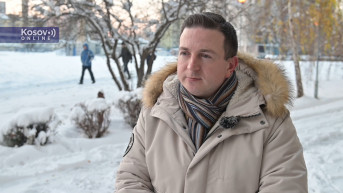
Assistant Professor at the Faculty of Economics in Belgrade, Veljko M. Mijuskovic, expressed the expectation that this year will bring stabilization and a slight increase in foreign direct investment in Serbia, and assessed that Expo, in economic terms, should significantly improve the country’s performance.
Mijuskovic points out that it can be said that planned development elements related to Serbia, as well as to the region, largely depend, on the one hand, on internal factors, and on the other, on regional and global stability.
“What we could see in the previous period is that, due to wars taking place globally, the Russo-Ukrainian conflict, disruptions in supply chains and the like, we had a situation in which investors were somewhat more inclined to avoid this area. I expect that in the coming period this will change, that is, stabilize. This means that, in a way, foreign direct investment, on which our economic model is based, will continue at a capacity similar to what it was in earlier periods,” Mijuskovic told Kosovo Online.
According to him, when it comes to internal factors, they imply stability, institutional structure, and the continuation of some earlier, previously defined plans.
“If we speak specifically about Serbia, we could hear from the country’s leadership that the best development year so far is expected, linked to numerous plans, microprojects, and a broader major project, Expo 2027, which, both in infrastructural and economic terms, should significantly improve the country’s performance,” Mijuskovic said.
As he emphasized, this is in some way accompanied by increases in wages and pensions, which ensure continuous growth and maintain citizens’ living standards.
Asked whether the situation surrounding the Oil Industry of Serbia (NIS) would affect economic trends, he said that NIS is an important constituent of the country’s political and economic landscape, that it makes a significant contribution to gross domestic product, and that it is important for the situation with NIS to be resolved.
He assessed that it would not be bad for Hungary’s MOL to take over a majority stake in NIS from the Russians, but recalled that he has repeatedly pointed out that it would be best if Serbia itself were the partner that could buy out the Russian share.
“Now we see that this is potentially Hungary’s MOL. I have also pointed out that this is not a bad option given the close political and private relationship that exists between Hungary and Serbia, between the two presidents. In that way, we can speak of a good transitional situation for our country,” Mijuskovic said.
This would, as he noted, probably imply some form of redefining the business model, but it would enable continuity in the process of supply, crude oil processing, production of petroleum products, and further economic growth and development of the country.
“In that sense, NIS is an important determinant and in a way colors the landscape of what will happen during 2026,” Mijuskovic emphasized.
Asked whether possible elections in Serbia this year could affect economic trends, he expressed the expectation that elections should contribute to reducing tensions in society.
“I expect that elections should contribute to reducing tensions in society, through clearly defining whom this society wants to vote for, and I believe that this will be achieved by measuring past performance and everything that has been done for the country in infrastructural, economic, and geopolitical terms. If we set things up that way, I think there is no real dilemma,” Mijuskovic said.
Asked whether the Serbian economy should tie itself more closely to the European Union or seek new markets, he said that Serbia is a small open economy and, as such, has both an obligation and a necessity to cooperate with a larger number of entities globally.
According to him, if one speaks of a single entity or group of countries, the most important foreign trade partner is the European Union, but if one speaks of individual countries, the People’s Republic of China follows immediately, which points to serious economic diversification of the country.
“In that sense, different pillars of economic and business cooperation should be strengthened, through further cooperation not only with China, not only with the EU, but also with other Asian and African countries, as well as with the United States. That is, diversification of economic activity as a future prerogative for our economy,” Mijuskovic said.
He emphasized that he expects stabilization and a slight increase in foreign direct investment this year, although, as he noted, at the beginning of the year the situation is still very uncertain and it would be imprecise to define exact percentage shares.
“We can expect, as we have already heard some announcements from the National Bank of Serbia, a cycle of reinvestment by a certain portion of foreign direct investors who have remained here. If there is progress in resolving geopolitical issues and if investors, let me put it this way, stop avoiding this area, we can expect stabilization and a slight increase in foreign direct investment,” Mijuskovic said.
He noted that last year saw a halving of foreign direct investment compared to the year before, and that, as he said, all those elements could be explained by the developments we witnessed.
“Now I expect stabilization of those elements and further growth and development,” Mijuskovic said.
On January 7, Serbian President Aleksandar Vucic stated that inflows of foreign direct investment into Serbia last year had exceeded 3.5 billion euros, assessing that this was not bad, but still much weaker than in 2024 due to blockades that, as he said, were ravaging the country.


0 comments