
Gjokutaj: Shortage of skilled tradespeople is becoming a serious problem for Albania's labor market
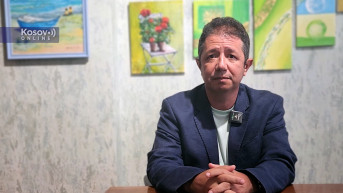
Economic expert from Tirana Eduart Gjokutaj has warned that Albania is facing a serious shortage of skilled tradespeople and qualified workers, assessing that years of investment and education policies have led to a lack of personnel in key sectors of the economy. He sees strengthening vocational and dual education, along with greater investment by the state and the private sector, as one of the solutions.
Gjokutaj, who is also president and fiscal analyst at the company ALTAX, believes that the problems facing Albania's labor market stem from the way investments and public policies have been managed over the past years, resulting in today's shortage of skilled tradespeople.
"We have many university graduates, but skilled trades are viewed here as second-class career choices. Of course, this policy, or this mindset, has 'produced' more young graduates and fewer skilled tradespeople. We particularly lack specialists in essential fields such as electricians, welders, and construction workers, but we also lack experts in photovoltaic energy and the energy sector, vehicle mechanics and specialists for related industries, as well as professionals in Albania's main industries today, such as construction, and especially tourism and agro-processing," Gjokutaj told Kosovo Online.
He adds that Albania lacks specialists who could contribute to the country's economic development, creating an obstacle to progress and greater competitiveness.
"First, and most obviously, especially over the past decade, there has been an exodus of skilled workers abroad, creating major shortages and a dangerous situation for Albania's labor market. This has forced businesses to address the problem by importing workers in sectors with the greatest shortages in order to avoid losses. Second, the situation is linked to the way vocational education policy has been developed, which has only recently begun to evolve differently, although it is still far from meeting market demands. There are weaknesses in linking theory with practice and in the level of investment in this area," Gjokutaj explained.
Comparing Albania with the rest of the region, he said that Kosovo faces a similar situation but has made greater progress by investing more in vocational education, particularly dual education, while also benefiting from stronger links with the German and Swiss labor markets.
"As for North Macedonia, that country has been investing in vocational education for years, both through public funding and cooperation with industry, such as the automotive sector and others. Serbia, of course, is at the forefront in the region, having invested heavily since at least 2017 and recognizing that vocational education forms the foundation for development. This gives it an advantage in the market and helps offset the losses caused by the emigration of young people, which is happening throughout the region," Gjokutaj said.
He stressed that Albania should develop policies that strengthen vocational education, which should no longer be viewed as a second choice but as a first choice, enabling the country to catch up with the rest of the region.
"On the other hand, the development of the dual education system, meaning 'theory plus practice,' should be implemented in line with market needs, and businesses should be consulted on how these programs should be designed. Companies often complain that what is taught in schools does not match their needs. Another issue is investment, which is at the heart of everything. However, investment in this area remains very modest in our country and cannot keep pace with the times, falling behind the demands of the economy, technology, and businesses. Therefore, we must increase investment in vocational education, improve the practical component and laboratory facilities in our schools. Another policy should involve fiscal incentives, as it is necessary to reduce costs for individuals, both through free vocational training courses and by helping businesses facilitate internships in their factories and workshops," the analyst emphasized.
Finally, he pointed out that young people's interest in enrolling in vocational schools depends on creating a favorable environment that would encourage them and reduce the costs of vocational training.
"Costs influence the decisions young people make. We know that people from the poorest segments of society attend these schools. On the other hand, encouraging young people depends on job opportunities, because we cannot expect vocational education to grow in a vacuum, that is, in an economy where only construction and tourism are experiencing high growth rates while lacking other sectors of the economy that could attract young people," Gjokutaj said.
He noted that the aspirations of young people in Albania are the same as those of young people in the European Union: they want to be part of a technology-based economy. However, qualifications must also be aligned with the direction in which the labor market is moving so that young people can feel secure about their future.
"Without a doubt, salary levels play a major role in encouraging young people to remain in their jobs and feel more secure. We are seeing that young people no longer have the same dream of earning degrees in fields such as economics or law," Gjokutaj concluded.

0 comments