
Starovic: Along with Montenegro, Serbia is the most prepared for EU membership by overall level of readiness
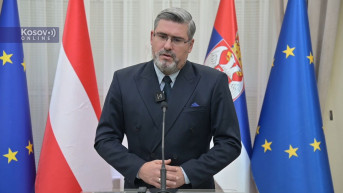
Serbia, together with Montenegro, is the most prepared candidate country for full membership in the European Union when assessed by overall level of readiness, Serbia’s Minister for European Integration Nemanja Starovic said today at the Ambassadors’ Conference in Belgrade, Una TV reported.
“This is not my personal assessment; it is an assessment that can be derived from the European Commission’s annual reports on the progress of candidate countries,” Starovic said at the panel titled “Serbia on the Path to EU Membership – Challenges and Perspectives.”
He recalled that, under the Copenhagen criteria, a set of economic, legal, and political criteria is taken into account in the accession process, and that although Serbia faces challenges in the area of political criteria, when overall readiness is considered, it ranks immediately behind Montenegro and ahead of North Macedonia, Albania, and Bosnia and Herzegovina.
“Already here we see a certain kind of absurdity that we are facing, namely that the political criterion—on the basis of which someone is today defined as a so-called frontrunner, the one leading the EU integration process—often does not correspond to the overall level of readiness as assessed by the European Commission itself,” Starovic said.
He added that this absurdity does not apply only to Serbia, citing North Macedonia as an example: according to the European Commission’s own assessments, North Macedonia is just behind Serbia in terms of overall readiness, yet it has not opened a single negotiating chapter, while Albania—ranked next after North Macedonia—has opened all negotiating clusters.
Starovic also recalled that Serbia was the first country to accept the new accession negotiation methodology based on grouping chapters into clusters, but noted that Serbia has still not opened all clusters.
He emphasized that he believes the path toward EU membership is certainly one of the priorities of Serbia’s foreign policy—and of overall national policy—and something that stems from Serbia’s state and national interests.
“As such, it is and must be a subject of interest and work for our entire diplomatic network, not only for embassies in EU member states. It is evident that many non-European actors also show interest, and to a significant extent support, for our path of European integration—whether we are talking about the United States, Japan, Switzerland, or Norway,” Starovic said.
The two-day Ambassadors’ Conference brought together in Belgrade ambassadors, heads of missions of the Republic of Serbia to international organizations, and consuls general.

0 comments