
Janevska: In some sectors there has long been a labor shortage, in others overemployment
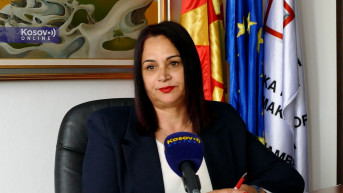
Natasa Janevska, education adviser in the office of the President of the Chamber of Commerce of North Macedonia, says that according to official statistical data from the State Statistical Office, the country is recording a positive trend in the labor market, meaning that the unemployment rate has been declining in recent years. Compared to 2020, when it was 16 percent, it has decreased over the past two years and now stands at 11.5 percent.
This has been achieved, as Janevska explains to Kosovo Online, through active government policies and measures, by organizing training for in-demand professions for the unemployed based on information gathered from various institutions.
Another factor contributing to this trend, she says, is dual education initiated by the Chamber of Commerce and implemented in cooperation with the Ministry of Education.
“We already have the first generation that found employment immediately after completing their education in companies in line with their needs,” Janevska pointed out.
The third aspect she highlights is the outflow of the workforce from the country.
“Although there is a positive trend, we still have to say that our labor market is not stable, because a large part of the working-age population is inactive. On the other hand, we have structural unemployment, which means there is a mismatch between supply and demand, meaning what is offered does not meet the needs. The skills required to perform certain work processes are lacking,” our interlocutor noted.
In some sectors, there has long been a shortage of labor, such as construction, hospitality, tourism, and the food industry.
“In some areas, there is overemployment. If we talk about public administration, perhaps a large part of it should gradually be reduced in favor of the workforce needed in the business sector,” she assessed.
Janevska says that the outflow of labor has for years become a global trend, which is also visible in the region.
“When it comes to labor migration, we no longer speak only about financial reasons, but also about the fact that young people now seek a better quality of life, a higher standard of living, and better working conditions, which they find in European countries,” she emphasized.
On the other hand, regarding what kind of workforce is leaving North Macedonia, she notes that it includes both low-skilled and highly educated individuals.
“Young people of all qualification levels are leaving our country. Most often, they come from the hospitality and tourism sector, waiters and cooks, because they are better paid in European countries, as well as from construction and mechanical sectors, locksmiths, welders, bricklayers, plumbers who are needed in the EU. They also leave from service sectors, from the food industry, machine operators and drivers who are needed in transport companies,” she listed.
On the other hand, she adds, foreign workers coming to North Macedonia most often come from Turkey, Nepal, India, and the Philippines.
“However, we also have a workforce coming from Kosovo, Albania, and Serbia. Unfortunately, a large part of our workforce that leaves consists of highly educated individuals, while those coming into our country have lower qualifications, mostly in construction, hospitality, tourism, service sectors, and the food industry. What leaves the country returns through the import of labor,” Janevska explained.
In certain sectors, as she says, labor shortages occur for various reasons.
“In construction, for a long time there have been no construction technicians among lower qualification levels. In hospitality, we lack waiters and cooks, in mechanical engineering we lack locksmiths, welders, CNC machine operators who are highly sought after, food technicians, bricklayers, plumbers, mainly in skilled trades, but we also lack highly qualified staff such as IT engineers and certain groups of other engineers,” she stated.
Artificial intelligence, she emphasizes, has already indirectly brought some changes to the labor market. As she explains, it has created a need for people to have digital skills, which has led to the need for changes in the education system so that students finishing primary and secondary education already possess digital skills and are ready for the labor market.
“We can say that there will not be layoffs or the disappearance of certain professions, but there must be retraining and upskilling of employees specifically for these digital skills. We must not allow artificial intelligence to lead, rather we should use it as a tool that can help in life. Fortunately, new professions have emerged with artificial intelligence, such as data analysts and IT engineers, who are highly needed, but this has also driven digitalization in administrative services, and people who want to work in these professions will have to possess these digital skills if they want to remain in the labor market,” Janevska pointed out.



0 comments