
Naumoski: Macedonia is the leader in the share of foreign investments in GDP; the Balkans need unity
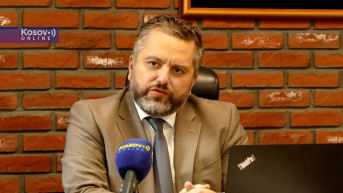
Sinisa Naumoski, analyst and member of the Board of Directors at Heidelberg University in Skopje, tells Kosovo Online that Serbia leads in the absolute amount of foreign direct investments, while North Macedonia has the best results in relation to gross domestic product. He notes that the size of the Western Balkan market is an advantage for the region, which should act in synergy.
“Serbia has around five billion euros in 2024, which is the largest inflow in the region. When you look at the structure, Macedonia leads in the share of foreign direct investments in gross domestic product – that’s around 8 or 8.1 percent, or in absolute terms about 1.2 billion euros for 2024,” he said.
He adds that Albania is recording record growth in industries such as tourism and infrastructure, that Kosovo has the greatest ambition to accelerate investments in 2025, while Montenegro and Bosnia and Herzegovina show a certain stability in foreign investments.
He believes that current events in Serbia will negatively affect the attraction of foreign direct investments and that Albania and North Macedonia could benefit from that in terms of foreign investments, but Serbia remains the most attractive destination, primarily due to its market size and state subsidies.
“Serbia is the absolute choice because it has a large market. Currently, for 2024, they are number one in the statistics. For 2025, they are slowing down, but they are keeping up with Albania. There is huge logistical capacity, and the advantage lies in securing so-called cash subsidies from the Serbian government,” he explains.
Speaking about North Macedonia, Naumoski recalls the long-standing model for encouraging foreign investments.
“We are somewhere in second place, because we offer favorable conditions for foreign direct investors in the technological-industrial zones, where we provide ten-year benefits such as exemption from certain taxes and privileges in cost areas, apart from profit tax and employee contributions,” he explains.
He notes that the Macedonian concept, established around 15 years ago, is good for attracting investments and emphasizes the importance of the European Union’s Growth Plan, which allocates a total of six billion euros for the region.
“What we should be asking is: what are we doing with the EU Growth Plan? That is a very important question, let’s not forget it. I participated in a discussion on this topic, the EU Growth Plan includes six billion euros, of which four billion are non-repayable. This poses a major challenge for all countries, and certainly for the Macedonian state as well,” Naumoski says.
He recalls that the countries of the region offer various forms of support to investors.
“As I said, cash grants per job position, from zero to ten years, and certain logistics from local suppliers are profitable, and this can be seen as the way we compete with each other as Western Balkan countries,” he adds.
Naumoski believes that European policies after the war in Ukraine are creating a new framework for investments.
“I think the EU’s policy, especially after the war in Ukraine, will focus on the policy of nearshoring, bringing factories of strong European and American companies closer to this region, pulling them out of Eastern countries, and leading to the polarization of the world, as we expect,” he says.
He adds that digital transformation and the development of technological and information systems will be key elements in foreign investors’ decision-making.
“These are important factors for comparative advantages when a foreign investor decides to invest in a particular country,” he explains.
As a positive example, he points to Albania.
“Undoubtedly, as I mentioned at the beginning of the conversation, Albania is taking on the role of leader because it has a stable government in continuity, a geostrategic position and geographical access to the sea, and, thirdly, a serious ally, a traditionally strong EU member state, Italy,” Naumoski says.
He believes that the countries of the Western Balkans should not be seen solely as competitors.
“That doesn’t have to be the case, we should see it as an advantage. The Western Balkan countries can also pursue regionalization; let’s not forget that we once had the concept of the Open Balkan initiative, which unfortunately was unsuccessful,” he notes.
He adds that reviving the idea of regional cooperation would be beneficial.
“I think the Americans initially led it together with Germany, but ultimately, the German concept for the Western Balkans prevailed. The more we integrate all Western Balkan members into a single economic zone, the better it is for us,” the analyst concludes.
He believes that a joint approach is much more effective than individual action.
“It would be a smart strategy to simplify the fiscal systems of all member countries, open up markets, and achieve much greater exchange and movement of people across the Western Balkans. We should not exclude one another, but rather help one another,” he emphasizes.
He concludes that the size of the common market is a key advantage for the region.
“We know very well that we cannot act as individuals, as former Yugoslav republics like Macedonia, Serbia, Bosnia, and Montenegro, we have the experience of a large market. Therefore, the size of the Western Balkan market is our advantage to act together and in synergy,” Naumoski concludes.


0 comments