
Stojkovski: The EU’s message to Skopje remains the same – deliver what’s needed
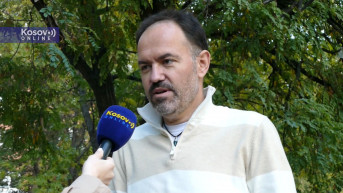
The Executive Director of the Prespa Institute in Skopje, Andreja Stojkovski, stated that during her visit to the region, European Commission President Ursula von der Leyen likely sent different messages to each country. As for North Macedonia, he said he sees no difference from what has been said before – that the country must deliver what is needed in order to move forward.
“We heard what the Prime Minister said a few days ago, and we also heard an interview with a member of the National Security Council recently. I think it’s not a matter of needing more guarantees, but rather of greater political vision, courage, and determination, because there are no guarantees that can prevent political manipulation in the process or replace political leadership. At the same time, there are no guarantees that can give you courage if you don’t already possess enough of it yourself,” Stojkovski told Kosovo Online.
He added that the negotiating framework mentions the Macedonian language and the obligation to translate EU legislation into Macedonian.
“That is one of the guarantees we are seeking. If we wait for an amendment to the agreement, we will probably be waiting too long. In the meantime, if we lack courage, we will begin to lose people, because more and more citizens see their future and their lives outside this country. As long as there is no perspective, things will only become more difficult,” he said.
Stojkovski noted that the situation or status of each country in the region differs, and therefore the EU’s message to Albania will be different from the one to Serbia, and certainly different from the one to North Macedonia.
“If that’s the case, then it means that Serbia is not meeting the political criteria, and if those criteria are not met, further negotiations are truly at risk, because without fulfilling this criterion, we can’t even talk about opening negotiations. In Serbia, von der Leyen spoke about the basic principles of democracy and the results achieved in relation to those principles. In Serbia’s case, we will probably be able to see the political mechanism of the new enlargement methodology in action,” Stojkovski concluded.

0 comments