
Ognjanoska Stavrovska: The election of Sekerinska to a top NATO position would have a positive impact on the Western Balkans
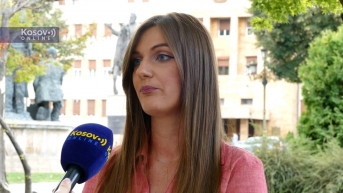
Leposava Ognjanoska Stavrovska, a PhD candidate in EU law and European integration from Skopje, believes that the election of Radmila Sekerinska as the new NATO Deputy Secretary General would have a positive impact on the security and stability of the entire region, especially in the process of integrating the Western Balkans into the European Union.
"I think the election of any candidate from this region, and of course we would like that candidate to be from our country, North Macedonia, would have a positive impact. The security and stability of the region are essential, implying the security and stability of each member state, and any attempt to destabilize any part of Europe or any part of the region would have implications for other countries. I would particularly emphasize that certain decisions being made or that will be made within NATO, including decisions on future enlargement or other modalities of action, would reflect on the European integration process, especially on certain developments taking place within the European Union, where the security dimension of enlargement is increasingly emphasized. We know that certain unprecedented decisions have been made, driven by specific geopolitical circumstances," Ognjanoska Stavrovska stated to Kosovo Online.
She highlights that this is of key interest, regardless of whether the Western Balkan countries aspire to join NATO.
"Regardless of whether all the countries in the region aspire to NATO membership or have not expressed such interest, they are still encompassed by the European integration process," she emphasized.
The election of a candidate from North Macedonia, she argues, would not only signal that the Western Balkans are of strategic importance to NATO but also that the candidate understands "the role of certain global actors."
"This is a clear sign that we are dealing with a region of strategic importance for maintaining these organizations, traditionally formed by Western European states. On the other hand, it requires a person who understands more directly the role of certain global actors, such as Russia, and how they operate or the influence they exert in this part of Europe," Ognjanoska Stavrovska believes.
She emphasizes that Radmila Sekerinska is well-known not only to the Macedonian public but also internationally and enjoys a reputation in transatlantic circles.
"This is certainly due to the fact that she has held high political positions in the country, being directly involved in and leading certain processes related to our European integration. But on the other hand, I assume it is also the result of a certain personal mark left within such processes, with specific results, especially during her term as Minister of Defense, at a time when Macedonia became a NATO member," Ognjanoska Stavrovska said.
She believes that North Macedonia should support Sekerinska's candidacy due to the country’s strategic commitment to Euro-Atlantic integration, but also to affirm itself as an active NATO member.
"My opinion is that the state of Macedonia should support this candidacy, primarily through our diplomatic network, because Euro-Atlantic integration is our strategic commitment, from which, as we have seen, there has been no deviation even when the ruling elites changed. This will, of course, significantly contribute to the affirmation of Macedonia as a NATO member state, i.e., a country that is not just a consumer of security policies but also an active contributor to them," Ognjanoska Stavrovska noted.
Reminding that the position of NATO Secretary General is the highest civilian role in this military-political alliance, she also highlighted the significance of the Deputy Secretary General position.
"The position of NATO Secretary General is actually the highest civilian role in NATO, within the military-political alliance, which entails enormous responsibilities, authorities, and powers in the decision-making process, including chairing certain committees and coordinating the entire process and implementation of decisions. Therefore, it is understood that the position of Deputy Secretary General is also very significant, as it complements this highest civilian role and can sometimes involve performing certain delegated tasks, especially in the case of the Secretary General's unavailability or absence," she explained.
She also reminded that the current NATO Deputy Secretary General, Mircea Geoana, comes from Eastern Europe.
"The difference between West and East still dominates in this military-political rhetoric. However, the need to once again seek a person from this region reflects the awareness of the importance of understanding the region and the challenges it faces. Of course, it is also about the broader security situation, but I think it is becoming clear in these organizations, typically formed by Western European countries, that the survival of these transatlantic alliances and the maintenance of the values and interests that bind these member states would be impossible without more active involvement or affirmation of Eastern European countries," Ognjanoska Stavrovska concluded.


0 comments