
Trosanovski: Two Sides Are Needed for the Revocation of the Prespa Agreement
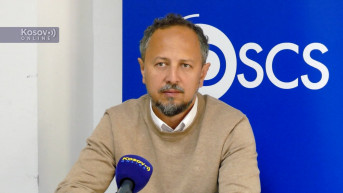
President of the Institute for Democracy, Marko Trosanovski, states that the new government in North Macedonia cannot question the implementation of the Prespa Agreement because its revocation requires the consent of both parties.
"According to the way the agreement is structured, it cannot be unilaterally reviewed or revoked; there must be agreement from both sides, and in that sense, we cannot simply withdraw if we wish to. I say this purely formally and legally. I think we will see many such moments in the coming period, which formally and legally cannot have any effect given the international legal nature of the Prespa Agreement," says Trosanovski.
He emphasizes that the speech at the inauguration of the new president of North Macedonia is not regulated by the Prespa Agreement and is in a gray area.
"She is not yet formally a legal public figure, and the process is ongoing until she attains such status. It is still in the domain of civic communication, and in that sense, as Article 7 of the Prespa Agreement states, the use of terms is permitted. However, this is walking a fine line, which should be done with much more reserve or caution in the future. The previous government, after the initial euphoria following the Prespa Agreement, rarely used the adjective or the full constitutional name in domestic settings. But given the views of this political composition towards the Prespa Agreement, both neighbors and the international community will be extremely cautious and sensitive to such, I would say, creative interpretations of the agreement," he adds.
He also mentioned that even a small provocation is enough for Greece, Bulgaria, and the international community to criticize North Macedonia.
"As international politics knows, the weak do what they must, and the strong do what they can. Even a small excuse or provocation given to Greece, Bulgaria, and the international community, I believe, will be met with criticism from their side, which will intensify if the practice continues. In this sense, considering that Greece can use this violation of the agreement at any moment as a basis for vetoing some future chapters if we continue negotiations with the EU, I think it is not the wisest to resort to creative solutions for the sake of domestic political points, especially when you have consolidated power at the central and local levels and at the level of the president of the state," concludes Trosanovski.



0 comments