
Association of Journalists of Kosovo and Metohija: We want the truth about the fate of our missing colleagues and for the perpetrators to face punishment
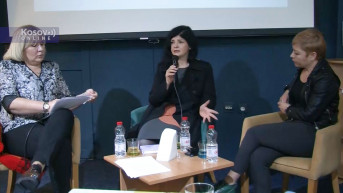
The Association of Journalists of Kosovo and Metohija held a panel discussion today on the occasion of the International Day to End Impunity for Crimes against Journalists at the private Cultural Center "Aquarius" in North Mitrovica, where it was stated that journalists expected to find their missing colleagues from the Kosovo conflict and that those responsible for their disappearance would face punishment.
The President of the Association of Journalists of Kosovo and Metohija, Ivana Vanovac, stated in an interview with Kosovo Online that the fact was that 17 missing journalists had not been found yet and that nothing was known about their fate to this day.
"Horrible. I don't know how any of us can go out in the field if a part of our consciousness carries that information. We have 17 colleagues about whom we still don't know anything today, 25 years later and someone who is responsible for finding out where they are, what happened to them, and who is responsible for assessing that there is no evidence and closing the investigation. Our task is not only to gather on days when we commemorate events but to constantly alert the public that it is important to find the missing because every time we close our eyes to someone's disappearance and suffering, we approve that it is completely fine, correct, and legitimate. That is why it is important to mention our 17 colleagues today and call on all relevant judicial authorities to not only address this but to put all their efforts and everything they have at their disposal on that side to find our colleagues, find the perpetrators, and masterminds, and finally get the satisfaction of justice", Vanovac said.
Numerous examples of the difficult work of journalists in the field and the risks journalists face while doing their jobs were presented at the panel discussion.
Maja Ficovic, the Director of Radio Kosovska Mitrovica, who presented her research on journalist safety at the panel, emphasizes that journalists express distrust in Kosovo's security system, which is why they do not report attacks on them to the competent institutions.
Ficovic also stressed the importance of educating citizens and the system to prevent the trend of increasing attacks on journalists.
"Both are important. If citizens are well-educated, then there won't be attacks in the first place, and then the judicial system and prosecution won't even have work in that regard. We can't rely solely on that. If journalists are attacked, and the trend of attacks on journalists is increasing worldwide, then the judicial system should be efficient. In the research I conducted over the summer, it was proven that journalists do not trust Kosovo's security system, and they do not report either verbal or physical attacks, considering these processes to be lengthy, exhausting, and yielding no results. It is important to work on educating citizens so that they know journalists are doing their job and do not perceive journalists as enemies because there is no need for that. To achieve that, we all need to be much louder, journalists, civil society organizations, and politicians, and we should all work on it because we have the most potent weapon in our hands; we have the media, and we should do this daily", Ficovic concluded.
Daniela Tomasevic, the Editor of Kontakt Plus radio, commented on the professionalism shown by journalists from Serbian editorial offices in the field during delicate and sensitive moments and particularly emphasized that the work of journalists was as interesting as it was responsible and delicate.
When asked to describe the work of journalists under the conditions in which journalists work in northern Kosovo, Tomasevic highlights that sometimes journalists are not even aware of the situation they are in while doing their job, and it is only later that they realize how potentially endangered they were.
"I would describe my job as inspiring. I meet new people and learn something new. When there are crisis situations, I am not aware of how unsafe I am at the moment. It's only after some time has passed that I realize the situation I was in. I rush, don't think, and it's only after it's all over that I realize that many things could have happened. However, even after that, I don't give up. It doesn't deter me from doing my job conscientiously, being as specific as possible in my reporting, not chasing sensationalism, and verifying information, both official and from the field. I strive to provide timely information about what is happening in northern Kosovo because it seems to me that all the focus is on northern Kosovo, where we had these crisis situations. I can say that the job is stressful, but at the same time, it's beautiful", Tomasevic concluded.

0 comments