
Bozovic: Better organization could boost dental tourism in Serbia
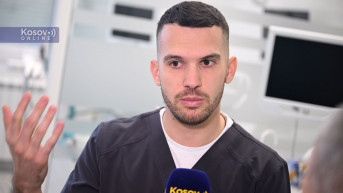
People coming to Serbia for dental procedures are most often Serbian nationals who have been living in Switzerland, Austria and Germany for years, while crowns and veneers are among the most sought-after treatments, dentist Momir Bozovic told Kosovo Online. He noted that prices in Serbia can be up to 80 percent lower than in Western European countries while the quality of materials is the same, and sees better organization of patients’ visits and greater state support as ways to further develop dental tourism.
Dentist Momir Bozovic said that patients visiting his practice most often came from Switzerland, Austria and Germany, but that they were primarily people of Serbian origin who had been living abroad for years.
“Most often, they come from European countries—Switzerland, Austria and Germany. I would single out those three countries. They are primarily our citizens, or members of our community who have been living abroad for years. We know that these are precisely the three countries to which people from Serbia most commonly move,” Bozovic said.
Crowns and veneers are among the services most frequently sought by patients from abroad, but Bozovic stressed that the aesthetic stage of treatment could only begin after a detailed assessment of the condition of the teeth and oral cavity.
“To get to that stage, we first need to develop a comprehensive treatment plan tailored to each individual patient. That plan may include dental treatment, tooth extraction where necessary, treatment of periodontal disease, implant placement and so on. It is a comprehensive process, and the most important thing is for the treatment plan to be tailored to each patient,” he explained.
He added that patients’ wishes could not always be fully realized, as they were often guided by photographs and examples they had seen online without taking into account that some images may have been edited or that the condition of their teeth might not allow for such a result.
Speaking about why patients from abroad choose dental services in Serbia, Bozovic stressed that both price and quality were important, but that lower prices did not mean lower-quality materials.
“All of these factors are certainly very important to patients. Price is extremely important, given that it can be up to 80 percent lower than in European Union countries. Most importantly, the quality of the materials is the same. The materials are sourced directly from those countries or through official distributors in Serbia,” he said.
According to Bozovic, the cost of dental services is also influenced by a country’s standard of living, which is why dental practices in Serbia cannot charge the same prices as those in Germany, Switzerland or Austria.
“The cost of materials and services is also determined by a country’s standard of living, so we cannot have the same prices as Germany, Switzerland, Austria and other countries. We have to adjust them to our country’s standard of living. This also dispels the misconception that price and quality are necessarily linked. That is not really the case—a country’s standard of living also determines prices,” Bozovic stressed.
Regarding the expertise of dentists, he noted that Serbia hosts numerous training programs and congresses throughout the year, featuring leading international experts from various fields of dentistry. He also recalled that the Dental Chamber of Serbia requires dentists to earn a specified number of continuing education credits as a condition for renewing their professional licenses.
“We can be proud of the large number of training programs and congresses held throughout the year. As one of the requirements for renewing our professional licenses, our Chamber requires us to earn a certain number of credits through training courses, lectures, congresses and similar activities. That is something I would particularly emphasize,” he said.
Bozovic added that patients from abroad often find dental practices in Serbia through recommendations from family members, friends and acquaintances, although dental practices’ websites and patient reviews are also playing an increasingly important role.
“People generally come on someone’s recommendation, whether from a neighbor, family member or someone else. Word of mouth always spreads, but dental practices also have their own websites and reviews, and people look at those as well. I can say that trust has grown over the years, and there is a tendency for it to continue growing,” Bozovic said.
Regarding the organization of patients’ visits, he said that some dental practices also provide accommodation, airport transfers and other services, but that there was still room in Serbia for better integration between dental practices and the tourism sector.
“Some dental practices arrange accommodation for patients and transportation from the airport, and they have their own diagnostic imaging facilities, so there are various models. In some countries, there are even dedicated dental tourism desks at airports. We do not have anything like that here. One idea for improving domestic dental tourism would be to develop organizations specifically dedicated to this activity, because the state should recognize the benefits this sector can bring,” he said.
He also identified remote consultations as one way of improving the service, allowing patients to send dental X-rays before traveling to Serbia and receive a preliminary treatment plan.
“We can offer patients from abroad the option of sending us an X-ray so that we can prepare a preliminary treatment plan. Once they come to the practice, we can establish the final plan and tell them how much time will be required to complete everything. Of course, an X-ray is an auxiliary diagnostic tool, while the clinical examination remains the primary diagnostic method,” Bozovic explained.
However, he cautioned against rushing dental procedures, stressing that treatment plans must be adapted to each patient’s condition and individual circumstances.
“You should never rush. As the saying goes, the fastest way to do dentistry is slowly. You always have to respect each person’s body and proceed gradually, depending on the circumstances. Sometimes the body allows us to proceed, and sometimes it does not,” Bozovic concluded.


0 comments