
Ceko: Many Albanian citizens turn to foreign clinics for treatment
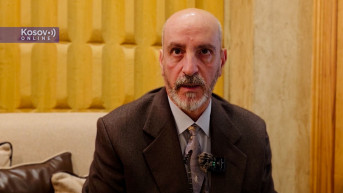
Albania spends considerably less on healthcare than other countries in the region, while citizens cover a large share of their medical expenses out of pocket, Enriko Ceko, Head of Business Administration at the Canadian Institute in Tirana, told Kosovo Online. Due to problems in the public healthcare system, as well as the high cost of private healthcare services in Albania, some citizens travel to Turkey, Italy and Germany for treatment, while the cost of more complex procedures abroad can range between EUR 10,000 and EUR 20,000.
Speaking about the state of Albania’s healthcare system, Ceko pointed to a disparity between the population’s life expectancy and the number of years people spend in good health.
“If we look at the statistics in Albania, there are certain paradoxes. The biggest is that Albanians have the longest life expectancy in the Balkans. Compared with other countries in the region, both men and women live one or two years longer, while our life expectancy is one or two years shorter than the European Union average. What is even more striking, however, is how many of those years people spend in good health. The average number of healthy life years in Albania is around 65 or 66, while in the European Union it is one or two years higher,” Ceko said.
He cited public healthcare spending as one indicator of the problems within the healthcare system. According to Ceko, over the past two to three years Albania has allocated an average of between USD 280 and USD 300 per capita to healthcare from the state budget, compared with between USD 550 and USD 600 in other Balkan countries.
“We also have important data from a World Bank report on healthcare. It shows that almost 60 to 65 percent of Albanians’ healthcare costs are covered from their own or their family budgets. In the European Union, the situation is completely different: citizens cover only around 10 percent of the costs, while the state finances 90 percent. Even elsewhere in the Balkans, the situation is better than in Albania,” Ceko said.
According to him, the conditions for which Albanian citizens seek treatment abroad differ from the health problems typically seen in other Western Balkan countries and the European Union. Cardiovascular diseases are among the most prevalent, followed by diseases of the digestive and respiratory systems.
Ceko also pointed to the high number of people diagnosed with malignant diseases, noting that between 7,000 and 8,000 new cancer cases are registered in Albania each year, despite the country’s population having declined from approximately 3.5 million to around 2.1 million.
Speaking about the reasons why citizens seek treatment at healthcare institutions abroad, Ceko pointed to problems within the public healthcare system, as well as limitations on the use of health insurance in private hospitals in Albania.
“Knowing the state of Albania’s public healthcare system, from primary to tertiary care, I can say that a large proportion of citizens turn to foreign clinics, mainly in Turkey, where medical tourism is highly developed, but also in Italy and Germany. They also travel to Italy and Germany because of family ties, as they may be able to use the health insurance of family members who live there,” Ceko explained.
He added that although Albanian law provides for the possibility of using health insurance in private hospitals, in practice this is very difficult to achieve.
“We have a major problem in Albania because prices in private hospitals are extremely high. A single night in hospital, including all services, costs between EUR 300 and EUR 1,000, depending on the conditions and services offered by the hospital. At the same time, an Albanian citizen pays around EUR 100 or EUR 200 in social insurance contributions over the course of an entire year. Even when a private hospital accepts that insurance, it does not cover all the costs,” he said.
Ceko stressed that services in public hospitals are theoretically free of charge, but that citizens complain about the lack of adequate healthcare and medicines, which often forces them to purchase medication from pharmacies located near hospitals.
Regarding the total amount Albanian citizens spend on medical treatment abroad, Ceko said that comprehensive data that could establish an annual figure were unavailable.
“We do not have precise data on how much Albanians spend annually on medical treatment abroad. However, if we take into account that even in Europe a single night in a private hospital costs between EUR 1,000 and EUR 1,500, depending on the type of illness, we can estimate how much such treatment may cost,” Ceko said.
He explained that a patient traveling abroad for surgery must take into account the costs of hospital admission, preparation for the procedure, the surgery itself and several days of recovery.
“If a patient has to undergo surgery abroad, they remain in hospital for several days before the operation and another three to four days afterward. In such a case, the total cost can range between EUR 10,000 and EUR 20,000. The problem is that we do not have an exact figure for the number of Albanians who travel abroad for medical treatment each year,” Ceko concluded.


0 comments