
On this day 27 years ago, the battle of Pastrik came to an end
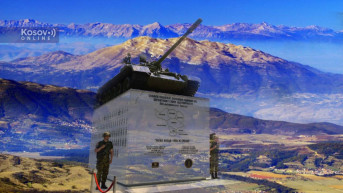
On this day 27 years ago – June 14, 1999 – the Battle of Pastrik, the largest attempt at a ground invasion of Kosovo during NATO's campaign against the Federal Republic of Yugoslavia, came to an end. Having begun in the early morning hours of May 26, the battle continued uninterrupted until June 14 and concluded five days after NATO and representatives of the FRY signed the Military-Technical Agreement in Kumanovo, bringing hostilities to an end.
The battle was preceded by the Battle of Kosare, which lasted from April 9 to June 10, 1999, and partially overlapped with the fighting at Pastrik.
As part of NATO's intervention, several thousand members of the Kosovo Liberation Army (KLA), supported by the Armed Forces of Albania and backed by NATO air power, attacked the Kosare border outpost located on the Yugoslav-Albanian border in the Prokletije mountain range, on the peaks of the Junik Mountains.
The attackers' objective was to seize the Kosare outpost and breach the border in order to open a corridor deeper into Serbia and Kosovo, paving the way for a ground invasion by NATO forces. However, Yugoslav troops succeeded in preventing this plan. This battle, better known as Operation Arrow ("Strela"), would ultimately prove to be only the first phase of the offensive.
When it became clear that no breakthrough could be achieved in the Kosare sector against the defensive lines held by the Yugoslav Army, a new offensive was launched against Mount Pastrik.
This attempt at a ground offensive by KLA forces, supported by NATO and regular units of the Albanian Army, began with an attack on the Gorozup border outpost near Prizren and quickly spread across the entire Pastrik area.
This sector of the Albanian border, in an operation codenamed "Arrow 2" ("Strela 2"), was defended by members of the 549th Motorized Brigade—the only unit targeted by carpet bombing during those days.
When infantry assaults by KLA fighters failed to achieve results, NATO commenced intensive air strikes against Yugoslav Army positions. Strategic aviation, including B-52 bombers capable of carrying nuclear weapons, was employed, along with 24 Apache attack helicopters.
The Battle of Pastrik was also marked by extensive use of artillery and air power against Yugoslav defensive positions.
The commander of the 549th Motorized Brigade, General Bozidar Delic, later recalled that night attacks were frequent on Pastrik.
"Why did they opt for night attacks? Every movement they made in an assault was largely halted by artillery fire. Our infantry on the front line was never without fire support. That is why they launched attacks at night, because under cover of darkness they could approach almost within what we would call hand-grenade range. Then intense exchanges of fire would follow. They would launch an attack, regroup, and during a single night often organize and carry out three or four assaults. They were always repelled—either by small-arms fire or even by hand grenades. We also had something specific: directional mines called 'Vihor 1,' which we manufactured in Prizren and which caused, I would say, devastation among enemy ranks. These mines weighed around 70 kilograms, contained nine kilograms of explosives and 35 kilograms of metal fragments, clearing everything in front of them for several hundred meters. There were many of them on Pastrik because we produced them in batches of one hundred," General Delic recalled.
In terms of intensity and NATO's use of strategic aviation, the Battle of Pastrik may have been even more demanding than the Battle of Kosare.
"It was a classic air-land battle. For us, it was the second defensive battle of Pastrik. Since they failed to achieve their objective through Kosare, they advanced along the Drim-Kosovo axis through Pastrik, toward Prizren via the White Drin Valley," recalled retired Admiral Bosko Antic, former head of the National Defence School and co-author, together with General Nebojsa Pavkovic, of the book Kosare and Pastrik – Serbian Thermopylae, in an earlier interview with Kosovo Online.
According to Antic, the battle was marked by numerous acts of heroism.
"The high morale and loyalty of the members of the 549th Motorized Brigade to their commander were particularly evident. It is well known that when he was asked to withdraw by 100 meters, he replied: 'There is no retreat; Serbia lies behind us.' I believe those words will remain a source of inspiration throughout our history, just as Tibor Cerna's words at Kosare—'This country is worth dying for'—will continue to inspire future generations," Antic said.
Retired Brigadier General of the Serbian Armed Forces Stojan Konjikovac, who served as one of the senior officers of the 549th Motorized Brigade on the Albanian border, described the Battle of Pastrik as "one of the largest battles in the defense of Serbia during the 1999 NATO aggression."
"The Battle of Pastrik demonstrated the determination and heroism of the brigade's members—the determination to defend and protect their homeland. There are values, as embodied in the Kosovo Covenant, for which a person should, if the moment comes, consciously sacrifice himself. Those values are the homeland and freedom. We defended our homes, our homeland, and our freedom—and we defended it successfully," Konjikovac previously told Kosovo Online.
Twenty-six members of the Yugoslav Army were killed at Pastrik, with more than half of the casualties resulting from NATO air strikes. According to official data from Kosovo's Commission for the Verification of Veterans' Status, 453 members of KLA forces were killed in the Pastrik operational zone, while more than 700 were wounded.
For the courage displayed during the battle, the 549th Motorized Brigade of the Yugoslav Army was awarded the Order of the People's Hero after the war.
Beginning this year, by decision of the Serbian Government, the Battle of Pastrik has been included among the dates of national significance in the state's official commemorative calendar. Consequently, for the first time this year, May 26—the day the battle began—was marked by an official state ceremony.



0 comments