
Dimcevski: The Battle of Kosare deserves to be remembered, taught, and studied
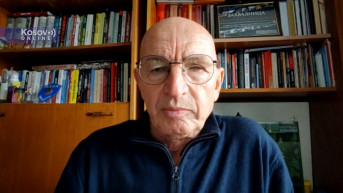
The Battle of Kosare was of exceptional importance for the course of the 1999 war in Kosovo and significantly disrupted NATO’s plans. Because of this, as well as the bravery and patriotism shown by its participants, it deserves to be remembered, taught, and studied, retired Lieutenant Colonel Dragutin Dimcevski, wartime commander of the Kosare outpost and then deputy commander of the 53rd Border Battalion, said in an interview for Kosovo Online.
“That battle, I can freely say, disrupted the aggressor’s plans and, of course, influenced the outcome of the battle itself. It was fought under extremely unfavorable combat, weather, spatial, and climatic conditions, and it is truly a battle that deserves to be remembered, taught, and studied,” Dimcevski emphasized.
He was one of the direct participants and also the commander of the defense of the outpost, which became a symbol of the Serbian army’s successful defense in 1999.
He explains that the Battle of Kosare, which began on April 9, lasted for the next 67 days, and at the beginning, the forces of the then-Yugoslav Army, specifically the 53rd Border Battalion, numbered about 130 members.
They faced, he noted, a significantly stronger enemy, whose core consisted of KLA members, mercenaries, volunteers, as well as the regular army of Albania and NATO air forces.
“My unit managed to stop the enemy at the very border, inflict losses, and enable the deeper units to take their positions and consolidate their ranks,” Dimcevski emphasized.
The ground offensive, he specifies, was preceded by artillery preparation from the direction of Albania in the early morning hours.
“There was precise artillery preparation beforehand in the area of Rasa Kosares and Vis, the highest point at 1,385 meters above sea level, or as it’s referred to today, Point 601. From that point, the entire defensive area of the Kosare outpost could be monitored. During the artillery preparation, infantry forces moved into close proximity to our positions at Rasa Kosares, Maja Glava, and Glava,” Dimcevski recalled.
He says the outpost building itself was hit by a shell during the artillery attack.
“People often say the outpost was captured. The outpost as a structure was never actually defended,” Dimcevski clarified.
He says it is very difficult to single out any of the 67 days of battle at the border, as each day they were under attack from artillery and infantry.
One of those days was the very beginning of the battle, April 9, when he arrived at the outpost.
“I arrived in the morning around 6:45 and saw that morale among many of the soldiers was completely broken. Rasa Kosares had been taken. Those moments were extremely difficult for me, it was something I had never experienced before. The goal was to stop the enemy at the frontline and enable the deeper units to arrive and take up their positions. I succeeded because the soldiers trusted me, and I trusted them. The soldiers were highly trained, well-positioned, and deployed effectively. The defense was scattered, and we were deployed to halt the breakthrough. We spent two days directly on the front line,” the border guard recalled.
He pointed to April 11, Orthodox Easter, as an especially painful moment for everyone at the outpost.
“That day I suffered the greatest losses. In the Kosare area, I lost eight men – one commander and seven soldiers. That day was a black one for us, even though it was a major Christian holiday,” Dimcevski stated.
One of the events that left a lasting impression on him was the death of Slavko Krunic on May 4.
His family was only able to recover his remains years later.
“It was only through international organizations and the Red Cross that his remains were identified through DNA and handed over on October 11, 2003. I attended the funeral in the village of Kamenica near Gornji Milanovac,” Dimcevski said.
When asked if he has wanted to return to Kosare in the past 26 years, the retired lieutenant colonel had no hesitation.
“My great wish is to return, not to fight, but as a tourist. I wish to visit all of Kosovo and Metohija, especially Metohija, where I served and spent many good days. But unfortunately, I believe I am not welcome there. I don’t feel it would be safe, and I doubt I would be allowed to go,” Dimcevski concluded.
0 comments