
Djokovic: Kosovo is in the heart of every Serb; it is the center of our culture, identity, tradition, and faith
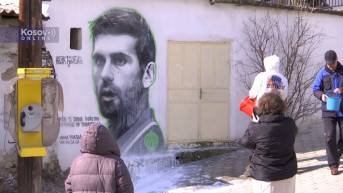
Serbian tennis player, Novak Djokovic, said that he wanted to baptize children in Kosovo and added that Kosovo was in the heart of every Serb and that it represented the center of our culture, identity, tradition, and religion, Sportal reports.
In an interview with the Italian newspaper Corriere della Sera, Djokovic said that he was aware that the issue of Kosovo was delicate and that, although there was no armed conflict, there was a lot of tension.
"I want to return to Kosovo with my wife to baptize my children, Stefan, eight years old, and Tara, five years old. I know that this issue is delicate, that the conflict is still present even though it is no longer armed, but there is a lot of tension. I don't want to participate in politics, but for every Serb, Kosovo is in the heart, it is the center of our culture, our identity, our tradition, and our faith," Djokovic said.
Talking about his childhood, Djokovic said that he had had complete freedom, without a phone.
"When the sun went down, that was the signal that I had to go home. The forest and nature were fundamental in my education, so I would like my children to be outdoors as much as possible. When I was four years old, I was given my first racket, but none of us had ever played tennis, no one knew what it was. We were a family of skiers," he stated.
He also explained why he compared himself to a wolf.
"Once as a child, I saw a wolf in the forest. I felt deep fear; they told me that in such cases you have to go back slowly without losing sight of them. We looked at each other for 10 seconds, the longest time in my life, and then turned left and left. I felt a very strong feeling that never left me, a connection between soul and spirit. I never believed in coincidences, and I don't think that wolf did either. It was a very short but very important encounter for me," Djokovic said.
He emphasized that he was very attached to his family and that he tried to be available to everyone, but that sometimes he had to be alone.
He adds that he somehow remained connected to that wolf because the wolf is a sacred animal for the Serbs.
"It is our totem animal. It is a symbol of the national tradition, the ancestral faith that precedes Christianity. Religion before religion," he added.
It is well known that Jelena Gencic had a great influence on him, and Djokovic says that she saw something in him and that he learned everything he knows from her.
Asked to comment on the war in Ukraine, Novak answered through a personal example,
"As a son of war, all I can say is that no one wins in war. War is the ugliest thing in life, the worst invention of man, and the worst idea in history. I have seen the suffering and poverty in my country, the only thing you can do is pray to God that it ends tomorrow. War creates a void in every family, so I cannot support any war against any country."
When asked to explain why he had not undergone vaccination against the coronavirus, which was why his career had suffered, Djokovic says that many people appreciated that he remained constant.
He emphasized that 95 percent of what had been written and said about him on television in the last three years had been completely false.
"I am not against vaccination and I have never said that I am, nor am I in favor of vaccination. What I am in favor of is choice, I defend freedom of choice. It is a basic human right to freely decide what to inject into the body and what not. After returning from Australia, I explained it on the BBC, but they took out a lot of the sentences, the ones that weren't appropriate. That's why I never talked about that story again," he said.
When it comes to the fact that he was not allowed to play at the Grand Slam in Australia, Djokovic says that it became a political case, which threatened the world.
"They put a completely false label on me and I still feel sick to my stomach, I am labeled as persona non grata. In the end, a person who faces the big media has no chance. Many have disappointed me, when half the society is against you, then you see the real face of people. Many people turned their back on me, including many players and some organizers," Djokovic said.

0 comments