
Drajcici village is home to only four Serbian families today: Life here is difficult, but we will not abandon our hearths
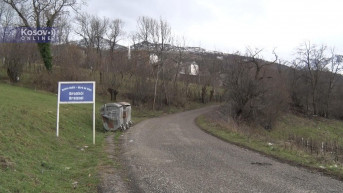
Drajcici is one of the 16 villages in Sredacka Zupa, situated between Prizren and Sirinicka Zupa. Today, only eight people remain to testify about the village where, before 1999, around 180 Serbs lived.
Perched on a hill with a beautiful view of the snow-covered peaks of the Sharr Mountains, Drajcici is now home to only four Serbian families.
Numerous abandoned houses, surrounded by stone walls and locked with wooden gates, bear witness to the fact that a predominantly Serbian population once lived there.
The gate of the oldest resident, ninety-three-year-old retired teacher Tomislav Tomic, is still open. Since the death of his wife, he has lived alone in a house that is about 120 years old. He emphasizes that solitude is the most difficult for him.
"After the war, 30 Serbs were left, but some old ones died, so now there are only eight of us. I am lonely, the whole day I sit alone. Without a television, I would go crazy, but I have a television, so I change channels. I don't like politics, and I've never been involved in politics. I focused on my work, and for my work, I received an order with silver rays from the SFRY state. Sometimes, a doctor from Hoca visits me, and he connected me with a group of people from Backa Palanka, and they send me a food package every month. I am not hungry; I have both a Serbian pension and part of the Kosovo pension, but it is enough that these people respect me," Tomic says.
He recalls successfully preserving the building of the elementary school in the village from demolition, where he worked as a teacher for 38 years. However, it couldn't escape the ravages of time.
"Although I am old, I succeeded. Dalibor Jevtic, KFOR, and the police helped me. They put on a roof, tiles, and brought three trucks of wood. And now, the school is collapsing, but I didn't allow them to demolish it. That school was built in 1903. There was a garden belonging to Mladen Jevtic, which he donated for the building of the school when his wife and daughters died," Tomic said.
Even though he is lonely, he says he is a happy man because he has three children, six grandchildren, and nine great-grandchildren. He emphasizes that he and his descendants will preserve the ancestral property.
"I neither sell nor will my children sell, even though some known people from Prizren—Turks, Albanians—asked to buy, but I say: I'm not selling! This is my heritage; my father worked hard in America until he bought it. I heard that one Serb on the hill sold his property; some Albanian wants to build a house there. He ruined our village water supply, and we barely have water in the house. Otherwise, others are not selling; nobody is selling property," Tomic said.
Zlatibor Cvetkovic also never left the village. Although he says they have no problems with Bosniak neighbors and spend time together, they stayed in the village, as he says, because they have nowhere else to go.
"It has to be done. We don't have our place to go in Serbia, and I won't leave my hearth. We have no pressure from Muslims; we live here, we gather together in the store. There is no perspective here, and Muslims are leaving; mostly they go to Slovenia, then to Germany and Switzerland. Twenty days ago, one family with children moved away. The others are waiting for the visa-free regime to leave, starting January 1," Cvetkovic says.
In the farthest house in the village lives the three-member Ristic family, mother Nada with sons Zvezdan and Radovan. None of them work, and they live on social assistance and pensions. Nada emphasizes that life is tough for Serbs here.
"There are no more Serbs here, just the three of us, another three down there, and two more—eight in total. I receive a small pension from my late husband; the sons receive social assistance, and we get a hundred euros from Kosovo, and that's how we live. For treatment, we go to Recane, Strpce... we buy medicines ourselves. Life is tough for Serbs here, there are no people," Nada says.
The remaining Serbs point out that the village comes to life three times a year—for St. Nicholas, St. Archangel, and Easter—when a large number of Serbs return to the village and everyone gathers at the Church of St. Nicholas.
About a hundred Bosniaks and eight Serbs live in the village of Drajcici today.


0 comments