
EFJ: Pressure on journalists in Kosovo further worsened in the case of Serbian media
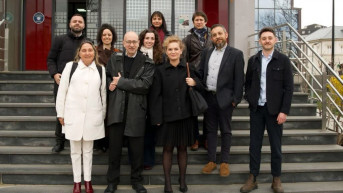
Media freedom in Kosovo has been declining since 2023 due to a series of negative developments, which calls for an urgent political response from the government. In the case of Serbian and other media outlets that do not belong to the majority community, pressures have been further intensified by threats from foreign governments and limited access to public information in their languages, the International Media Freedom Mission, including the European Federation of Journalists (EFJ), concluded today.
Following a two-day visit to Pristina, the coalition of media freedom organizations within the Council of Europe Platform for the Safety of Journalists stated that the previously stable level of media freedom in Kosovo, a candidate for European Union membership, has been replaced by a period of deterioration over the past three years.
“Although Kosovo has a pluralistic media landscape, a low level of physical violence against journalists, and broad legislative alignment with European and international standards, certain media freedom standards have been undermined by the actions of the ruling Self-Determination party,” the conclusion published on the EFJ website states.
It is noted that the main factors for such an assessment include the declaration of the Law on Media as unconstitutional—which had been adopted and would have increased political control over the Independent Media Commission—insufficient funding and political pressure on Radio Television of Kosovo (RTK), as well as the continued rise in verbal targeting and disparagement of journalists by politicians from the ruling Self-Determination party.
These developments, it is emphasized, “have undermined Kosovo’s positive trend in media freedom and development since independence and have thereby damaged its status as a clear regional leader in media freedom within the EU accession process.”
Regarding the safety of journalists in Kosovo, media representatives largely expressed confidence in the recent response of the prosecution, while the delegation also noted and welcomed improved handling of such cases by the courts.
Particular praise was given to the recently adopted Strategy of the Kosovo Judicial Council for improving access to justice for the period 2026–2028, which prioritizes cases related to the safety of journalists, defamation, and SLAPP lawsuits against journalists. As stated, it is already producing results, with several cases having been resolved quickly before the courts.
It is further noted that the total number of cases documented by the Association of Journalists of Kosovo—including disparagement, discrediting, and online harassment of journalists, particularly by political actors—has drastically increased in recent years, reaching a peak in 2025. Politicians from the Self-Determination party are identified as the main source of these attacks.
“A particularly alarming trend identified by numerous media stakeholders is the use of toxic narratives by Self-Determination officials, who falsely portray journalists asking legitimate questions as Serbian ‘mercenaries’ and ‘agents’ funded by foreign powers. In the case of Serbian and other media not belonging to the majority community, these pressures have been further exacerbated by threats from foreign governments and limited access to public information in their languages,” the International Media Freedom Mission’s conclusion states.
The legal framework for media freedom and the safety of journalists in Kosovo largely remains aligned with EU standards, and in recent years no journalist has been arrested. During meetings with the mission’s representatives, Kosovo Prime Minister Albin Kurti provided verbal assurances that defamation would not be recriminalized, contrary to recent calls by certain high-ranking Self-Determination officials.
“Given that media freedom is a key pillar of Kosovo’s EU accession process, the current government must make significant efforts to restore confidence in its democratic capacities and return to the path of progress in media freedom that the country had achieved over the past fifteen years. To support this process, the mission partners will publish a report with findings and recommendations for the government, which will be shared with the Council of Europe, the European Union, the United Nations, and the Organization for Security and Co-operation in Europe,” it is stated.
The mission in Pristina was conducted from March 24 to 26. The delegation met with Prime Minister Albin Kurti, as well as with editors and journalists, representatives of the judiciary, regulatory bodies, and the public broadcaster RTK.
The mission included the Association of European Journalists (AEJ), the European Centre for Press and Media Freedom (ECPMF), the European Federation of Journalists (EFJ), Index on Censorship, the International Press Institute (IPI), Osservatorio Balcani Caucaso Transeuropa (OBCT), and Reporters Without Borders (RSF), with the support of the Association of Journalists of Kosovo (AJK). A similar mission was organized in 2022.

0 comments