
Eparchy of Raska and Prizren: Minister Ceku's accusations show there is no desire for sincere communication.
The Eparchy of Raska and Prizren, in response to what they describe as unfounded accusations of unauthorized renovation of its Serbian Orthodox Church facilities in Kosovo, states that the SOC has never been closed to dialogue. However, they believe that the dialogue must be based on at least a minimal level of trust and that many more urgent issues related to the rule of law, fundamental religious freedoms, and laws need to be resolved as soon as possible.
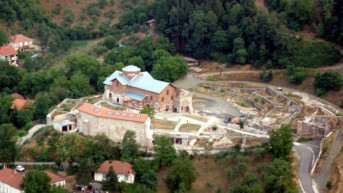
According to the statement, Kosovo's Minister of Culture, Hajrulla Ceku, sent a letter to the Bishop of Raska and Prizren, Teodosije, on October 6th, offering the Ministry's assessment and reparation of the damage to the Banjska Monastery following the unfortunate events of October 24th.
"Minister Ceku published a facsimile of the letter on the 'X' social network the same day, even though the letter officially reached the Eparchy on October 11th. Before it was possible to respond to the Minister's letter, new accusations from the Ministry of Culture appeared on the Koha portal on October 12th. It states that the Eparchy of Raska and Prizren is allegedly renovating the Banjska Monastery without approval from the authorities in Pristina. Therefore, the Eparchy has an obligation to address the public again on all these issues because there is evidently no genuine willingness for cooperation and normal communication," the statement says.
The Eparchy emphasizes that the damage at the Banjska Monastery on October 24th did not occur in the church or the historical part of the monastery. Instead, it involved a broken metal gate of recent origin and damages to the guesthouse building, outside the main complex of the monastery, which require metalwork and carpentry repairs.
"Therefore, we believe it is necessary to inform the public that the Eparchy of Raska and Prizren has already collected the necessary funds for these repairs, thanks to a donation from the Hilandar Monastery Foundation, and the damage will be soon repaired. The protection of religious sites and cultural monuments is of great importance, especially for our Church, which uses these facilities as living places of worship. Therefore, it is highly irresponsible to accuse the Church, which is making enormous efforts to preserve its heritage from destruction and desecration in Kosovo and Metohija over the last 24 years, of being irresponsible about what represents the foundation of our identity and survival in an atmosphere of ongoing ethnic discrimination," they emphasize.
They point out that the issue of protecting SOC properties in Kosovo has been especially considered and defined by Ahtisaari's Annex 5, which the Kosovo Government previously accepted with an obligation to include these provisions in the new Cultural Heritage Law.
"As is well known, Annex 5 of the Ahtisaari Plan states that the Serbian Orthodox Church 'has the full right to manage its property, reconstruction, and access to its facilities' (Annex 5, item 1.5). This document was never repealed or rendered obsolete because Kosovo, based on its readiness to accept the provisions of the Ahtisaari Plan, has been recognized by a number of states in the meantime. Unfortunately, we are witnesses to the continuous efforts of the authorities in Pristina to abolish or reinterpret everything that remains from Annex 5 of this document, and partly incorporate it into Kosovo's legislation," the Eparchy states.
They state that the Law on the Protection of Cultural Heritage, which was planned to be adopted in line with the principles of Annex 5 of the Ahtisaari Plan, has not yet been prepared or adopted by the Kosovo Assembly in line with the commitments made and the existing procedures for laws of special sensitivity.
"For several years, this issue has been discussed within the Council for the Implementation of Special Protective Zones. This Council has not met for three years because the current Kosovo Government unilaterally rejected the agreement from November 2020 regarding the issue of the transit route near the Visoki Decani Monastery, even though it was adopted and signed by the EU, OSCE, two Kosovo ministers from the previous government, the SOC, KFOR, and the Mayor of Decani. The Kosovo Government's failure to respect the decisions and agreements is the key reason why this Council is still not functioning," the Eparchy says.
Therefore, the Eparchy of Raska and Prizren believes that issues such as the damage at the Banjska Monastery should be resolved within the context of the dialogue in Brussels, which, among other things, provides for the formalization of the status of the Serbian Orthodox Church in Kosovo, and not from positions of authority and threats, while the Government openly violates the Law on special protective zones and the decision of the Constitutional Court of Kosovo regarding the land of the Visoki Decani Monastery, which has not been implemented for seven years and is now completely ignored by the current Government of Kosovo.
"Unfortunately, the accusations that our Church is conducting unauthorized protection of its religious facilities, which are simultaneously in active use by our Church, are highly provocative and entirely untrue. The Eparchy of Raska and Prizren has its Service for the Protection of Cultural Heritage, led by Mrs. Svetlana Hadzic, and everything done over the years in repairing the damage primarily caused during a wave of armed attacks by Albanian extremists on the SOC's sanctuaries has been carried out in cooperation with international experts engaged by the SOC. From 2005 to 2010, our Church collaborated under the guidance of the Council of Europe and with representatives of the then Ministry of Culture of Kosovo, and during that period, damage to around 30 damaged or destroyed churches and monasteries that suffered during the March Pogrom of 2004 was repaired. However, the attitude of Kosovo institutions towards the SOC was more tolerant then, and there was room for cooperation. Meanwhile, the situation has deteriorated significantly, especially over the past three years. In an atmosphere where SOC facilities are still exposed to cases of vandalism, theft, and attacks, which the Kosovo Police mostly fail or do not want to resolve, nor classify them as crimes with religious or nationalistic backgrounds, it is completely unjustifiable to accuse the Church of not caring about its religious facilities," the statement continues.
The Eparchy takes this opportunity to remind that the Serbian Orthodox Church on the territory of Kosovo is faced with numerous other unresolved issues, including the aforementioned issues of non-compliance with the decision of the Constitutional Court of Kosovo from 2016 regarding the registration of the land of the Visoki Decani Monastery and the issue of building a transit road to Montenegro through the protected zone of the Decani Monastery (which has been assessed by EU and OSCE legal teams as a violation of the Law on special protective zones).
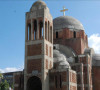
"Recently, there has been a problem with the draft of the laws that would revoke existing rights of the Serbian Orthodox Church, and the Kosovo Police still do not allow access to our clergy and believers and the performance of religious ceremonies in the Christ the Saviour Cathedral in Pristina, despite the fact that it is a religious facility built in accordance with the law and which, along with the land, is registered in the cadastre as the property of the Serbian Orthodox Church. Negative attitudes of Kosovo institutions towards the Church and our identity continue, with attempts at the cultural appropriation of Serbian Orthodox churches and monasteries and frequent media reports carrying statements from certain 'experts' and 'historians' who openly spread religious and national hatred," the statement reads.
They emphasize that for years, they have been unable to renovate or access a number of religious facilities due to the ban by the Kosovo Police or opposition from municipal authorities.
"We emphasize that these are issues that are clearly recognized in the international community, which we regularly discuss with the EU, OSCE, and ambassadors of the Quint and other countries, and are mentioned every year in official reports as a serious shortcoming in the functioning of Kosovo society in relation to the religious freedoms of the Serbian Orthodox Church (e.g., annual reports by the State Department). This attitude is contrary to the basic principles of the rule of law and the protection of human and minority rights and does not contribute to the building of a democratic society," the statement adds.
The Eparchy concludes that the Serbian Orthodox Church has never been closed to dialogue, but they believe that the dialogue must be based on at least a minimum level of trust, and the above-mentioned issues, which are much more urgent and relate to the rule of law and fundamental religious freedoms, must be resolved as soon as possible.
comments