
Gudzic: The ultimate goal of Albanian elites is to erase Serbian presence in Kosovo
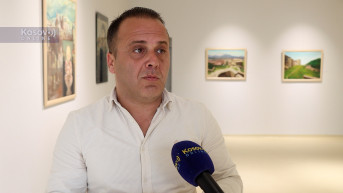
Historian Aleksandar Gudzic stated that calls for the demolition of the Orthodox church in Pristina are part of the narrative about "Serbian occupation" and Albanian continuity, on which Kosovo’s political public sphere builds its statehood, institutions, and education system, with the ultimate goal of completely erasing Serbian presence.
"For decades, the Albanian political public in Kosovo has been building Kosovo’s statehood, institutions, and education system on the narrative of exclusive Serbian guilt for the war, as well as on the idea of Albanian continuity in these areas," Gudzic told Kosovo Online.
He explains that this narrative is based on two key points rooted in the thesis of Serbian occupation of Kosovo.
"According to this narrative, Serbs occupied Kosovo twice. First, in the 12th century, the Nemanjic dynasty allegedly occupied Kosovo and built their churches and monasteries on the foundations of Albanian churches. The second point is the ‘Serbian occupation of 1912.’ The ultimate goal of this scientifically unfounded construction is to claim that Albanians have historical continuity in this region and that Serbs, on two occasions, took Albanian land, churches, and monasteries. What is the ultimate aim of this narrative? It is to establish the idea of Albanian continuity and to erase, in the minds of ordinary people and the broader public, any memory of Serbian presence in these areas," Gudzic said.
Commenting on the claims of historians and writers Jusuf Buzhovi and Enver Rexhaj that the Church of Christ the Savior in Pristina should have been demolished immediately after the war, Gudzic described these as "extremely dangerous messages" that could lead to further misunderstandings and conflicts.
"Experience has shown that it is not enough to simply destroy churches and monasteries; it is also necessary to spread a false narrative about Albanian continuity. It is not uncommon in the Albanian public discourse to hear claims that Gracanica is an Albanian church that was taken over by the Serbs. Everyone is expected to accept the narrative coming from Pristina, from both the academic and political spheres," Gudzic emphasized.
However, he points out that there is ample evidence contradicting this narrative.
Regarding the Gracanica Monastery, he cited its founding charter, which is depicted as a fresco at the entrance to the church.
"Its founder, Stefan Uros II Milutin, following the complete methodology of drafting a charter, including invocation and intitulation, clearly states: 'I, by the grace of God, King of Serbian and Coastal Lands, have decided to build a church.' He then lists all the places he donates to the monastery for its upkeep. Thus, the facts refute this narrative, and in the long run, it cannot endure. It will last only as long as Kosovo’s statehood lasts. The moment that ceases, this narrative, along with historical falsifications and appropriations, will also cease," the historian asserted.
He further noted that a "romanticized approach to history," which lacks scientific grounding, is not exclusive to Albanians in Kosovo.
"It is visible among other neighboring nations as well. Croatian pseudo-historians, for example, also feel the need to embellish their past, as do Bosniak and Serbian historians. I recall Radivoj Radic’s remark that 'Balkan nations are older than themselves.' Even the Greeks, whose history stretches deep into antiquity, sometimes feel the need to beautify their past. So, this is a widespread tendency in the region. In Kosovo, however, it is different because it has political support and is part of an institutional project," Gudzic stressed, recalling a similar instance in 2019 when then-Kosovo Prime Minister Ramush Haradinaj, during a visit to Novo Brdo, claimed it was the ancient Albanian city of Artana.



0 comments