
Ignjatovic: Women don’t report abusers due to lack of trust in male-dominated institutions
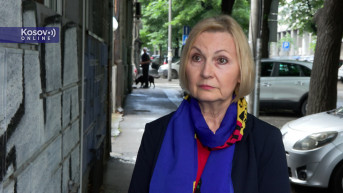
Tanja Ignjatovic from the Autonomous Women’s Center emphasized that women often choose not to report sexual harassment due to a lack of trust in institutions dominated by men, as well as a lack of evidence, leading those who do come forward to face discomfort and judgment.
“Women don’t report sexual harassment to institutions mainly because they lack trust, primarily since these are institutions dominated by men. Women feel uncomfortable because of this, they feel that men won’t take violence against women seriously enough. On the other hand, these acts typically occur without witnesses. So women may have the experience, but not enough evidence to be believed. They believe the institutions won’t believe them, will downplay their experience, normalize it, and do nothing, so they give up on reporting it. Because if you report it and nothing happens, you are left with only the discomfort, ranging from being subjected to unpleasant questioning to being accused by the person you reported of making things up,” Ignjatovic said.
She noted that the number of reported sexual harassment cases in Serbia is significantly lower than what research suggests.
“We see in Serbia that the number of reported sexual harassment cases is dramatically lower than it should be. When we conduct research, we find that this is one of the most common forms of violence against women. In Serbia, there are around 250 reports of sexual harassment per year, which is very low. Only one in five cases gets a court resolution. The fact that a report isn’t formal or doesn’t end in court doesn’t mean that harassment didn’t happen, it just means there is not enough evidence to prosecute the behavior. And it least of all means that the report is false, though that is often the assumption made by the woman’s surroundings, including institutions,” she said.
Ignjatovic encouraged women in Serbia to contact women’s organizations, where they can receive both emotional and legal support, and where their experience can be evaluated for potential legal action.
She also highlighted evidence as a major issue.
“If it is a one-time experience, it is unpleasant, and the woman may think: ‘OK, I’ll probably never see that person again, and I don’t want to go through the process,’ and that is why she doesn’t report it. But if she expects to see those individuals more often, then she really should seek advice on how to create a safety plan, how to navigate that space while staying safe. Secondly, she should consult with legal professionals on how to document the harassment, because without factual evidence, it is very hard to go through the legal process,” Ignjatovic emphasized.
She added that it would be helpful for institutions to implement internal protocols, so that in cases of workplace harassment, incidents are investigated internally and disciplinary procedures are carried out.
She stressed that prevention is crucial and that from an early age, boys and girls must be taught what constitutes unacceptable behavior.
According to her, the Ombudsman should investigate why there are so few reports of sexual harassment, because the phenomenon clearly exists.
“When I compared the number of reports of sexual offenses in Serbia and Sweden, there are ten times more in Sweden, even though our populations are roughly comparable. This doesn’t mean men in Sweden are more violent or aggressive, it means that women there are more aware and have greater trust in institutions, which is why they report more. Ombudspersons should address the question of why violence isn’t being reported and push institutions to develop procedures. It is especially problematic to assume these are false reports. We cannot say that just because something wasn’t reported, it didn’t happen. We know from experience, from working with women, that they endure many violent events. They only decide to report when they truly can’t bear it any longer,” Ignjatovic said.
She concluded by noting that one reason women don’t report violence is their immediate social environment, which often begins to treat them differently once they initiate a case.



0 comments