
Issues facing women in Kosovo: Violence, unemployment, and lack of knowledge about legal rights
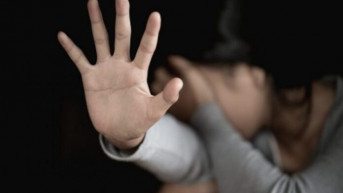
Violence against women in Kosovo is on the rise, and safe houses, of which there are 10, are almost full, warns Nevenka Rikalo from the Women's Association "Ruka ruci" (Eng: Hand to hand) and Igballe Rogova from the Women's Network. They are working to raise awareness among women about their rights and provide assistance in their economic empowerment.
In just the period from January to September of this year, the Kosovo Police recorded 2,008 cases of violence against women in families. However, the question is how many women did not report violence due to economic dependence on their partners or a lack of knowledge about their legal rights.
According to data from the Kosovo Women's Network, which brings together 140 organizations focused on women's rights and providing assistance to women, only 18% of women in Kosovo are employed. Data from the Women, Peace, and Security Index for 2023 show that Kosovo is the second-worst place for women to live in Europe after Ukraine.
The President of the Women's Network, Igballe Rogova, disagrees with the research findings of the Women, Peace, and Security Index, claiming that the survey questions were not clear and precise.
"It is not true that the situation in Kosovo is the worst, that Kosovo ranks second in Europe because there is a good quality of life for women here. The problem lies in employment. If you do not have economic support, everything becomes difficult, including issues like violence and education. I am against that research because the questions were confusing. When conducting research, there should be a good model for the questions. It is not dangerous to be a woman in Kosovo; it is just challenging due to economic instability, and employment, and this affects violence against women and women's education", Rogova emphasizes.
She claims that Kosovo has good laws regarding women's rights, but women do not utilize them.
"They should report violence, they should assert their property rights because we have laws that encourage and support women", she says.
Violence against women is not just a problem in Kosovo but everywhere in the world, Rogova adds.
"Here, women do not utilize institutions enough. When I talk about institutions, I mean the police and the courts because we cannot resolve this on our own. Women's organizations cannot do it alone; we now have institutions that can help", Rogova said.
She points out that the Women's Network suggested to Kosovo institutions to assist safe houses in Kosovo, and for the first time this year, the Kosovo Government agreed to help. On the other hand, organizations under their umbrella contribute to the funds.
"At the beginning, one grant was around 500 euros, and now it's up to 10,000 euros. Our goal is, when we say, as a network, we want to work together, I cannot expect these organizations to work without funds. That's why we started with the Kosovo Network's funds, which you can see on our website, which organizations received grants and how they used them", she emphasizes.
The Women's Network has also launched the "Red Shoes" campaign, where women dress in red on Tuesdays and say, "Today I will not criticize any woman".
"Every woman should fight for herself; no one will help you if you don't think about yourself first. But that woman should have someone to help her along the way, and my advice to all women is to show solidarity with each other. My vision has three big desires. One is to involve men in our work because I don't believe we can help women if men are not with us on this path, and I see more and more men supporting our work. The second was important for me that the younger generations are involved, and now I see both boys and girls participating, protesting together against violence. But my third desire hasn't come true, for women to be in solidarity with each other and to stop criticizing each other", Rogova claims.
Nevenka Rikalo, a counselor at the "Women's Inclusive Center", a shelter for victims of domestic violence in the municipality of Novo Brdo, warns of the increasing violence against women.
The Women's Inclusive Center was opened three years ago, and we can say that from year to year, the number of reports of victims exposed to domestic violence is increasing. In Kosovo, there are nine safe houses, one of which belongs to the Ministry of Internal Affairs and is exclusively for trafficking victims. The other nine safe houses are distributed across regions, including Novo Brdo and Zubin Potok, which are two municipalities that accept victims of domestic violence and women from non-majority communities. The Women's Inclusive Center is such a safe house that accepts victims, and during this period, from January to October, we had 15 reported women who sought assistance with the involvement of the police or the Center for Social Work, along with 18 children. Among the victims are not only women from non-majority communities but also women from majority communities, so we have started to learn a bit of the Albanian language to be able to communicate with our clients", Rikalo emphasizes.
She points out that poverty is a condition to which women in Kosovo are most exposed.
"Besides unemployment, we can say that women do not prioritize their health or education. Perhaps the fact that women always take care of their family members more than themselves, and the saying 'let others go first', might affect their health. Regarding education, we can say that the level of education for women has increased, but the number of women in decision-making positions is very low, not only in politics but also in leadership positions in businesses. Interestingly, a large percentage of women are uninformed about how to improve their economic status because they know very little about inheritance rights and are not well-informed about obtaining loans to start a business", Rikalo said.
When asked whether the situation of women in urban and rural areas in Kosovo differed, Rikalo emphasizes that it depends on the perspective.
"If we look at health preservation, women in rural areas are much more at risk because there is still no organized public transportation from villages to enable them to get medical check-ups. Also, very few doctors work in villages where they can provide organized healthcare. Regarding safe houses, there is a greater opportunity for employment and the reintegration of women in urban areas. In the city, there are better employment opportunities, and many businesses are willing to employ women who have escaped from violence. In contrast, in rural areas, we have very few businesses willing to hire women who have been exposed to violence", Rikalo claims.
Despite everything, Rikalo emphasizes that institutions are doing their part and reminds of the Istanbul Convention, which was adopted in 2011 and ratified in 2020.
"Now, the Law on Protection from Domestic Violence, the Law on Inheritance, and the Law on Gender Equality are being harmonized with the Istanbul Convention because the focus will not be solely on victims of domestic violence but also on the perpetrators. This is a new aspect introduced by the Istanbul Convention, and now laws, administrative guidelines, and regulations are being harmonized to ensure that they are enforced. This is a positive step regarding the work of institutions", Rikalo said.



0 comments