
Ivanovska: Gambling is becoming an increasingly prominent social problem in North Macedonia
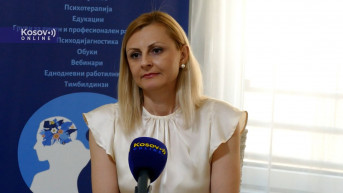
Psychologist and psychotherapist Natasa Ivanovska has stated that gambling is becoming an increasingly serious social problem in North Macedonia, emphasizing that it is particularly concerning that more and more young people are engaging in gambling. She stressed that gambling addiction is not merely a bad habit, but a serious condition that affects emotions and overall functioning.
According to Ivanovska, gambling advertising is widespread, access to gambling is easy, and online platforms are much more difficult to regulate and control. All of this, she noted, creates the impression that there is a certain degree of state tolerance toward the gambling industry at the expense of society and public health.
As she explained, this carries an increased risk of addiction, financial instability for individuals and entire families, problematic interpersonal relationships, and various psychological consequences, including anxiety, depression, and similar conditions.
“I would particularly highlight the impact on young and vulnerable groups, who are especially susceptible to easy access and aggressive marketing campaigns that can encourage them to start gambling. From that perspective, I would say that gambling addiction is not merely a bad habit, as many people tend to view it, but a serious condition that affects emotions, impulse control, and overall quality of life and functioning. Therefore, a comprehensive and systematic approach is urgently needed,” Ivanovska told Kosovo Online.
She pointed out that betting shops are often packed during major sporting events, such as the current FIFA Club World Cup, due to a combination of factors.
“One of those factors may be the heightened emotional excitement surrounding the event and the general atmosphere of sports euphoria. However, in addition to emotional excitement, I would also mention the social aspect. We know that matches are watched together with family members, friends, and colleagues, which enhances or creates a sense of togetherness and belonging, especially among young people,” Ivanovska said.
According to her, in such an environment, betting may be perceived as part of a shared group experience or as a way of becoming even more involved in the event itself.
“When betting is accepted, highly visible in the social environment, and even normalized, it becomes much easier for an individual to engage in such risky behavior, while the potential risks are often overlooked,” Ivanovska added.
She explained that gambling in North Macedonia is regulated under the Law on Games of Chance and Entertainment Games and that, as in most countries, there are legal provisions governing licensing, age restrictions, responsible gambling measures, and taxation.
“At present, we are also hearing about proposed legislative amendments, but I believe what is lacking is a comprehensive and consistently implemented national strategy that should include prevention, youth education, public awareness campaigns, early identification of risky behavior, and accessible psychological support, treatment, and resocialization programs for individuals who have already developed an addiction,” Ivanovska said.
Blagorodna Koceva Simjanov, Executive Director of the Association HOPS – Healthy Life Options, said that the World Cup acts as a catalyst that intensifies gambling addiction and turns it into a mass social phenomenon.
She noted that betting shops are social gathering places where watching matches is inseparably linked to a “betting culture.”
“Facts from the region, including analyses conducted by TGM Research in Serbia, show that sports betting is the most common form of gambling activity, involving more than 36 percent of the population. During major championships, the volume of online betting through mobile applications increases dramatically,” Koceva Simjanov told Kosovo Online.
According to her, the problem is even more pronounced in North Macedonia because, unlike many European countries, there are still no restrictions on gambling advertisements during sports broadcasts, allowing operators to remain constantly present “in the pocket of every young person.”
“Although betting shops may be full, the essence of the problem also lies in continuous digital accessibility, where the normalization of betting through aggressive marketing directly undermines preventive resistance among young people,” she said.
Koceva Simjanov emphasized that North Macedonia lacks a comprehensive national strategy for addressing gambling addiction, despite some initial legislative steps, including amendments to the Law on Games of Chance adopted in 2024 that introduced a mandatory minimum distance of 500 meters between gambling venues and schools.
“These amendments are an administrative measure rather than a systemic solution, given that the state is in an obvious conflict of interest. Games of chance generate annual turnover of approximately €2.8 billion, according to the Public Revenue Office, making the state fiscally dependent on this sector,” she said.
She further noted that the lack of a serious approach is reflected in the fact that North Macedonia has no national register of gambling addicts, while a 2024 study showed an alarming increase in problematic gambling among young people, reaching as much as 7.6 percent.
She added that there is not a single public health institution in the country specializing exclusively in the treatment of pathological gambling, meaning that the burden of rehabilitation falls almost entirely on civil society organizations.
“The state demonstrates a degree of tolerance by allowing operators unrestricted marketing opportunities and economic growth, while systemic measures for prevention, continuous monitoring, and assessment remain absent. As a result, we are attempting to manage only the consequences rather than addressing the root causes of addiction,” Koceva Simjanov concluded.

0 comments