
Jankovic: The region is still too patriarchal for a greater number of women in politics
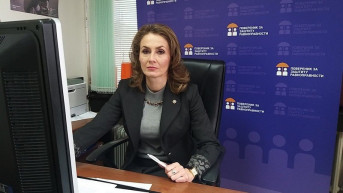
In the Kosovo political environment, systemic segregation dominates as a form of discrimination, particularly against the Serbian population in the north, said Commissioner for the Protection of Equality Brankica Jankovic. She added that, in the current atmosphere in northern Kosovo, one cannot speak of goodwill in society toward women—whether in politics or in other spheres of life—while, in her view, Kosovo’s President Vjosa Osmani has done nothing to improve the position of women.
“Everyone is a target, but especially women. To such an extent are women, particularly young women and girls, the targets of extremists, as we have seen in the media, that Serbs from the north have been forced to self-organize, to record and report to the Kosovo Police verbal and even physical assaults ranging from offensive remarks to sexual harassment. Increased police repression and the arrest of Serbs, the bringing in of organized groups to sit in cafés in Mitrovica and provoke residents—especially women—this is the atmosphere in which we cannot speak of society’s ‘goodwill’ toward women, whether in politics or in other areas of life. This is a policy of pressure on the Serbian and other non-Albanian population. I do not believe that Vjosa Osmani, whom you mention, has done anything to improve the position of women in northern Kosovo and in Serbian enclaves, which I believe applies to society as a whole,” Jankovic told Kosovo Online.
She stressed that the problems faced by women in politics are not the same as those faced by men, as it is significantly more difficult for women to participate in political life worldwide, including in the Western Balkans.
According to her, the reasons are varied, but the main one is the dominant patriarchal-conservative framework that characterizes the culture of everyday life.
“This framework particularly concerns the expected roles of men and women, which they largely fulfill, so women are more burdened with household chores, caring for children and elderly or sick family members, and other traditional ‘female’ responsibilities. All of this, along with many other socio-cultural barriers, limits their participation in political and other social activities,” the Commissioner emphasized.
In her words, women often lack even the support of those closest to them, which leads to them not being sufficiently encouraged to engage in politics, causing many to give up their aspirations and ambitions.
Those who do not give up, Jankovic said, are usually under far greater scrutiny than men and must prove their knowledge, expertise, and abilities to a much higher degree.
“And, as a rule, women are judged far more harshly for everything they do,” she pointed out.
In her view, the entire region remains too patriarchal to allow for a greater number of women in politics.
“Patriarchy is so deeply entrenched in our region—and this applies to almost the entire world—that sometimes it seems to me that we will never overcome it. But those are only occasional moments of weakness we all have, because I believe that women’s participation in politics is important for providing a different perspective, which will ultimately serve as the foundation for a different Western Balkans—a more stable and firmer pillar of the entire European architecture. We just need to find a way to turn women’s voices into policies that lead to genuine reconciliation among peoples who have for years been trapped in the interests of regional and global political players. If our young men and women are to remain living in these beautiful Balkan lands of ours and build fairer and better societies, we must create a different atmosphere in which gender equality has an important role. Because what is good for women is also good for society as a whole,” Jankovic concluded.


0 comments