
Miloš Subotic: While they were beating me in the police station, other officers were laughing; this no longer feels like life

Source: PrintScreen Facebook/Srpska demokratija
Miloš Subotic, a lawyer from North Mitrovica who publicly stated on Saturday that he was a victim of abuse by the Kosovo Police, told Danas that he still fears for his and his family's lives.
"This doesn’t feel like anything; this doesn’t feel like life," says Subotic.
Over the past month, North Mitrovica, which is predominantly Serbian, has seen an expansion of Albanian-owned businesses, such as the Heb’s fast food chain or the Misini pastry chain. While the local Serbian population, almost completely unable to engage in hospitality businesses due to the ban on payment transactions in dinars and the import of Serbian goods, views the opening of "Albanian-owned businesses" as a political decision aimed at Albanizing northern Kosovo, Mitrovica’s pedestrian zone is getting yet another business, Danas reports.
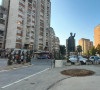
During the setup of this newest, fourth Albanian-owned establishment on the Mitrovica promenade, part of the pedestrian area was blocked off.
Miloš Subotic was detained at 1 a.m. on Saturday near the main bridge on the Ibar River after, as he says, he pushed aside bags blocking a public space near the newly opened "Mehana" shop so he could pass while returning home with his wife.
"I passed through the barriers; they blocked the pedestrian path. Whether I used a bit more or less force, I pushed aside what was blocking the promenade. My justification that it was a public passage is proven by the fact that the barriers were removed the very next day, making way for a normal passage," Subotic told Danas.
He was taken to the police station, where, according to his account, he endured police abuse. On Saturday, Subotic claimed that police officers struck him while he was handcuffed in a room without cameras and attempted to force a breathalyzer into his mouth after he refused to take the test—all while they wore jackets with their identification badges covered.
This Mitrovica resident publicly showed his injuries, which were also recorded during an examination at the North Mitrovica Clinical Center.
He emphasizes that two aspects must be separated—one being that he crossed the barrier, and the other being that "no one has the right to beat or mistreat someone in a police station."
"Who wouldn’t be afraid for their life in such a situation? The cruelty, the inhumane behavior struck me. While they were beating me, other officers passed by, and some even laughed at what was happening in the room. The room was camera-free, and the officers' badges were covered so their official IDs couldn’t be seen. They didn’t grant me the right to a lawyer, nor did they tell me the reason for my detention. They even told me I shouldn’t be out around 11 p.m. if I had a drink. It’s nonsense; I was with my wife,” he says.
He also mentions that police officers refused to translate the report into Serbian, so he didn’t know what he was accused of until an Albanian friend translated the document for him around 6 or 7 in the morning.
"They literally told me they had nothing better to do than translate it into Serbian. I didn’t even know what I was accused of until my Albanian friend translated it around 6 or 7 in the morning. I didn’t know. And this is the case for many people in northern Kosovo: excessive force, an abnormal amount of police… Searches, stress, our lives have been completely brought to a halt. I don’t even know how to respond. This doesn’t feel like anything; it doesn’t feel like life," Subotic says.
The Kosovo Police denied the beating, and Petrit Fejza from the Northern police region urged Subotic to file a report, to which Subotic responded by questioning how he could report a beating at the station where it happened. Nonetheless, he announced he would file a report with the Kosovo Police Inspectorate (PIK).
On the other hand, Subotic claims the police released two contradictory statements, first alleging he damaged state or municipal property, then private property.
"But that private property was on the path. I didn’t break a window; I just pushed aside what was blocking the path," Subotic states.
Although he hadn’t yet submitted the complaint to PIK, the Inspectorate, under media and public pressure, initiated an investigation ex officio. He gave an official statement at PIK on Saturday around 5 p.m. as the aggrieved party. However, he isn’t confident in the investigation’s outcome.
"I don’t know how effective it will be; given past cases, it will likely be swept under the rug," he says.
He also says he can’t wait to be summoned to court and wants to see how they will justify the ruling.
Several non-governmental organizations—Aktiv, CASA, ACDC, InTER, and New Social Initiative—collectively condemned the assault on Subotic, criticizing "the continuous silence of local EULEX police advisors and the entire mission” toward the unlawful treatment by the Kosovo Police. EULEX, however, reacted the next day, calling for an urgent investigation into the allegations.
Subotic says he had a meeting today with the EULEX investigation unit.
"They kept distancing themselves and saying, ‘We’re just monitoring, we’re just monitoring,’ as if they literally can’t do anything. I gave them an official statement," he explains.
He was also contacted by the UN Human Rights Office and the European Commission.
"I don’t know what to say; I don’t trust anyone in Kosovo. As I’ve already said, I fear for my life, the life of my family, and our property. I will hold the Government of Kosovo and the Kosovo Police accountable if anything happens to us,” he says.
This lawyer views the Kosovo Police’s treatment of Serbs in northern Kosovo as a political decision, claiming that a police protectorate has been established in northern Kosovo. After coming forward with his story, other citizens who had issues with the Kosovo Police also started reaching out to Subotic.
"I received thousands of calls, SMS messages, and emails where people told me they suffered some form of abuse. Some women also told me they experienced harassment. For instance, several of them told me that after crossing the border and showing their documents, they immediately received friend requests on social media from those same officers," he says.
He says he has heard many things in recent days, but that none of them had the courage to stand up and say what happened to them, as he did.
"I hope people will now gain a bit more courage, a bit more bravery, so that what happened can be known," he says.
Subotic states that in northern Kosovo, there is no longer any civilian, nor almost any judicial authority, only the police.
"We have become a police protectorate. We have no civilian authorities, hardly any judicial ones; we only have the police. We’re almost in a situation where there’s one person for every police officer. It’s a completely abnormal situation. A year has passed since Banjska, and it would be appropriate to de-escalate the conflict, to remove the special police, to have Serbs join the police as the law prescribes," he says.
He believes that Serbs can only defend themselves "individually, with non-violent actions and resistance" to make the international community aware of what they are going through.
"What hurts me is the ambivalence of the international community, as a person living in Kosovo, who has believed and still believes in the EU and European values. I work in international cooperation; I work on Erasmus projects. They are turning a blind eye to everything happening in northern Kosovo. I don’t know, I don’t understand why they are ignoring it—are they waiting for things to ignite here because everything is on the edge? When I have reached the point of starting civic activism, being a calm, reserved person, never even fined for speeding or parking, let alone anything else, you can imagine the situation other people are in. Everyone is telling me that some form of passive resistance should start, something needs to be done," he says.
Subotic warns that, otherwise, everything else will lead to the departure of the Serbian community from Kosovo.
"If things continue like this, the only outcome will be further departure of the Serbian community from Kosovo. I don’t understand the international community. Didn’t they want a multi-ethnic Kosovo?! If that’s what they want, this is not the way. Now we don’t have integration in the north; we have the conquest and colonization of northern Kosovo," Subotic states.

0 comments