
Naumoski: Germany lacks craftspeople the most; everyone is leaving the Western Balkans
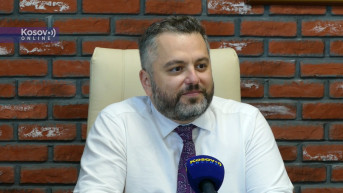
Sinisa Naumoski, an analyst and member of the Board of Directors at Heidelberg University in Skopje, says that the new, increased quotas for employing workers from the Western Balkans in Germany are welcomed by all those who are disappointed or who are not sufficiently financially and socially integrated into the system. Unfortunately, as he assesses for Kosovo Online, there are many such people.
“Germany has significantly relaxed, if I may say so, its policy towards all Western Balkan countries in recent years. This relaxation is seen in the easing of criteria for the entry of workers from the Western Balkans, with a particular emphasis on skilled craftspeople. In the global crisis with war and economic issues, the countries that invest in economic workers or soldiers (metaphorically) gain the most,” our interlocutor says.
He adds that the German economy has continuously lacked highly qualified workers in recent decades. According to the information he has, there is now a shortage of about 400,000 workers.
“The German Employment Agency reports that every year there is a shortage of ready personnel who can work in administrative positions. I am talking about highly educated personnel. The biggest motivation now is to employ skilled craftspeople. There is a shortage of about 50,000 workers from all Western Balkan countries,” he notes.
He explains that the conditions have now been further eased, specifically for craftspeople.
“The process of transfer has been facilitated not only for craftspeople but also for their families. However, for highly qualified personnel, such as doctors and medical workers, the same rules will apply. Your diploma must be accepted by the German government and ministry, and the whole process is facilitated, but only for craftspeople. The conditions for medical professionals remain the same,” the analyst from Skopje says.
He assesses that everyone from the region is leaving, regardless of national affiliation, and that this is something that should somehow unite the Western Balkans to find a common solution.
“My roots are from Western Macedonia, Ohrid, Kicevo, where I lived as a child. My Albanian friends and neighbors have all left. There are no rules, and this is something that should unite us as an economic cause, to see what we can do for the system. Bankers are leaving too. Here, at the academy, we have a ten-year portfolio of well-established, high-profile bankers. Today, even they are leaving because their salaries are ten times higher than the normal average salary here. What am I trying to say? Everyone is leaving, mostly from Kosovo, Macedonia, Albania, and Bosnia and Herzegovina. In a word, mainly those who have poor systems within their country’s structure are leaving. We must start changing the system ourselves, and that is very difficult,” Naumoski says.



0 comments