
Pavlovic: Vidovdan and Kosovo are intertwined in a single experience, ideas and consciousness cannot be arrested or harassed
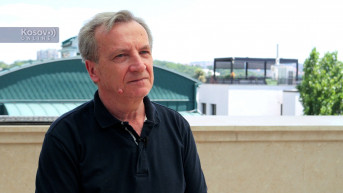
Historian Momcilo Pavlovic said that Vidovdan evokes associations with Kosovo, but also with sacrifice, rebirth, and the idea of freedom. He added that while the authorities in Pristina arrest Serbs over various symbols displayed during the commemoration of the holiday, ideas and consciousness cannot be arrested or harassed, but instead give rise to natural resistance.
"Vidovdan is the most famous day in Serbian history. There is no other day on which defeated armies met, where two rulers were killed, where heroism was displayed, where the Serbian Empire and its rule were defeated, yet to this day, in the consciousness of the Serbian people, wherever they may live, Vidovdan and Kosovo remain intertwined in a single event and a single experience," Pavlovic told Kosovo Online, noting that from the Battle of Kosovo, the marble pillars erected in its memory, and the monument to Prince Lazar bearing, among other things, the inscription 'He fell for the Serbian land,' to the present day, whenever Vidovdan is mentioned, people think of Kosovo.
But, he added, not only of Kosovo, but also of sacrifice, rebirth and the idea of freedom and liberation.
According to him, the extent of the Serbian people's attachment to Kosovo became evident in 1999.
"Since 1999, when the international forces entered by force rather than by consent, the Serbian army withdrew, accompanied by more than 200,000 civilians, unarmed people, and with them also went history, memory and remembrance. To this day, a large part of that population has not returned. A form of occupation regime has been established that supports Albanian separatism and nationalism in such a way that there is no place for Serbs," our interlocutor said.
As he pointed out, little has fundamentally changed since 1999.
"Neither have large numbers of people returned to Kosovo, nor has property that was seized in one way or another been returned. At the same time, it should be acknowledged that Albanians also suffered and that their property was also seized. If all this is known and these are the realities, then Vidovdan is an appropriate day and holiday not only to reflect on the past, which cannot be changed, but also on the future. Would it not be better, more beneficial and more logical to invest in peace rather than conflict and division? In other words, on June 28 at Gazimestan, anyone who wishes, Serbs, Albanians or anyone else, should be able to commemorate the holiday freely and with dignity, as has been done for centuries, especially since 1912, when Kosovo was reoccupied from the Ottoman Empire," the historian said.
Pavlovic said that Vidovdan has nothing to do with Albanians, but that the authorities in Kosovo are seeking to exert pressure on Serbs who wish to mark the holiday in various ways and through different symbols.
"The Battle of Kosovo and everything connected with Vidovdan has no substantial connection with Albanians. They neither played a significant role in it, nor was it a battle between Serbs and Albanians, nor was the concept of national identity in the 14th century the same as it is today. Nations are a product of the 19th century, and above all, a nation is not in the blood, it is in the mind. What we have now is this supported, young Albanian nationalism that is turning into chauvinism, insisting that there is no place in Kosovo and Metohija for another people who also regard Kosovo and its history as their heritage. Be that as it may, the current authorities in Kosovo and Metohija, supported by international actors, are exerting pressure on Serbs who wish to commemorate Vidovdan with a mural, billboard, poster, T-shirt, or flag," Pavlovic said.
Although arrests of Serbs during Vidovdan commemorations have become frequent, Pavlovic said that consciousness and ideas cannot be arrested or harassed.
"People have been arrested, detained, harassed, and some even convicted because of this. Some have been prohibited from displaying a flag or even a simple slogan such as 'The Vidovdan Covenant.' What is forgotten is that ideas and consciousness, and Vidovdan, like Kosovo, lives in the consciousness of the Serbian people wherever they may be, cannot be arrested, cannot be harassed and cannot be bombed. They remain and endure. Detaining and harassing people because of those ideas and that consciousness only creates natural resistance and instability. In that sense, I believe it is better to invest in peace, coexistence, and parallel life rather than conflict, harassment, or demonstrating to Serbs that they have no place there and cannot commemorate any holiday or display their own symbols," Pavlovic said.
Asked about the initiative to seek UNESCO protection for Vidovdan, the historian said that it is a complex issue.
"Vidovdan is a complex, multifaceted concept. Would we, for example, seek to protect only the monument at Gazimestan, or both memorial complexes? But then it would turn out that they are located in Kosovo, regardless of the fact that those monuments were built earlier. As for the spiritual heritage aspect, Vidovdan is both a church and a national holiday, and at certain times it has also been a state holiday. So how would that be formulated? How UNESCO bodies could place this issue on the agenda and adopt a decision is a matter that requires serious discussion," Pavlovic added.


0 comments