
Radojkovic: The claim that the Church of Our Lady of Ljevis is a Dardanian church is a brutal falsification
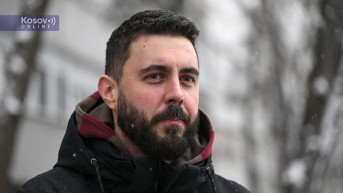
Historian Stefan Radojkovic stated that the attempt to present the Church of Our Lady of Ljevis as a temple built in honor of the "goddess Premte" was a brutal falsification, pointing out that this trend of cultural appropriation was not an isolated incident, as such things had happened before and would continue to happen.
Agon Rrezja, a doctoral student at the University of Zagreb, presented the Church of Our Lady of Ljevis as a temple erected in honor of the "goddess Premte", specifically St. Petka, referring to Serbs as "occupiers who came to Prizren with the Nemanjis conquerors".
Radojkovic says for Kosovo Online that the problem is that the Pristina administration feels quite comfortable in this position and that it is not a matter of misinterpretation but a gross falsification because, he adds, Dardanian ethnic churches do not exist.
"Dardanian ethnic churches do not exist; they are not recorded in history. Of course, Dardania as an Illyrian tribe did exist and is a historical reality of the first centuries of the Balkans, which is not disputed. However, it is problematic when you falsify something. This only supports the thesis that they feel comfortable in the current constellation of international relations and how they reflect on the Balkan Peninsula, specifically the Western Balkans", he stated.
Radojkovic recalled that the Pristina administration had a serious media campaign when the Serbian Orthodox Church published the book "Christian Heritage in Kosovo and Metohija", which does not have an ethnic dimension.
"They reacted when this book, as it is in English and printed in the USA, was found in the office of a high EU official. This just shows that they pay close attention to symbolism, identity, and the identity and cultural appropriation of Kosovo and Metohija, which as a geographical and territorial concept belongs to all peoples living in those areas. It is not an exclusive right of Albanians, Gorani people, Serbs, or anyone else", he added.
As Radojkovic explained what further encouraged the Pristina administration to engage in such actions was that over the past 20 years, authors like Noel Malcolm, Anna Di Lellio, and other scholars had participated in a project of cultural appropriation and often historical falsification.
As he adds, they received a lot of media space, which was supposed to build their credibility.
"In this way, they now further build their attempts, such as the attempt to become a member of UNESCO, which will not happen because if we have any indicators of how they would behave as a member of that organization, this is one of the examples. The Republic of Serbia and the Serbian Orthodox Church must resist these efforts", he emphasized.
Radojkovic notes that fortunately for the Serbs and humanity as a whole, the Serbian Orthodox Church, the Visoki Decani Monastery, and the clergy and monasticism of the Eparchy of Raska and Prizren are more than capable and accustomed to such attempts at appropriation.
He emphasizes that they have proven more than capable of facing this task and that it requires more proactive action from the Republic of Serbia, following the example of the SOC's publication "Christian Heritage in Kosovo and Metohija".
He believes that one way to counter such attempts at rewriting history is for the media to react to them.
"What is more needed is proactive action, where relevant publications are released in English, Russian, Spanish, French, and all world languages, and promoted in diplomatic centers and important global cultural institutions such as UNESCO. The UN is one forum where we could address this, and our scientists dealing with the issue of Kosovo and Metohija should publish in English, which is an increasing trend in our scientific institutions. The conversation about Kosovo and Metohija should be based on reality, not on some projects, in this case, Pristina and its sponsors, trying to promote the independence of Kosovo and Metohija, the independence of the Pristina administration. Instead, we should talk about the ethnic groups living there, and their real needs, talk about 2024, and have other ethnic groups like the Gorani people in focus. They are very interesting from a scientific perspective. We could also promote the position of those ethnic communities that are not in the spotlight and highlight the achievements of scientists dealing with the medieval period", he explained.
Radojkovic points out that the problem for the Pristina administration is that between the 4th century AD and the 11th century, there is no inscription or document mentioning any coinage like "Albanian" or "Arbanas", and they struggle to show that the population that should be Christian today is Albanian, not Serbian.
He notes that the Albanians living in Kosovo, who are Catholic Christians and mostly live around Gjakova, lack material evidence to support all these claims.
"What unfortunately works in their favor is that we live in a postmodern time when the spoken or written word is often taken as a fact, and material remains are disregarded. In general, this plays into their hands, given the constellation in international relations where they are favorites of Brussels, Washington, Paris, and Berlin", he adds.
Referring to the case of the Novo Brdo fortress, Radojkovic says that it is also a part of the same puzzle, but thanks to art historians, Novo Brdo is well-researched in a scientific sense and documented.
"There, regarding the scientific community, international, local, regional, there are no doubts; they can hang whatever flags they want, it doesn't matter. What we need to do is strengthen our advocacy campaign for our interests based on facts. We don't need to invent anything; we do not need to invent anything. It's enough for us to testify to the truth, which is not only in records and inscriptions but also in material evidence at Our Lady of Ljevis and Novo Brdo Fortress. That is quite enough, but we must communicate in English and other languages and in a language that the Brussels administration understands", he says.
Radojkovic notes that for the Brussels administration, it is not enough to just translate; it must be presented in a specific format and language.
"We must be aware that this is not a conversation between two art historians or historians and archaeologists but between historians and archaeologists on one side and technocrats and bureaucrats in Brussels on the other. It should be presented, for example, in 20, 30 pages maximum, and it should be a continuous effort that we engage in institutionally and individually, and the SOC does this as a matter of course", Radojkovic concludes.
0 comments