
Ristanovic: Gazivode is the legacy of the SFRY, it was not built with Kosovo's funds
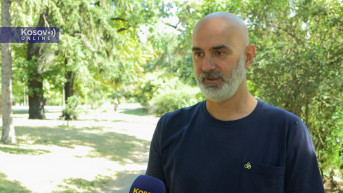
Dr. Petar Ristanovic, a research associate at the Institute for Serbian Culture in Leposavic, told Kosovo Online that claims by politicians from Pristina that Gazivode was built with Kosovo's funds are fundamentally inaccurate because Serbia is still paying off the 1972 loan from the World Bank.
Ristanovic explains that this hydro system on the Ibar River was constructed after extensive preparations as one of the crucial projects for the development of Kosovo.
"The idea was to create the large Ibar-Lepenac system, which was intended to generate electricity, provide water supply for most of Kosovo, and, of course, bring economic profit to the province. Thus, in 1972, a loan was taken from the World Bank, and the construction of the project began. After 12 years, only part of it was completed. Lepenac, the other half, was never built," our interlocutor notes.
He adds that today the significance of Gazivode for Kosovo is fundamental because it is one of the most important strategic facilities.
"Without water from Gazivode, a good part of central Kosovo would not have a water supply. Even more importantly, the water from Gazivode is used to cool the Kosovo A and Kosovo B thermal power plants, without which Kosovo would practically not have enough electricity to meet household needs. Finally, Gazivode is also important for some economic aspects, although this is the least significant in the whole situation," he emphasizes.
In response to the claims by members of Self-Determination that Gazivode was "bequeathed to the Albanians by their ancestors," Ristanovic replies that "the lake was left to them by the then Yugoslavia," specifically the federal government which guaranteed the loan from the World Bank.
"Politicians from Kosovo often state that Gazivode, or the Ibar hydro system, was paid for with funds from Kosovo, which is formally true but essentially inaccurate. The funds were transferred to a company established in Kosovo, in Pristina, but these were World Bank funds guaranteed by the federal government. As far as I know, Serbia is still repaying the last portions of that loan," he explains.
Ristanovic sees the constant rewriting of history, including the case of Gazivode, as a behavioral model of the regime in Pristina, led by Albin Kurti.
"I think this fits into the current government's pattern of behavior in Pristina, specifically Kurti and his associates, who make maximalist demands without any willingness for talks and negotiations. So far, they have been accustomed to getting what they ask for, and they continue in that direction. How long this will last, we shall see," says Ristanovic.


0 comments