
Traces of Serbian history in Albania – from the relics of Jovan Vladimir to Great War memorials
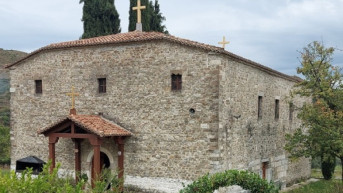
From the relics of the first Serbian prince and saint, Jovan Vladimir, through medieval towns that served as seats of the heirs to Serbian rulers, to nearly forgotten graves and monuments that bear witness to the suffering of the Serbian army during the Great War, traces of Serbian history in Albania continue to withstand the passage of time, RTS reports.
Traces of Serbian history in Albania still exist, but few people visit them. Serbian believers mostly come to the monastery near Elbasan, where the relics of the first Serbian prince and saint, Jovan Vladimir, are kept, on religious feast days.
Hidden from public view and outside the usual tourist routes, these sites preserve the memory of centuries of shared history and events that shaped the history of the Serbian people.
"I will certainly take away wonderful impressions from here, and I hope to return since we are not far away," one visitor said.
About ten kilometers from Shkoder lies Drivast, once one of the most important medieval towns of the Nemanjic, Balsic, Lazarevic, and Brankovic dynasties. At a time when Shkoder was the Serbian capital, the heirs to the throne resided there, RTS writes.
Bojan Popovic, director of the Museum of Frescoes in Belgrade, says that historians generally agree that all major towns in Albania were inhabited by Romance-speaking and Greek populations, as well as Albanians and Serbs.
Centuries of intertwined destinies
Although they are not included in tourist itineraries, many cultural monuments in Albania, including the Monastery of Saint John in Ras-kula near Shkoder, represent valuable testimony to centuries of intertwined destinies and coexistence in the region.
Helidon Sokoli, director of the regional office of the Ministry of Culture in Shkoder, points out that it has been documented that a Slavic community existed for two centuries and conducted services according to Eastern rites in that monastery.
"Even today, in some of the villages near the church, we have a Slavic population in three or four villages, whether Serbian or Montenegrin, who have lived in these areas for centuries," Sokoli says.
Monastery in Shkoder withstanding the test of time
In the past, Shkoder could also be reached via the Bojana River, on whose banks stood a trading port, a customs office, and the Monastery of Saints Sergius and Bacchus, which continues to withstand the passage of time. During the 11th and 12th centuries, four Serbian kings of the Vojislavljevic dynasty were buried there.
Dr. Edmond Malaj of the Albanian Research Institute says that those graves no longer exist because the river has taken its toll and caused significant erosion.
"It is known that the monastery was renovated in 1290. We know this from two stone inscriptions showing that Queen Jelena of Serbia financed its restoration. We also have evidence of another reconstruction in the 14th century carried out by her sons, Stefan Dragutin and Stefan, that is, Uros II," Malaj explains.
The monuments and graves that still exist in Albania today have largely been forgotten or neglected.
Among them are the only preserved monument erected to Serbian soldiers during the Great War and the grave of Bishop Serafim of Raska and Prizren, who was interned during the Second World War.
0 comments