
Vanovac: The new law is an attack on media freedom in Kosovo, especially on Serbian newsrooms
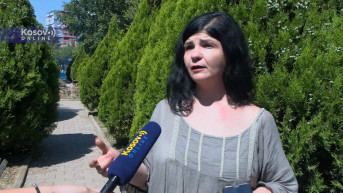
The adoption of the Law on the Independent Media Commission affects all media in Kosovo and particularly small newsrooms like Serbian ones, Ivana Vanovac, President of the Journalists' Association of Kosovo and Metohija, says to Kosovo Online. She adds that this law allows the authorities to eliminate any media outlet if its critical approach bothers the political establishment.
She highlights one of the key criticisms – legal ambiguity, meaning the law's provisions are not fully specified, especially in the most sensitive areas, such as imposing monetary penalties.
"In this part, there is a provision that if a media outlet violates the ethical code, it can be fined between 200 and 40,000 euros, without further gradation, that is, specification for which offense each amount is intended. I assume this is left to be regulated later by some bylaw, but from this perspective, we really cannot know if such a bylaw will be enacted and what it will look like," Vanovac explains.
Another problem, she adds, is the very high fines, especially considering that Serbian media in Kosovo are primarily local.
"Imagine if someone at some point decides to fine them 40,000 euros, that would be equivalent to closing and shutting down a media outlet," our interlocutor explains.
According to her, there is also a problem with issuing licenses to electronic media, which under the new law are called "video sharing platforms."
"That part of the law is terribly unclear, so we still do not understand whether only registration with the Independent Media Commission is required or if it is necessary to apply for some license. If you get a license, that license can be challenged at some point based on something. And if we have a licensing system, then we are talking about the most open censorship," the president of the Journalists' Association of Kosovo and Metohija says.
She also points out that it is problematic that the mandate of the members of the Independent Media Commission is fixed at four years, whereas it was previously from two to four years, and members were very changeable, which is "always desirable for a regulatory body."
Moreover, the number of commission members increased from seven to 11, and "nobody is quite sure why."
"These members are chosen by the Kosovo Assembly, and when something is chosen by the Kosovo Assembly and at the same time given a four-year mandate with the possibility of reappointment, it is quite negative. This ensures the conservativeness of a decisive system. What does that actually mean, to simplify? Imagine there is some media that at one point does not appeal to the authorities, that is, its critical stance bothers that political establishment, so it means that the political establishment will have no problem getting rid of that media thanks to the possibility of acting through commission members and fines that go up to 40,000 euros," Vanovac explains.
She reminds that the Association of Journalists of Serbia, with its branch in Kosovo, appealed to the European Federation of Journalists, the International Federation of Journalists, and all relevant international journalistic organizations and associations to react, as this is, she says, "the most open attack on media freedom."
Vanovac mentions that the latest reaction came from the US Ambassador to Kosovo, Jeffrey Hovenier.
"I think that the relationship between Pristina and Washington is the most sensitive, and it would probably be expected that Pristina will react to it first. There is one more instance that has not been used at this moment, and that is the instance of the president, in this case, Kosovo President Vjosa Osmani, who has the right not to sign the law, that is, to return it for revision. What is somewhat critical is that this is not a permanent solution. She has the mandate to return the law once or twice, but she cannot prevent its adoption," she says.
She assesses that it is good that there is a unified stance – of both journalistic associations and international organizations.
"We had numerous ambassadors, and all came out with a unified condemnation of the fact that Pristina did not consider the 12 recommendations given by the Council of Europe for this law. They absolutely ignored them, which is always bad. The law is bad, undemocratic, and not in line with European standards in the part that concerns us the most, so our views absolutely align. This can definitely negatively affect Kosovo's image, which it currently has in Europe, before the US, and the entire international community, and we rely most on the Kosovo president's institution recognizing this and preventing the enactment of such a law," Vanovac concludes.


0 comments