
The villages in the municipality of Leposavic are in complete lockdown, local roads are dug up, and normal life is impossible
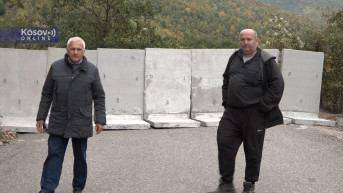
Over the past few weeks, excavators accompanied by Kosovo Police have dug up all the local roads in the municipality of Leposavic and installed concrete barriers. This has made it extremely difficult for the residents of surrounding villages to access their homes and they face significant daily challenges. Some of the local Serbs, as reported to Kosovo Online, have already reached out to the police, KFOR, and EULEX regarding this matter, but they have not received any response.
Petko Radovic from the village of Josanica says that besides the residents who cannot reach their properties, miners also cannot go to work.
"My property is blocked, and above it are the villages Plakaonica, Duboka, and the Crnac mine, which is separated towards Gnjezdane. It's impossible to pass through to the Crnac mine, and the mine's services, all the main compressors, are up there. People come to this place and then have to walk four kilometers. They come to this place, and then they go on foot, the same goes for the return journey, as well as when they go for the night shift at eleven in the evening. Whether the mine will continue to operate, given this situation," Radovic said.
He added that they would most likely run out of firewood this year.
"I have a forest, and I've prepared firewood for the winter, but now I can't even get up there to bring it down. I also have a field where I work, but everything has come to a standstill; there's no work. Nobody here is waiting, it's been set up this way. We can't dismantle it; there might be cameras, so we don't get arrested. This year, we're behind on both crops and work," Radovic said.
Radovic says that there have been various challenges in the past, but he has never experienced a situation where you couldn't go to and return from your property.
"In the village of Gnezdane, there are about ten houses, and we all have something there. We don't have large estates, but each of us works there. We used to make a living from the forest and earn some money, but that's difficult now. There are also the villages of Duboka and Plakaonica, and people used to go up there daily to do some work in the village, but now that's stopped, and nobody goes up anymore. We've faced all sorts of challenges in the past, but we've never had a situation where you couldn't go to and return from your property. They've already warned us that we can leave, but we won't be able to come back," Radovic added.
Despite having a house in Leposavic, Dragos Balovic works the land in the village of Zrnosek, where, he says, he can't even go on foot now.
"With these concrete barriers, the village of Zrnosek, which is a part of the territory of Kosovo and Metohija, has been cut off, and the villages of Stanulovice and Tresnjica are also isolated. We've had the same problem once before when the road was blocked, but an agreement was reached, allowing the locals who have houses in Leposavic but farmland in the villages to pass freely to carry out necessary tasks in the village. People living in the village were also allowed to travel to Leposavic. Considering the terrain, Stanulovice village belongs to Central Serbia and is about ten to twelve kilometers away from Leposavic. The nearest municipality or medical facility is around fifty kilometers away. Consequently, many people from the Stanulovice village built houses in Leposavic, where they live with their families while working their land in the village. Now, we're facing the same problem again. It happened on Friday without any prior notice, and I can freely say that many people were trapped," Balovic said.
On Friday, when the concrete barriers were set up, people were, according to Balovic, trapped both in the village and when trying to enter the village.
"People came to finish their work, but when they tried to return home, the road was closed. Many of them had no fuel in their cars, no food, and there's no phone network, so they couldn't call for assistance. People had to leave their cars and walk to Leposavic. Those who wanted to return to Leposavic by car had to travel about 250 kilometers because they had no alternative route except going through Blazevo, Kopaonik, Raska, and Novi Pazar to reach the Brnjak border crossing, through North Mitrovica, to reach Leposavic. Instead of the usual fifteen to twenty minutes it takes to get to their homes, people had to spend five hours traveling back home," Balovic emphasized.
He said that the situation was most challenging for a family living in Stanulovice with a young child.
"In the village of Stanulovice, there's a family living with a small child. On the same day, they were separated. The mother and child stayed in Leposavic, and the father was in the village. The child had a fever, and the father didn't know what to do because he couldn't get to Leposavic. In the end, the wife came via the Jarinje exit, crossing Kopaonik, and they currently live there. I can say that this man is involved in agriculture, with about a hundred sheep and other small and large livestock for which he needs to provide food daily, which is currently impossible. To reach Stanulovice without using this road, he must travel 130 kilometers to reach Jarinje. To return to work in Leposavic, he has to travel 250 kilometers to get to Brnjak, as the Jarinje crossing is closed for entry. There are many families here who work the land, and it's autumn; people are harvesting crops. People in these hilly and mountainous areas haven't even harvested their potatoes or brought firewood to their homes. On behalf of all the residents of the villages of Zenosek and Stanulovice, I urge all relevant authorities, including KFOR and EULEX, to allow these people, who come here every day, to pass through and reach their homes," Balovic pleaded.
Milosav Tiosavljevic went to the Zrnosek village but had to leave his car this time and attempt to reach his property using roads not intended for vehicles.
"In the village of Zrnosek, we have livestock, cats, dogs, pigs, and bees. I arrived about an hour ago; I bought food to feed the animals. I couldn't drive up there; I parked my car not far from here, and I came with the tractor to pick up the bags, as you can see. The tractor is covered in mud from the bad road. The conditions are poor; we can't reach our homes by car. Agriculture needs to be completed; we have potatoes, beans, and everything here. We worked throughout the summer without any problems, and now they've set this up, preventing us from reaching our homes," Tiosavljevic said.
Tiosavljevic also said that they had complained to the police station in Leposavic yesterday but didn't expect much from it.
"We went to the police station in Leposavic yesterday; they promised to let us know today what they will do. If they can help, fine, if not, we'll have to seek assistance from the authorities. We don't have the living conditions to come here. Today, it's raining, and we can't even walk; all the old paths are overgrown with weeds," Tiosavljevic stated.


0 comments